Tehran’s Response Hinges on Damage Assessment and Remaining Capabilities
Following a series of Israeli strikes targeting Iranian military officials, scientists, and its nuclear and ballistic missile infrastructure, Tehran has promised retaliation. However, beyond a minor drone operation, the exact nature of Iran’s response remains uncertain, hinging significantly on the effectiveness of Israel’s initial strikes and the extent of Iran’s remaining ballistic missile capabilities.
Targeted Strikes: Tabriz and Top Commanders
Reports indicate that Israel’s attack targeted sites in Tabriz, a launch point for Iran’s October 2024 ballistic missile assault on Israel. Additionally, the strikes allegedly eliminated Mohammad Hossein Bagheri, Iran’s chief of staff, and Hossein Salami, head of the Islamic Revolutionary Guard Corps (IRGC), the organization overseeing Iran’s ballistic missile program.
Iran’s Ballistic Missile Arsenal: A Threat to Israel
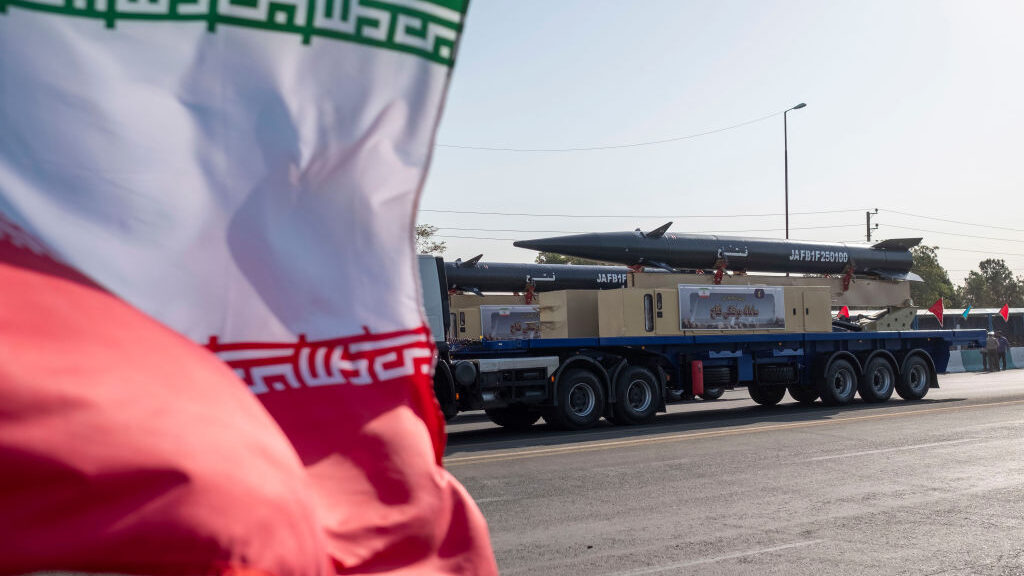
Prior to the strikes, ballistic missiles were Iran’s primary means of striking Israel. Medium-Range Ballistic Missiles (MRBMs), with ranges exceeding 1,000 km (621 miles), are essential for reaching Israel from Iran. Iran possesses a diverse arsenal, including liquid-propellant missiles developed in collaboration with North Korea, such as the Ghadr and Khorramshahr, as well as advanced solid-propellant ballistic missiles. Some, like the Kheibar Shekan, feature maneuverable re-entry vehicles with control fins and satellite navigation for enhanced precision. Iran claims to have developed the Fattah, a Kheibar Shekan variant capable of hypersonic trajectories, making interception more difficult.
Operation „True Promise”: A Precedent of Missile Warfare
In April 2024, Iran launched Operation „True Promise,” deploying 110 ballistic missiles alongside unmanned aerial vehicles and cruise missiles in retaliation for Israel’s assassination of Mohammad Reza Zahedi, commander of the IRGC Quds force, in Damascus.
Israel’s Missile Defenses: A Shield Under Strain
Israel’s missile defense systems, including Arrow 2 and Arrow 3 interceptors, with support from U.S. Navy destroyers equipped with Standard Missile 3 interceptors, successfully intercepted most of the ballistic missiles during the April 2024 attack as well as during a second attack in October 2024 where 150 ballistic missiles were launched. However, some missiles struck Nevatim and Tel Nof Air Bases, and the area near Israel’s intelligence headquarters.
A Question of Quantity and Resource Allocation
Fending off large-scale attacks poses a significant challenge to Israel’s defenses, as the number of interceptor missile launchers is limited. Prioritizing the defense of specific targets and allocating interceptors to incoming missiles strains command-and-control structures and radar resources.
Underground Facilities and Mobile Launchers: Preserving Iran’s Missile Capabilities
To protect its missile arsenal from potential strikes, Iran has invested in building hardened underground missile facilities. These facilities, while potentially vulnerable at their entrances, offer protection against air strikes and can be used to store and prepare missiles. Iran utilizes commercial trucks and trailers for transporting and launching its missiles, often disguised with tarps to appear as ordinary vehicles.
Dispersion and Mobility: Challenges for Israel
To safeguard its remaining missiles from Israeli follow-on attacks, Iran may disperse its missile forces, making them difficult to track and identify. Solid-propellant missiles, with their greater mobility and shorter launch preparation times, present a more immediate threat.
Shorter-Range Missiles: A Threat to US Facilities
While Iran’s smaller short-range ballistic missiles are not a direct threat to Israel, they can reach U.S. facilities in the region. In 2020, Iran attacked American facilities on Al Asad AB in Iraq in retaliation for the U.S. drone strike that killed IRGC General Qassem Soleimani. The U.S. recently deployed a Patriot missile defense battalion to the Middle East to defend against short-range ballistic missiles, but a large-scale attack could potentially overwhelm defenses and escalate the conflict.