British Build Nears Completion Despite U.S. Shift; Platform Set to Enhance Early-Warning Defense
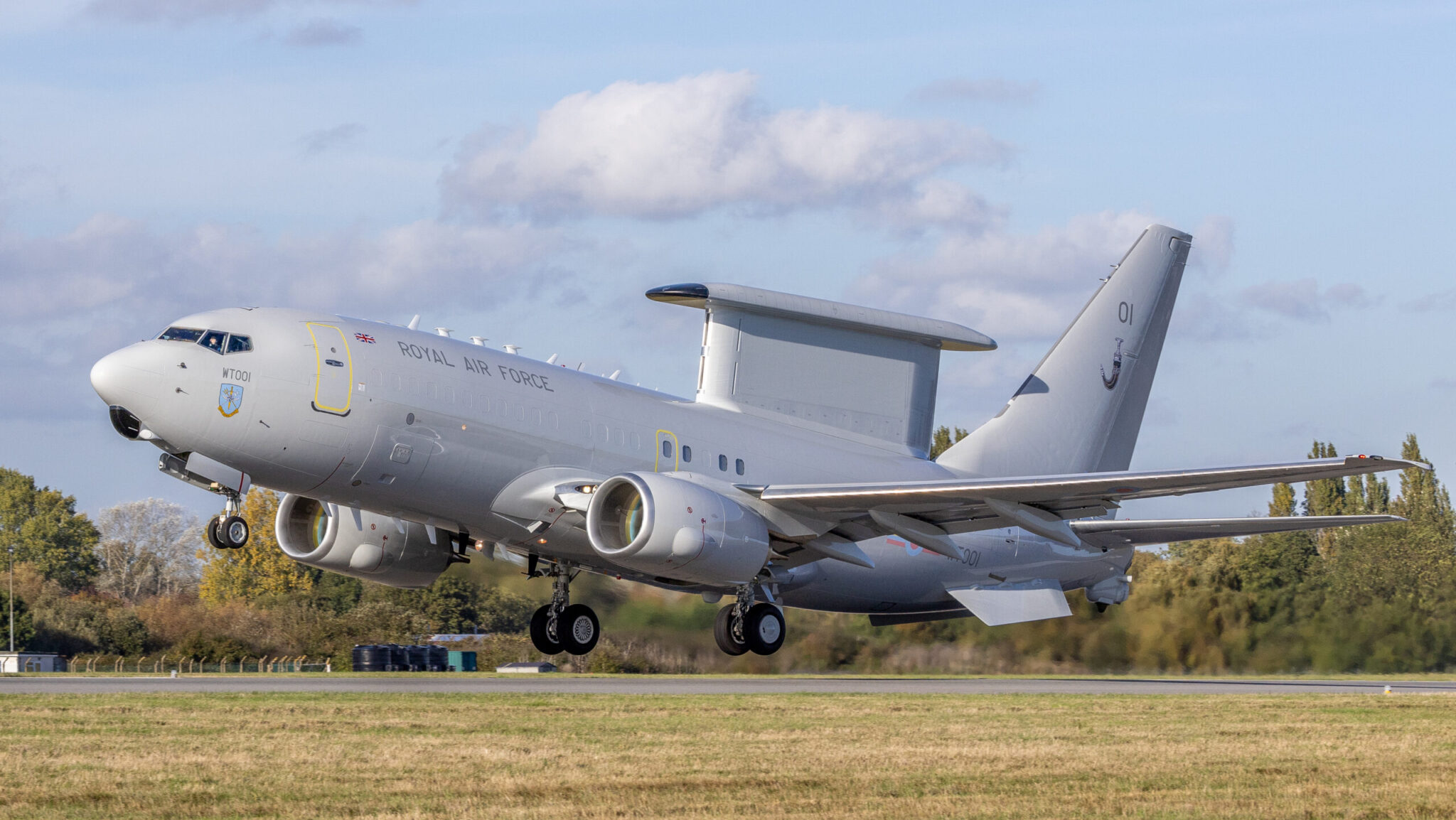
The development of the United Kingdom’s first E-7 Wedgetail Airborne Early Warning (AEW) aircraft is approaching a crucial milestone, with the platform remaining on track to provide Britain with missile threat detection capabilities once operational. This comes despite the recent decision by the US Air Force to cancel its own Wedgetail procurement program, as a UK Ministry of Defence spokesperson told Breaking Defense.
Progress Amid Uncertainty: Ground and Flight Testing Underway
The spokesperson confirmed that the initial aircraft, part of a three-plane order from Boeing, will soon commence comprehensive ground and flight testing before being handed over to the Royal Air Force (RAF). The UK’s Wedgetail program, estimated to cost £1.89 billion ($2.57 billion), had already completed three test flights as of May, according to UK defense officials. The exact number of remaining tests hinges on each test’s success.
Impact of US Air Force Cancellation: Minimal for UK Deployment?
Boeing UK declined to comment on how the cancellation of the US program might affect the UK’s efforts, pointing instead to the UK Ministry of Defence. Douglas Barrie, a senior military aerospace analyst at the International Institute for Strategic Studies, indicated that the cancellation likely won’t alter the UK’s ongoing flight test schedule or entry into service plans. He described the US decision as “an extraordinary waste of money,” emphasizing that the UK’s procurement was a separate, albeit costly, effort.
Delays and Past Challenges: Program’s Troubled Timeline
Initially planned for operational deployment in the early 2020s, the UK’s Wedgetail project has faced delays and technical hiccups. Last year, it was revealed that the aircraft would reach its initial operational capability (IOC) milestone only by 2026. Andy Start, CEO of Defence Equipment and Support, mentioned that technical and delivery issues at Boeing contributed to the program’s slippage.
Questions of Value and Future Procurement
Lawmakers have voiced skepticism about the program’s value, criticizing it in a 2023 report as “extremely poor value for money.” Still, the UK’s recently published Strategic Defence Review suggests further aircraft development could happen if funding becomes available. The original plan involved acquiring five aircraft to replace aging E-3D Sentry platforms, but this was scaled back to three due to cost considerations. The UK has also committed to purchasing all five Northrop Grumman MESA radars, which will serve as both operational sensors and spares.
Operational Role and Capabilities
Based on Boeing’s commercial 737 Next Generation aircraft, the Wedgetail conversion is performed at Birmingham Airport by STS Aviation Services. The Royal Air Force’s 8 Squadron, based at Lossiemouth, Scotland, will operate the new fleet. Boeing highlights the aircraft’s capability to detect and track multiple threats at long range, providing 360-degree coverage through the advanced MESA radar system—an essential component for early warning and maritime domain awareness.
Summary
While the US Air Force’s cancellation of its Wedgetail effort marks a setback for American procurement, the UK’s program remains on a separate and steady course toward operational readiness, likely bolstering Britain’s early-warning and missile defense posture upon completion.