A new study by the Center for Strategic and International Studies (CSIS) argues that shifting away from reliance on large, ground-based radars towards a networked layer of smaller passive sensors could „substantially improve” U.S. air and missile defenses while decreasing vulnerability to attack.
Enhancing Resilience
The CSIS authors assert that „Faced with the threat of complex and integrated attack, the existing air and missile defense architecture would benefit from a more proliferated, passive, and ultimately resilient posture. Doing so would, at long last, better align AMD [air and missile defense] operations to the strategic environment of today.”
Mesh Sensing: A Technical Dive
The study, titled „Mesh Sensing for Air and Missile Defense,” provides a detailed technical analysis of how such a network of multiple passive sensors could be designed and implemented, outlining both its advantages and disadvantages.
Poland as a Case Study
The study utilizes a hypothetical network covering Poland as an example, estimating that such a system would require 400 electro-optical and infrared sensors, connected by a robust communications and power grid. Poland’s geography was chosen because it „offers a useful test case for considering meshed sensors, with a mix of relevant topographies and an area comparable to theaters of interest, including in the Indo-Pacific.”
The Shift to Passive
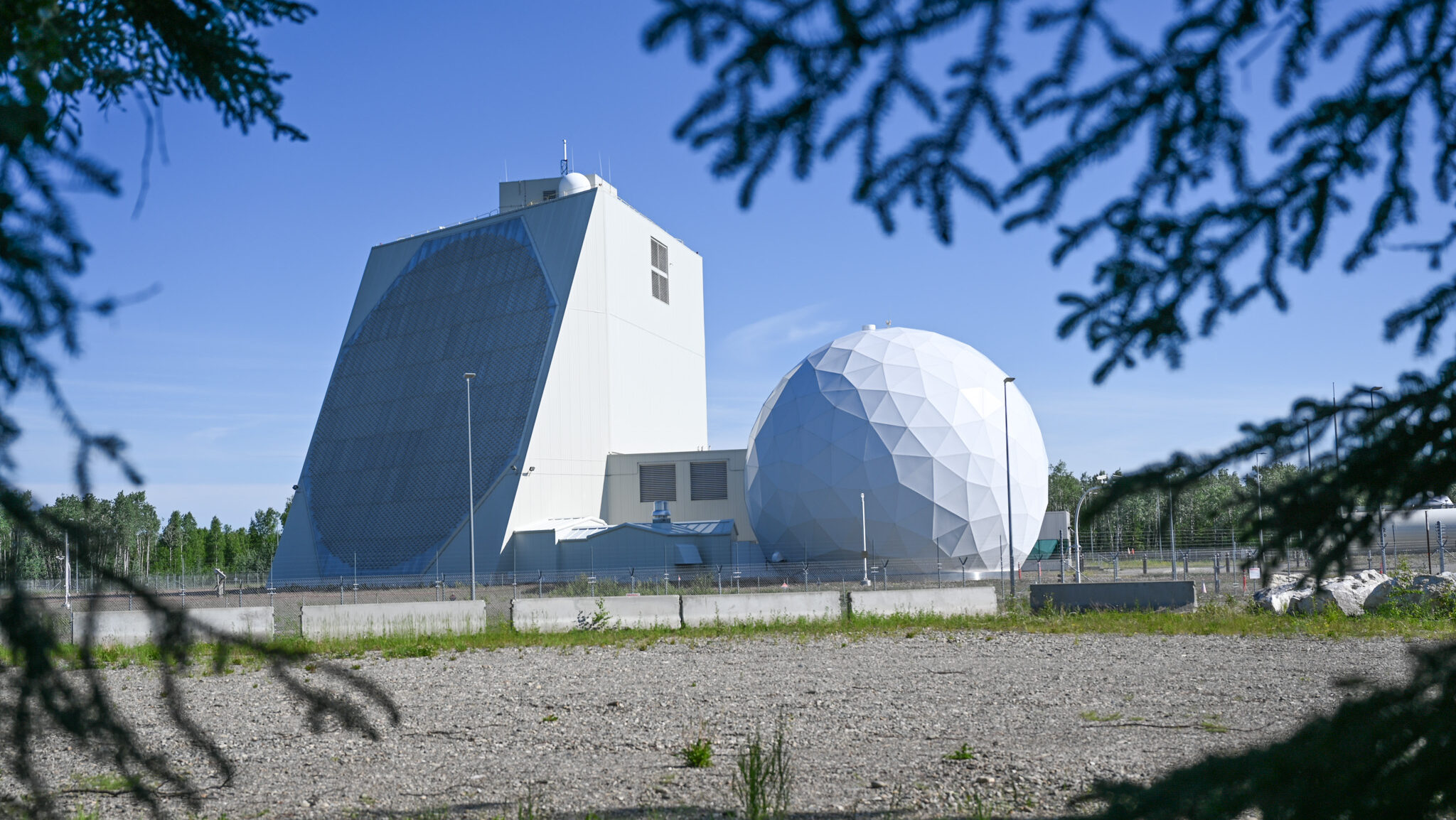
While current U.S. military air and missile defense systems rely on powerful radars that emit electromagnetic waves to pinpoint targets, these emissions make them easier for adversaries to detect and target. Passive systems, on the other hand, collect energy emanating from incoming weapon systems, making them harder to detect. Examples include Ukraine’s „Sky Fortress” network, which uses acoustic sensors, and the U.S. Army’s Army Long-Range Persistent Surveillance (ALPS) system, which employs passive radio receivers.
Weather Challenges
Passive systems face challenges, primarily degradation due to weather conditions. The CSIS study concludes that the optimal architecture would be a hybrid, integrating multiple system types. „The challenges posed by weather underscore the need to integrate meshed sensors with other passive sensing modalities and existing, active architectures. Passive, multistatic radar, passive radiofrequency detection, acoustic systems, and other approaches all stand to play potential roles,” the study says.
Overcoming Blind Spots
Even a mixed system would have limitations, particularly in tracking low-flying airborne targets due to the Earth’s curvature and terrain features. This is why satellite systems have traditionally been used to detect and track ballistic missile launches.
Complex Deployment
The placement of sensors is not a simple task. „Site selection for even an individual radar is an involved process in which potential missile launch sites, tactical mobility, and other considerations are accounted for. With more sensors involved, these problems balloon in complexity. … Computational approaches are needed to determine where to place proliferated sensors,” the study says.
Power and Communication
Ensuring access to power grids and robust communications networks is another challenge. „Sensors connected to centralized power supplies could open civilian power grids to enemy attack, demanding distributed grids with high-performance battery, solar, generator, or fuel cell supplies,” the study stresses. „Additionally, the physical communications backbone that connects gridded assets will need engineering and placement as careful as that required by the sensors themselves.”
A Difficult Path
The CSIS study concludes that while a mesh network of proliferated passive sensors offers improved performance and greater resilience, developing such architectures will be complex and likely expensive. „Much remains to be done to bring this philosophy to earth,” the study concludes.