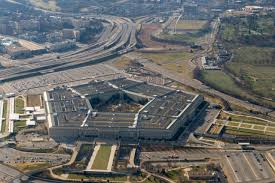
Washington D.C. – Congressional defense committees have issued detailed guidance to the Pentagon on how to spend a staggering $150 billion in supplemental defense funding, offering unprecedented insight into which programs are poised to benefit from the massive cash infusion.
Deadline Looms for Pentagon’s Implementation Plan
The House and Senate Armed Services Committees have given the Pentagon until August 22nd to submit its implementation plan, outlining whether it will adhere to the committees’ recommendations. In a July 22nd letter to Secretary of Defense Pete Hegseth, HASC Chairman Mike Rogers (R-Ala.) and SASC Chairman Roger Wicker (R-Miss.) emphasized the importance of the guidance.
„To inform the development of such plan, the committees are attaching guidance outlining the intended appropriations,” Rogers and Wicker wrote. „We value your partnership and look forward to working with you on modernizing our military, enhancing our defense industrial base and building a ready, capable and lethal fighting force that will deter America’s adversaries.”
Delving Deeper: Unveiling Specific Spending Targets
While the original reconciliation bill, signed into law on July 4th, outlined funding for major acquisitions like additional Arleigh Burke-class destroyers and F-15EX fighter jets, many funding lines remained vague, tied to broad categories such as „counter-unmanned aerial systems programs.”
The committees’ guidance provides granular spending details for these programs. Notably, the document reveals key missile defense programs slated for increased funding under the Pentagon’s Golden Dome missile shield program.
Golden Dome: A Closer Look at Missile Defense Investments
The congressional plan offers an in-depth view of Missile Defense Agency (MDA) programs receiving funding boosts as part of the Trump administration’s ambitious Golden Dome initiative.
For instance, the bill allocates $2.2 billion for „accelerated hypersonic defense systems,” with the implementation plan specifying that all funds will go to the Glide Phase Interceptor.
Similarly, the $800 million earmarked for „accelerated development and deployment of next-generation intercontinental ballistic missile defense systems” will be channeled into the Next Generation Interceptor (NGI) program. Lawmakers have further stipulated that $60 million should fund a test of the NGI’s ability to intercept an incoming missile mid-course.
Additionally, $65 million is allocated for expanding the production capacity of the Standard Missile-3 Block IIA to 36 per year. Lawmakers demand a detailed spending plan for each of these initiatives.
Air Force and Army Programs Get a Boost
The spending plan provides further detail for spending targets that benefit Air Force programs like the B-21 Raider and LGM-35A Sentinel ICBM, which would receive cash infusions of $4.5 billion and $2.5 billion respectively
An additional $1.5 billion for low-cost cruise missiles would be divvied up by providing $745 million for the Family of Affordable Mass Missile palletized munition, $500 million for the Extended Range Attack Munition developed for Ukraine and $30 million to accelerate a small cruise missile for special forces, among other projects.
The spending plan also offers insight into how lawmakers intend to supercharge munitions production, a key focus of the reconciliation process.
The ship-killing LRASM, receiving a $400 million increase, would be divided between the Navy ($288 million) and the Air Force ($112 million), totaling 240 rounds in FY26. Expanding AMRAAM air-to-air missile production, particularly the 120D variant, aims to address significant backlogs due to foreign demand and the fielding of Collaborative Combat Aircraft drone wingmen.
Meanwhile, lawmakers directed that reconciliation funds be used to reverse cuts on several development programs announced by the Army Transformation Initiative, like the Improved Turbine Engine Program (ITEP)
Additionally, $92.5 million is allocated to complete prototyping of the Robotic Combat Vehicle (RCV) program, and $250 million to buy 38 additional Armored Multi-Purpose Vehicle (AMPVs) from BAE Systems
Lawmakers are also eyeing a one-year acceleration to the Army’s Precision Strike Missile (PrSM) Increment 4 with an $85 million investment in long-lead items.
Finally the bill is also intended to provide the service with $4.5 million to spend on Anduril’s Roadrunner-Munition which contains a high-explosive interceptor meant to destroy an array of aerial threats.