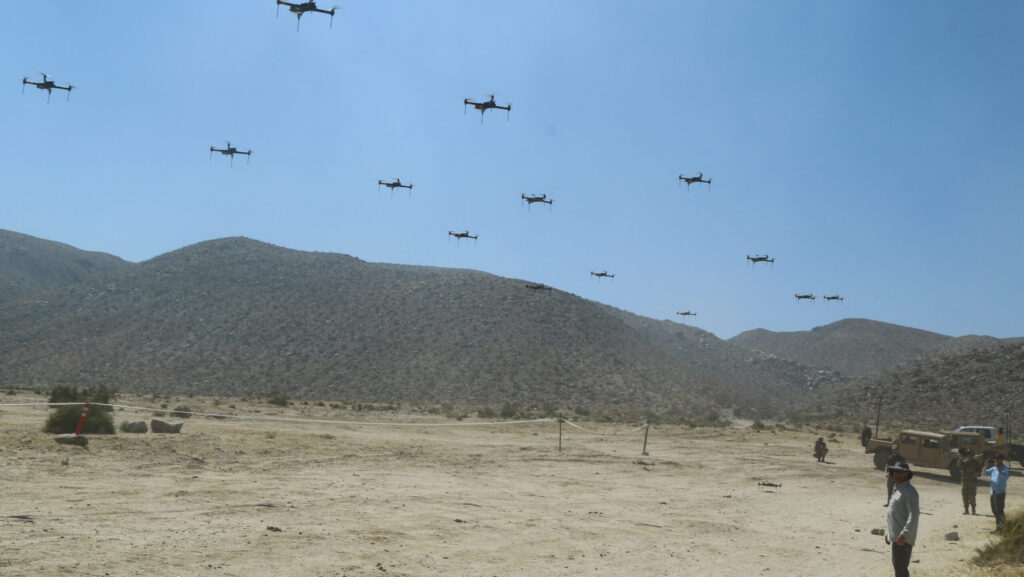
Washington D.C. – Sweeping changes to Pentagon drone policies are expected to alleviate soldier hesitancy in deploying small unmanned aerial vehicles (UAVs), spurred by concerns that bureaucratic hurdles were stifling their utilization in the field.
Army Leader Praises Policy Shift as Catalyst for Innovation
Col. Nick Ryan, Director of the Army Capability Manager for Unmanned Aircraft Systems, hailed the policy changes as a critical step forward. „Army-wide fielding of advanced UAS technologies was hindered by slow bureaucratic processes, overly restrictive policies, risk averse acquisition oversight, and sluggish budget debates that stifled innovation,” Ryan told Breaking Defense. „This new Secretary of Defense guidance cuts through that to expedite lethal UAS directly to our Soldiers.”
He emphasized the growing importance of UAS technology in modern warfare. „UAS are no longer optional. Our ability to proliferate, adapt, upgrade, and innovate our UAS technology and TTP’s [tactics, techniques, and procedures] faster than our adversary is essential to maintaining our dominance,” Ryan added.
From „Flying FLIPL” to Expendable Asset
For years, the Pentagon classified all unmanned aerial systems (UAS) as „nonexpendable property,” mandating strict accounting and tracking for each unit. The loss of a small drone, even in combat, could trigger a Financial Liability Investigation of Property Loss (FLIPL), potentially resulting in docked pay for the responsible soldier.
In October 2024, Ryan revealed that the burdensome process led some soldiers to avoid using smaller drones, with one model dubbed the „flying FLIPL.” „If they lost it or crashed it, they either had to do a ‘Hands Across America’ to go find it, [or] they had to do this FLIPL process, even in a combat zone,” Ryan explained at the time.
Hegseth’s Memo: A Call to Action
Defense Secretary Pete Hegseth’s recent „Unleashing US Military Drone Dominance” memo seeks to rectify this situation. The memo calls for arming every Army squad with small, one-way attack drones by the end of fiscal 2026.
To encourage drone use, Hegseth rolled back the blanket non-expendable policy, directing that all Group 1 and 2 drones (weighing less than 55lbs) be treated as „consumable commodities” rather than durable property. „Small UAS resemble munitions more than high-end airplanes,” Hegseth wrote. „They should be cheap, rapidly replaceable, and categorized as consumable.”
Streamlining Regulations and Training
Hegseth’s memo also directs the Chairman of the Joint Chiefs of Staff, Gen. Dan Caine, to revise Joint Unmanned Aircraft Systems Minimum Training Standards (3255.01) to exclude Group 1 and 2 drones, and revise the definition of Group 3 drones (56lbs to 1,319lbs).
Ryan explained that the memo aims to eliminate property accountability policies that hinder rapid procurement and realistic training, while also directing services to modify policies that „overregulate” UAS with unnecessary bureaucratic procedures.
Army spokesperson Steve Warren echoed this sentiment, stating, „Our intent is to make these drones, [and] in many cases, to treat them the same way we would treat other expendable [items like]…artillery shells, ammunition.”