Shifting away from internal development, the Army seeks commercial solutions for robotic platoons.
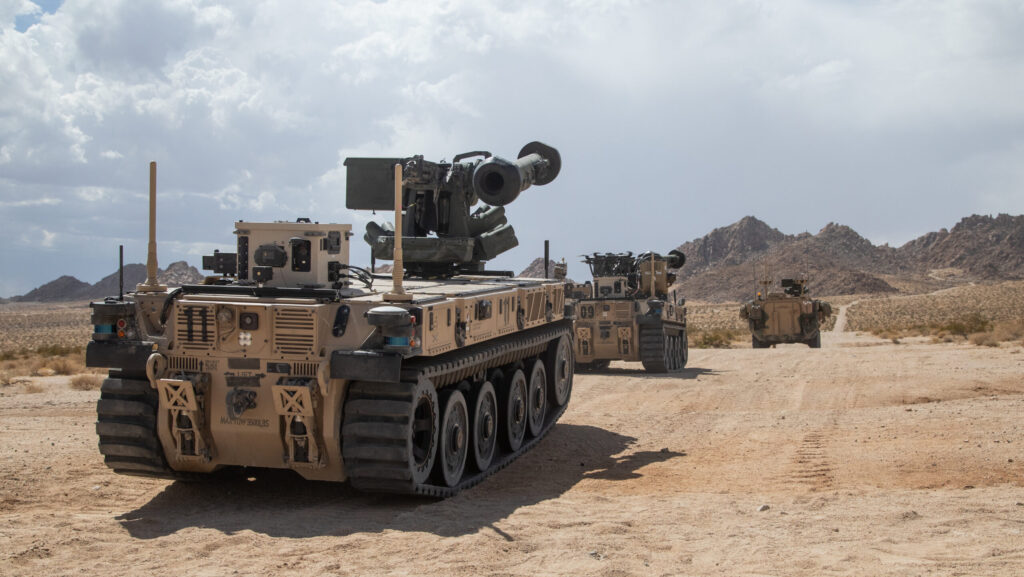
Washington, D.C. – The US Army is pivoting away from its internally developed ground autonomy software and is in negotiations with a company to integrate commercial solutions into two platoons of ground robots, according to Lt. Gen. Robert Rasch, head of the Rapid Capabilities and Critical Technologies Office (RCCTO).
Embracing Industry Expertise for Autonomy
„This was a decision to move away from just a government solution for autonomy, and bring in the best of industry to help, because we’re going to need them in the long run,” Rasch told Breaking Defense. A contract award is expected this fiscal year.
From RTK to Commercial Solutions
The Army had invested years in developing the Robotic Technology Kernel (RTK), later rebranded as the Army Robotic Common Software, as the software backbone for its envisioned ground robotic fleet. However, delays and viability questions arose, particularly regarding its use with programs like the Robotic Combat Vehicle (RCV).
Human Machine Integrated Formation (HMIF) Initiative
For the Human Machine Integrated Formation (HMIF) initiative, the Army is exploring alternative commercial solutions. HMIF aims to integrate robots and autonomous systems into Army formations.
Robotic Platoons to Undergo Upgrades
Once the deal is finalized, the selected company will integrate the autonomy software into existing ground robots and work on the Warfighter Machine Interface. These upgraded robots will be used by soldiers in a National Training Center rotation between October and December 2026.
Aiming for Intuitive Control
Rasch emphasized the goal of enabling a single operator to easily control multiple robots with their payloads, asking, „How can we make the science and art of one human being able to control lots of different things easy enough to where I don’t have to have four operators controlling a [single] robot?”
HMIF’s Potential Impact on RCV
The work on HMIF may also influence the path forward for RCV. While Textron Systems’s Ripsaw 3 had reportedly won the RCV competition, the program was identified as a potential cut as part of a budget realignment. However, lawmakers added $92.5 million for RCV prototyping.
Informing Future RCV Strategy
„There’s still some decisions that the Army is weighing on how they want to proceed [with RCV] from the overall autonomy perspective,” Rasch explained. „My hope is that the work that we’re doing on HMIF will inform that overall strategy.”