A recent collision between Chinese naval and coast guard ships highlights the dangerous consequences of Beijing’s aggressive maritime tactics.
Collision Raises Questions of Competence and Coordination
A recent incident in the South China Sea has amplified concerns over China’s increasingly assertive actions in the region. On August 11, a Chinese People’s Liberation Army Navy (PLAN) vessel collided with a Chinese Coast Guard (CCG) ship. The collision resulted in significant damage to the coast guard vessel and raised questions about the fate of sailors who were on the bow moments before impact. Chinese authorities have yet to publicly account for these sailors.
„It shows how close we are to an incident that triggers a wider diplomatic and military crisis,” said Euan Graham, an Australian Strategic Policy Institute analyst.
Blame Game and Video Evidence
Despite video evidence clearly showing the Philippine Coast Guard attempting to avoid confrontation, China has placed blame on the Philippines for the incident. The video footage reveals the Philippine ship maneuvering to evade being rammed or sprayed with a powerful water cannon by the Chinese Coast Guard.
Collin Koh, a maritime affairs expert at Singapore’s S. Rajaratnam School of International Studies, noted, „The key takeaway from this unprecedented collision was that clearly there might have been some problems in the coordination between the PLAN and CCG.” He further questioned the competency of Chinese personnel onboard both vessels, stating that the collision serves as „irrefutable evidence that China’s aggressive behavior poses not just a danger to its rivals in the SCS, but even to Chinese forces themselves.”
Growing International Response
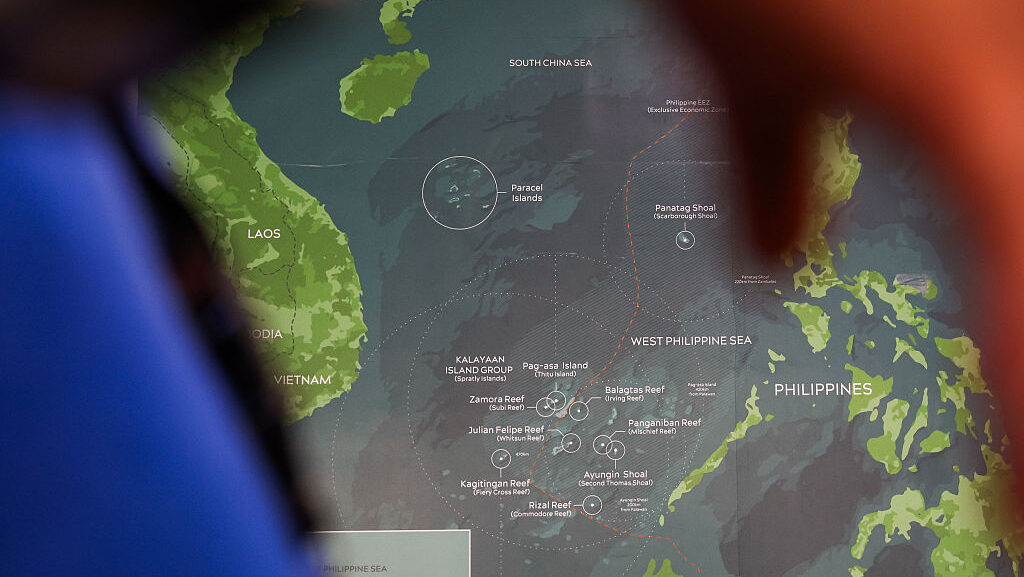
The incident occurs amidst rising tensions in the South China Sea. As China strives to assert de facto control over waters that a UN tribunal has ruled belong to the Philippines, more countries are conducting joint operations with the Philippines to counter the PLAN and Chinese Coast Guard.
Recently, the British Royal Navy’s HMS Prince of Wales aircraft carrier joined forces with ships from the United States, Australia, Japan, Norway, and Spain for a significant nine-day operation in the North Philippine Sea.
Strategic Implications and Deterrence
Experts believe that the increased military presence of the US and its allies has likely deterred even more aggressive Chinese actions. Koh argues that the continued naval presence is „at least discomforting enough for Beijing to have second thoughts about pushing the envelope of its coercive act against the Philippines.”
The Philippines has adopted an „assertive transparency strategy” of documenting and sharing videos of encounters with Chinese vessels, gaining international support.