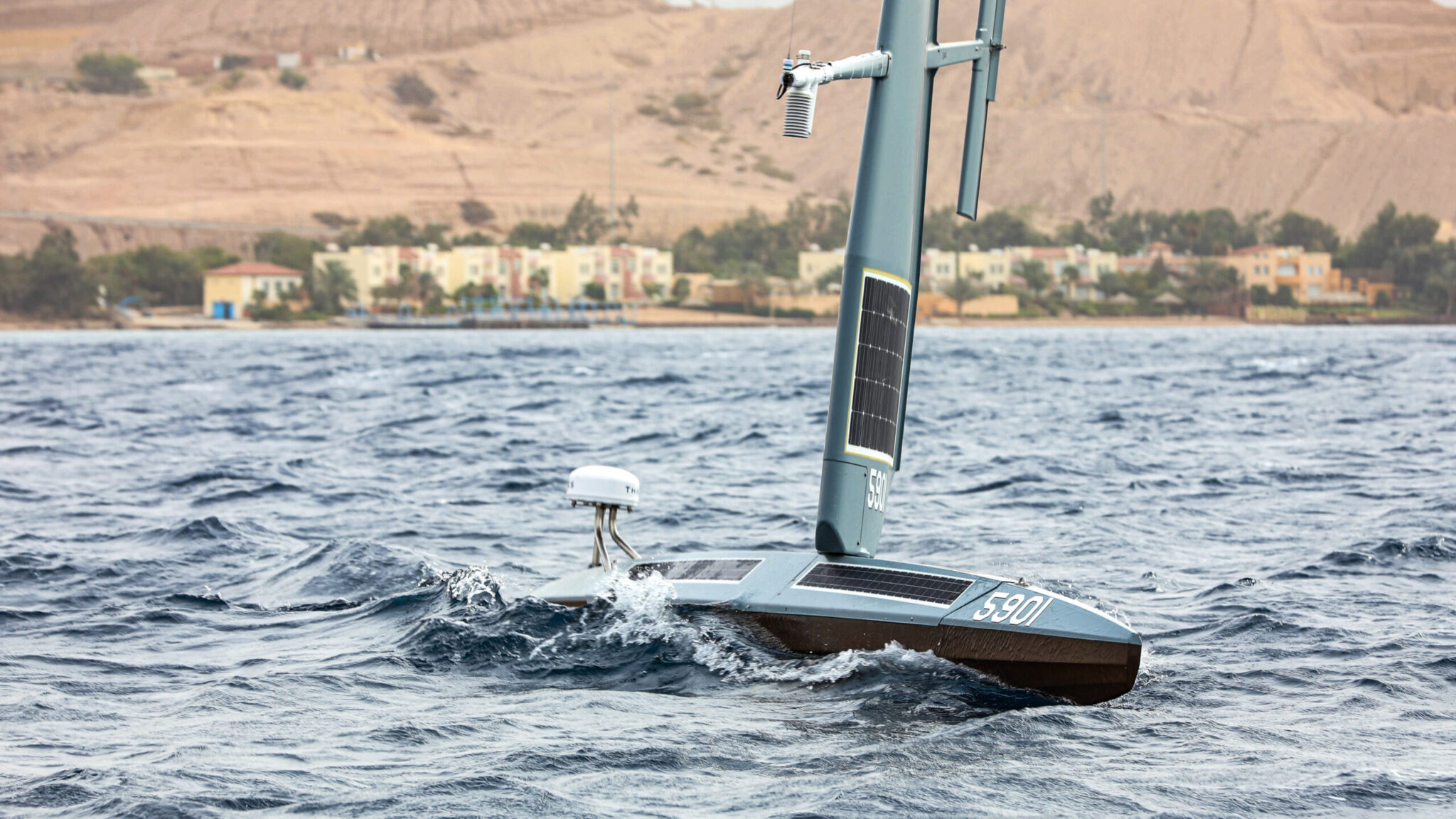
Pentagon’s New Approach Aims to Revolutionize Maritime Warfare Through Mass-Producible, Adaptable USVs
Earlier this summer, the U.S. Navy convened a gathering of industry leaders to chart the course for its unmanned surface vessel (USV) future. The turnout was remarkable, with nearly three times the number of contractors vying for a seat at the table compared to the previous year’s event.
The focal point of the discussion? The Navy’s ambitious Modular Attack Surface Craft (MASC) program. This initiative seeks to develop USVs capable of carrying diverse payloads, designed for ease of mass production and rapid repair. Eschewing prescriptive requirements, the Navy challenged defense firms to innovate, delivering tailored solutions to meet the service’s evolving needs.
Shaking Up the Status Quo
This deviation from traditional, design-mandated pitches initially sparked unease among some industry players. However, a key Navy official emphasized that this discomfort was not only anticipated but actively encouraged.
„I don’t know how many times I said it, at least the first day, probably the second day too: Be uncomfortable. It’s okay to be uncomfortable because we are challenging the status quo,” Capt. Matthew Lewis, the program manager for the service’s office overseeing its unmanned systems portfolio, told Breaking Defense.
Drawing Inspiration from Silicon Valley
The Navy’s MASC program draws inspiration from the Defense Innovation Unit (DIU), the Pentagon agency renowned for bridging the gap between the military and Silicon Valley. DIU favors problem-focused narratives and broad solution outlines over rigid specifications. This approach aims to foster innovation and agility in addressing operational needs.
The Navy’s solicitation, for instance, seeks „vessel solutions that will address up to three operational needs,” allowing for variations in payload, range, and speed depending on the problem industry tackles.
Calculated Risks for an Agile Future
While some industry players have expressed concerns about the program’s structure and the inherent uncertainty, Navy officials like Lewis and Dorothy Engelhardt, a senior civilian overseeing unmanned systems, maintain that now is the time for „calculated risks.”
Lewis emphasized that traditional approaches cannot meet the agility and timelines required. He believes that leveraging „Other Transaction Authority” and this new approach provides the flexibility to capitalize on existing company investments in independent research and development.
MASC: A Departure from the Exquisite
MASC represents a significant shift from the Navy’s previous vision for its hybrid fleet. The program prioritizes vessels that are „non-exquisite,” adhere to commercial standards, and are easily mass-produced and repaired.
Pending funding approval, the Navy will assess proposals and engage in detailed discussions with vendors in the coming months, potentially leading to a prototype production contract in early fiscal year 2026.
Overcoming the Learning Curve
Engelhardt, a veteran of the Navy’s unmanned portfolio, acknowledged the „huge learning curve” the service has faced in realizing its visions for unmanned technology. She cited challenges related to software, policy issues surrounding freedom of navigation, and the integration of unmanned systems into the broader force structure (DOTMLPF).
Policy Precedents and Industry Response
Policy choices surrounding unmanned systems, such as the concept of „optional manning,” will have a significant impact on future programs and industry decisions. While optional manning has been considered in the past, the need for habitability requirements can negate some of the cost benefits of unmanned vessels.
Another key requirement in the MASC solicitation is that proposed vessels be „constructed to an American Bureau of Shipping standard.” This requirement has already spurred increased engagement between unmanned systems vendors and ABS, an international certification agency for commercial ships.
Saronic, a USV maker led by Navy veterans, recently announced a memorandum of understanding with ABS to pursue certification for its autonomous capabilities. Saildrone also announced that its Surveyor-class USV received full classification from ABS, a first for an unmanned vessel.
Saildrone CEO Richard Jenkins believes that the Navy’s ABS requirement is driving the increased focus on certification within the industry.
A Nexus of Opportunity
Lewis believes that the confluence of technological advancements, growing industry interest, operational needs, and dedicated funding creates an environment ripe for the success of the MASC program.