Defense Innovation Unit Calls for Solutions to Thwart Maritime Border Threats
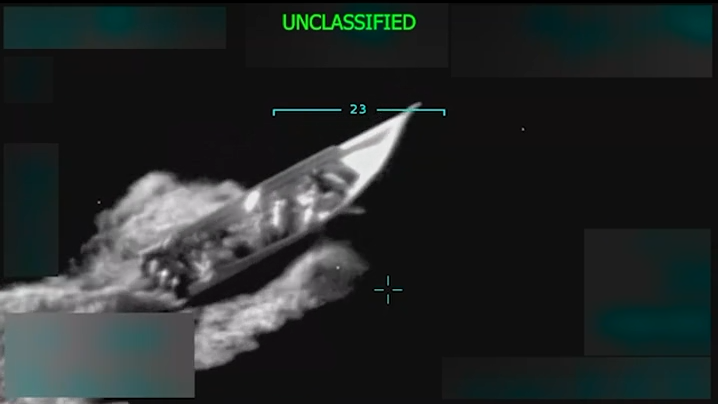
The Defense Innovation Unit (DIU), a Pentagon research agency known for its ties to Silicon Valley, is seeking non-kinetic technologies to help federal authorities disable small, high-speed watercraft breaching U.S. maritime borders. According to a solicitation published by the DIU, this initiative aims to address the growing security challenge posed by adversaries, including transnational criminal organizations (TCOs) and state actors, who use small watercraft to smuggle illicit cargo and aliens into the country.
Need for Non-Lethal Maritime Interdiction
The solicitation, addressed to industry innovators, highlights the need for solutions that can reliably stop non-compliant small watercraft without endangering Department of Homeland Security (DHS) or Department of War (DoW) personnel, operators/passengers on the non-compliant vessel (NCV), or nearby civilians. The system must be operable from a small Coast Guard boat while underway and ready for government testing within 60 days. The notice encourages creative solutions such as localized, non-kinetic energy (e.g., electromagnetic radiation), novel Electronic Attack (EA) methods, or other innovative approaches. Responses are due by September 30.
Context of Increased Maritime Enforcement
This solicitation comes on the heels of President Donald Trump’s announcement that the U.S. military had destroyed a boat allegedly carrying drugs to the U.S., resulting in three fatalities. This incident, along with other recent cases of deadly force against suspected drug runners at sea, has drawn criticism and calls for more conclusive evidence from the administration.
Escalated Federal Efforts at the Southern Border
The Trump administration has been actively tasking numerous federal agencies, including the Navy, with monitoring the U.S. southern border and its surrounding territorial waters. Earlier this year, the Pentagon deployed a Navy destroyer to assist Coast Guard units in maritime interdiction efforts—an action senior Navy officials recognized as unusual.
Navy Assessment of Maritime Support Role
As then-US Fleet Forces Commander, now Chief of Naval Operations, Adm. Daryl Caudle stated in March, „This is putting our toe in the water a bit to understand it, to make sure that we know how to employ this force. Is the return on investment for this level of capability going to return good, fruitful utilization of it?”
The DIU’s solicitation for non-kinetic technologies represents a strategic move toward more measured and safe maritime interdiction methods, amid growing scrutiny over the use of deadly force in these operations.