Maritime tech innovators Blue Water Autonomy and Saildrone have filed lawsuits against the United States Navy. The legal action follows the service’s rejection of their proposals submitted through the new Medium Unmanned Surface Vessel (MUSV) marketplace, launched this past March. These legal battles raise serious questions about transparency in one of the most ambitious programs to automate the American fleet.
Broken promises and legal battles: Claims that the Navy ignored its own procurement rules
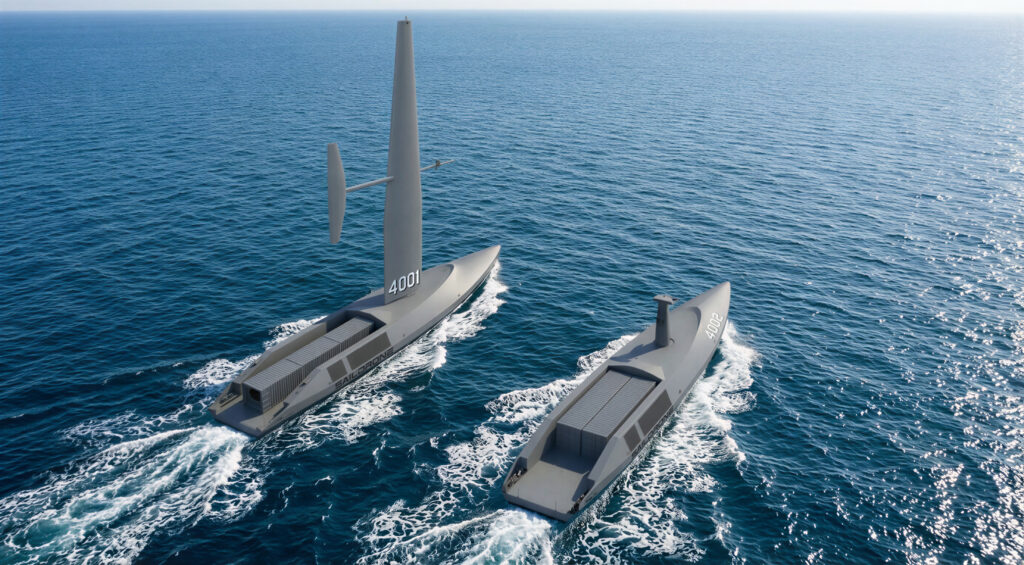
According to the unsealed legal complaints, both companies claim that their designs fully satisfied the military’s technical requirements. The firms allege that the Navy failed to adhere to the guidelines outlined in its own Request for Proposals (RFP), eliminating them from the competition based on conclusions that do not align with official documentation. Neither Saildrone’s „Spectre” nor Blue Water Autonomy’s „Liberty” designs were selected for the sea-based testing phase, which is expected to conclude in October.
The situation is particularly volatile for Blue Water Autonomy, as the company had been previously selected for a predecessor program before it was abruptly canceled by the Navy. Based on those initial positive signals, high-tier investors like Google Ventures injected significant capital into developing these autonomous solutions—investments that are now jeopardized by what the firms describe as an „arbitrary and premature exclusion.”
A multibillion-dollar standoff: Startups push to halt the MUSV program
In its complaint, Blue Water Autonomy has gone as far as asking the court to effectively freeze the program, halting further testing and the awarding of future contracts until the Navy re-evaluates its proposal in accordance with the law. The company is seeking a fair opportunity to demonstrate its prototype’s capabilities before the program’s massive funding is permanently allocated to other competitors.
Meanwhile, Saildrone asserts that its vessel met or exceeded every mandatory acceptability criterion and had already received certification from the American Bureau of Shipping in late 2025. While Saildrone is not asking to pause the entire process for other participants, it is imperatively demanding a legal re-evaluation, pointing out that other selected firms faced more significant issues regarding design maturity or manufacturing readiness.
Private innovation versus military bureaucracy: High-level frustrations within the Pentagon
This legal dispute highlights the growing friction between the fast-moving private tech sector and the Pentagon’s rigid procurement processes. The Navy justified its shift in acquisition strategy by citing a desire to move rapidly from prototyping to serial production, claiming that enough mature platforms already exist on the market. However, military leaders have publicly acknowledged their own frustrations with how slowly new technologies are being integrated into the fleet.
In June, the Navy announced that seven major firms, including Leidos and Huntington Ingalls Industries, had advanced to the at-sea testing phase. Funding for this marketplace is derived from a massive spending bill passed in July 2025, which allocated approximately $2.1 billion specifically for MUSV development. It remains to be seen whether judicial intervention will force a recalculation of the U.S. naval armament strategy.