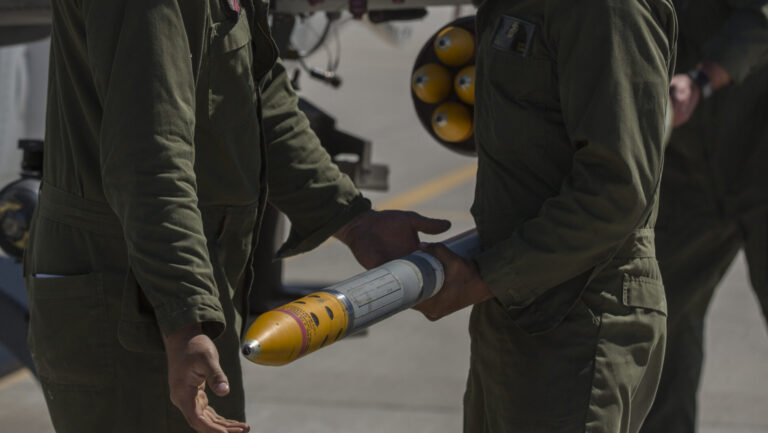
The US State Department has cleared a potential Foreign Military Sale of high-precision weapons to the Kingdom of Saudi Arabia, in a deal valued at approximately $1.96 billion. The agreement focuses on equipping Saudi forces with advanced technology capable of converting conventional rockets into smart weapons, providing an efficient solution to modern aerial threats.
Low-cost efficiency: Turning simple rockets into high-precision interceptors
Saudi Arabia’s request includes 20,000 APKWS-II (Advanced Precision Kill Weapon System) units, half of which are designed for air-to-air guidance, with the remainder for air-to-ground operations. In addition to these conversion kits, the package includes LAU-131 launchers, high-explosive warheads, rocket motors, and training equipment.
The primary advantage of these systems is the ability to convert relatively inexpensive unguided rockets into precision interceptors. This technology allows the Saudi Air Force to respond effectively to attacks without deploying disproportionately expensive military resources for small-scale targets.
Riyadh’s defense strategy: Protecting Patriot systems from cheap drone attacks
A critical aspect of this acquisition is the protection of the Patriot missile stockpiles, which are extremely costly. Military experts emphasize that using APKWS-II systems allows for the interception of cheap drones used by adversary groups without depleting the strategic ammunition of high-altitude air defense systems.
This capability is considered vital as drone swarm attacks have become a frequent tactic in regional conflicts. Through this technology transfer, Saudi Arabia enhances its self-defense capacity and its interoperability with American forces stationed in the Gulf region.
A diplomatic reset: Gulf security amidst tensions with the Houthi group
The proposed sale comes at a moment of high tension, following the recent breakdown of a four-year truce between Saudi Arabia and the Iran-backed Houthi group in Yemen. The State Department highlighted that this transaction supports US foreign policy goals by strengthening the security of a Major non-NATO Ally, considered a pillar of political stability and economic progress in the region.
For Riyadh, this deal represents not only a technical modernization but also a „pragmatic reset” of relations with Washington, driven by the need to counter asymmetric threats at its borders. Although BAE Systems has been identified as the prime contractor, the final implementation of the deal depends on further negotiations and potential reviews by the US Congress.