Amidst growing concerns over foreign arms embargoes, Israeli Prime Minister Benjamin Netanyahu recently declared his ambition for Israel to achieve greater self-reliance in defense production, envisioning the nation as a „super Sparta.” However, analysts tell Breaking Defense that while increased domestic defense capabilities are desirable, the defense industry’s capacity for complete self-sufficiency has limits.
The Limits of Total Independence
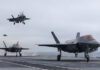
Yaakov Amidror, former National Security Advisor to Netanyahu, stated, „Israel will not be totally independent. It will not produce F-35s or submarines, for example, but Israel can be and should be less dependent on others regarding munitions and spare parts.”
Netanyahu’s Call for Self-Reliance and Subsequent Clarification
Netanyahu acknowledged Israel’s „sort of isolation” economically in a Sept. 15 speech. He stated, „I am a believer in the free market, but we may find ourselves in a situation where our arms industries are blocked. We will need to develop arms industries here — not only research and development, but also the ability to produce what we need.” Following a backlash, Netanyahu clarified that the defense industry was already thriving, but reiterated the need for „security independence.”
Export-Oriented Economy Presents Challenges
Eran Lerman, former Deputy for Foreign Policy and International Affairs at the National Security Council, noted that Netanyahu quickly walked back his initial comments about complete self-reliance because „it simply cannot work in an economy fully geared towards export.” Lerman, now Vice President of the Jerusalem Institute for Strategy and Security, added that generating alternatives to supply chains makes sense, but characterizing this goal with the „red battle cloak of Sparta was an obvious mistake.”
The Crucial Role of U.S. Support
Yaakov Katz, author of Shadow Strike and a fellow at the Jewish People Policy Institute, agreed that while self-reliance is important, Israel cannot realistically produce major platforms like warplanes. He emphasized the importance of U.S. support, stating, „Without spare parts, maintenance, and more from the US, Israel will not be able to fly and hence, will not be able to fight. So while independence is important, so is ensuring we have bipartisan support in the US for decades to come.”
Embargoes and Record Export Sales
Despite some European nations announcing arms embargoes to Israel over its actions in Gaza, Washington has maintained its close relationship with Jerusalem. Israeli defense firms have, in fact, recorded record export sales amidst the ongoing conflict with Hamas.
Investing in „Blue and White” Industries
Israel has been investing in domestic defense contracts, aiming to bolster local industries and create „manufacturing independence.” This includes manufacturing munitions and repairing and producing tanks.
Establishment of a National Armament Council
As part of the self-reliance drive, Israel is establishing a National Armament Council. Israel Ministry of Defense Director General Amir Baram said the council will „accelerate our preparedness for third- and fourth-tier threats dramatically” by uniting stakeholders from various sectors.
Baram emphasized that „security and economic strength are inextricably linked, particularly in Israel. Fundamental security is a cornerstone of national security — alongside robust economics, social cohesion, and cutting-edge technology.”