Trilateral Meeting Between Germany, France, and Spain Delayed as Questions Loom Over Future of Ambitious Defense Project
Berlin – A crucial meeting among key stakeholders in the Future Combat Air System (FCAS), one of Europe’s most ambitious and scrutinized defense endeavors, has been postponed indefinitely. The delay represents the latest setback in a development process plagued by persistent challenges.
„The date of the trilateral meeting has been postponed,” a spokesperson from Germany’s Federal Ministry of Defence confirmed to Breaking Defense. „The Federal Government continues to strive for the successful implementation of the project. We are in close contact with our French and Spanish partners to determine a new date for this meeting.”
Uncertainty in Paris
While the spokesperson refrained from disclosing the specific reason for the postponement, it coincides with significant political upheaval in Paris, as French President Emmanuel Macron prepares to appoint a new prime minister today. As of now, the French Armed Forces ministry and Spain’s Ministry of Defense have not yet responded to requests for comment.
Doubts and Eyebrows
This delay is accompanied by recent concerning remarks from industry officials, intensifying concerns about the project’s viability and the potential consequences for its participants should it collapse.
Berlin at Greater Risk
Despite the challenges, three close observers of the program suggest that FCAS is not yet beyond hope. However, they caution that if the program fails, the repercussions could be more severe for Berlin than for Paris. France may possess the capacity to pursue its own sixth-generation fighter program independently, leaving Spain’s future involvement uncertain.
„I think they [France] probably can” produce a future fighter jet alone, but „it will be expensive,” Douglas Barrie, a senior fellow for military aerospace at the UK-based International Institute for Strategic Studies (IISS) think tank, told Breaking Defense.
Leadership Dispute
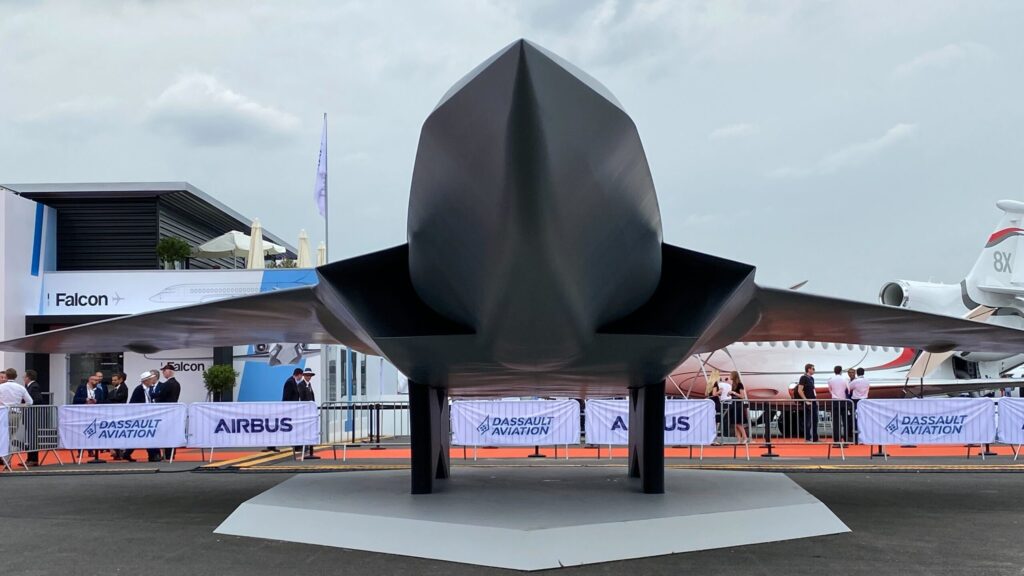
FCAS, intended to replace Eurofighter Typhoon and Rafale fighter jets by 2040, has encountered persistent difficulties since 2021. The core issue lies in the complex partnership between Airbus and Dassault, with the latest power struggle revolving around the French manufacturer’s demand for greater control over the New Generation Fighter (NGF), the central aircraft within the FCAS framework.
Dassault CEO Eric Trappier has emphasized that FCAS is destined for failure unless his company is designated as the „clear leader” of the program, as reported by Flight Global. The program’s future hangs in the balance as these internal disputes and external uncertainties persist.