NDAA Moves to Conference as Lawmakers Address Acquisition Reform and Funding Discrepancies
The Senate has finally approved its $913.9 billion version of the fiscal year 2026 defense policy bill after overcoming a month-long impasse on amendments.
The National Defense Authorization Act (NDAA) passed with a vote of 77-20, signaling strong bipartisan support.
With the Senate’s approval, the House and Senate armed services committees can now begin the conference process, where lawmakers will work to reconcile the differences between their respective versions of the bill. The House passed its version of the NDAA last month.
Breaking the Stalemate
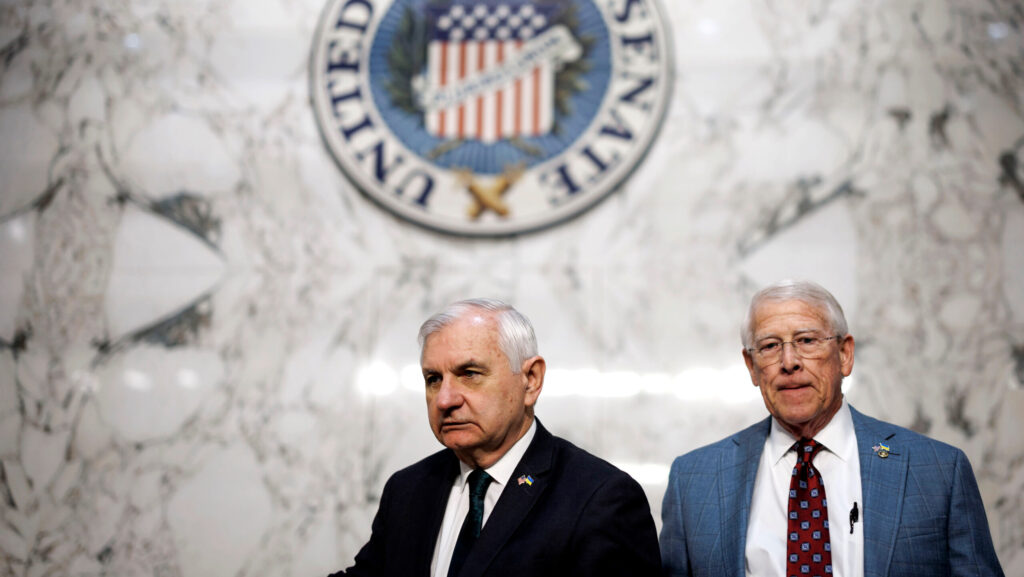
Earlier in the day, Senate Armed Services Committee (SASC) Chairman Roger Wicker, R-Miss., announced that Republican and Democrat leaders had reached an agreement to debate 17 amendments, split between the two parties, and urged the Senate to vote on the NDAA.
„We simply cannot delay this process any longer,” Wicker stated on the Senate floor. He warned that further delays would force a small group of senators to write the bill, bypassing proper deliberation.
Amendment Battles
During a „vote-a-rama” on NDAA amendments, Senate Republicans defeated an amendment that would have prohibited the use of FY26 funds to modify aircraft from a foreign government. This measure aimed to prevent a Boeing 747 donated by Qatar from being converted into a new Air Force One aircraft.
Senate Minority Leader Chuck Schumer, the amendment’s sponsor, argued that retrofitting the foreign-owned luxury jet would waste hundreds of millions of taxpayer dollars.
Sen. Deb Fischer, who leads SASC’s strategic forces subcommittee, contended that the amendment’s scope could impact the Air Force’s Survivable Airborne Operations Center program, which is using two Boeing 747s previously owned by Korean Air.
Republicans also rejected several Democrat-led amendments seeking to limit National Guard deployments without a state’s governor’s permission and to place additional restrictions on military collaboration with law enforcement.
Bipartisan Agreement on Drone Defense
In a rare display of bipartisanship, senators passed an amendment offered by Sens. Tom Cotton, R-Ark., and Kirsten Gillibrand, D-N.Y., granting the Defense Department additional authority to counter drone threats over military installations.
Gillibrand noted that numerous drones have been spotted near military installations, including sensitive sites like Langley Air Force Base, but current laws provide limited authority to mitigate these threats.
Cotton added that the language would „close the gap in law [and] simplify military guidance” on the topic.
B-1 Bomber Retirement Delay
Senators also agreed to an amendment to extend an existing prohibition on B-1 bomber retirements until the end of FY30, a move that Sen. John Cornyn, R-Texas, said would prevent a gap between the B-1’s sunset and the deployment of the B-21 Raider.
Conference Priorities
As the legislation progresses to conference, acquisition reform will be a top priority for HASC and SASC leadership.
Members of the conference will also need to address the funding discrepancies between the two bills, with the Senate’s NDAA adding $32 billion more than the Pentagon’s budget request and the House version. The NDAA’s final dollar figure could influence an upcoming spending debate on whether to accept the higher defense topline backed by the Senate Appropriations Committee, which added $22 billion on top of the department’s request.