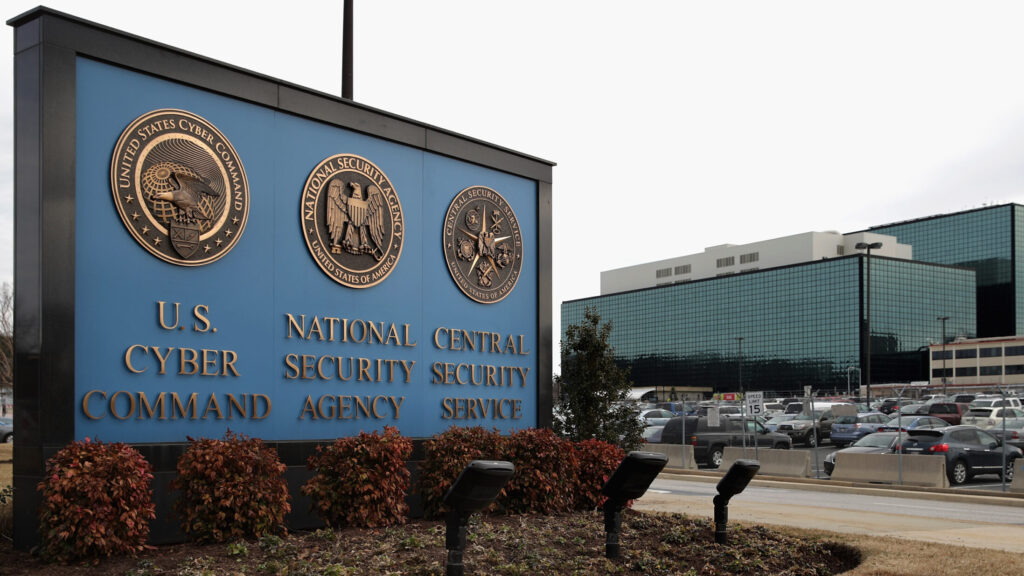
Prolonged Absence of Senate-Confirmed Leader Undermines U.S. Cyber Defense Capabilities
For nearly seven months since the Trump administration fired Gen. Timothy Haugh, commander of US Cyber Command and director of the National Security Agency (NSA), experts, former military officials, and even a congressman are raising alarm bells about the negative impact of this absence on America’s cyber preparedness.
According to eight sources, the lack of a leader is undermining the administration’s stated goals and military readiness. This unprecedented situation raises serious questions about the U.S.’s commitment to cybersecurity.
Congressman Don Bacon: Administration’s Neglect Endangers the Country
„It’s heartbreaking to see what’s going on with the cyber domain and the NSA under this administration. I say this as a Republican,” said Congressman Don Bacon, a member of Congress from Nebraska and chairman of the Subcommittee on Cyber Oversight within the House Armed Services Committee. „Seven months have passed. It’s inexcusable and shows a total lack of respect from the administration and the Secretary of Defense for this mission.”
Bacon and other experts point out that the U.S. is „under cyberattack every day,” and there is no one at the helm of the military and intelligence agency responsible for defending against these attacks and launching offensives.
Interim Leaders and Uncertainty: A Hindrance to Cyber Capability Development
Currently, Lieutenant General William Hartman, Deputy Commander of CYBERCOM, is serving as the acting commander of the organization and the acting director of the NSA. This situation is problematic because the Deputy Commander of CYBERCOM, while having a working relationship with the NSA, is organizationally separate from the agency.
A former high-ranking military official stated that they cannot imagine the leadership roles at Central Command, European Command, and Indo-Pacific Command being left vacant for so long. While those regions face their own threats, the nation faces persistent cyber intrusions on a daily basis.
In the past seven months, several names have emerged as potential candidates, such as Lieutenant General Richard Angle, commander of the Allied Special Operations Forces Command and Special Operations Command Europe. However, the White House rejected this choice. The Record reported that Lieutenant General Paul Stanton and Lieutenant General Thomas Hensley are now the leading candidates.
White House Promises a Nomination, But Experts Warn of Risks
White House spokesperson Anna Kelly told Breaking Defense that the administration „will make a nomination for US Cyber Command at the appropriate time. In the meantime, we remain fully equipped to deal with any potential cyber threats. Stay tuned!”
However, Erica Lonergan, assistant professor at Columbia University and adjunct at the Foundation for Defense of Democracies Center on Cyber and Technology Innovation, warns that every day of delay in nominating and confirming a leader is a bad day for America’s interests.
Haugh’s Surprising Dismissal: Unclear Reasons and Political Speculation
In April, Haugh was dismissed after only one year in office. The administration did not provide an official reason for his dismissal, although it has been linked to political activist Laura Loomer, who urged President Donald Trump to dismiss certain officials for their alleged lack of loyalty to his agenda and who took credit for the dismissal.
Serious Consequences: Unclear Priorities, Delayed Operations, and Reduced Influence
Experts warn that the risks of a prolonged leadership absence are multiple.
Kori Schake, senior fellow and director of foreign and defense policy studies at the American Enterprise Institute, said that „the risk of leaving the post vacant is that there is no one to set priorities, ensure compliance with administration priorities, authorize operations, and aggressively pursue threats.”
Mark Cancian, a senior advisor at the CSIS Defense and Security Department, noted that CYBERCOM was created to increase attention on the cyber domain. The lack of a four-star commander reduces the influence of cyber in the decision-making process at the highest level.
Interim leaders are limited in what they can do, and the pace of operations may slow down as they may hesitate to launch major initiatives. Also, the ability to coordinate efforts through government agencies may be affected.
Impact on Major Initiatives: CYBERCOM 2.0 and the Cyber Warfare Architecture
CYBERCOM is in the midst of several major efforts, such as the implementation of its new acquisition and budget authorities, the construction of the Cyber Warfare Architecture (Joint Cyber Warfighting Architecture), and the holistic revision of the command, called CYBERCOM 2.0. These areas cannot advance without a Senate-confirmed leader to put their stamp on them and lead them in the desired direction.
Discussions with the House of Representatives and the Senate can also be affected, as Congress exercises oversight and proposes legislative initiatives. A four-star official, confirmed by the Senate, can help guide discussions and initiatives with Congress.
NSA: A More Pressing Issue?
While most experts are concerned about the lack of leadership at CYBERCOM, Lonergan believes that the lack of a leader at the NSA may be a more pressing issue.
„Signal information is so fundamental to our understanding of the threat environment and the capabilities and intentions of our adversaries. The NSA is such an important part of our intelligence community and is so important as a combat support agency,” she said.
The Administration’s Commitment to Cybersecurity: Divided Opinions
Opinions are divided as to whether the lack of a candidate says something about how the administration values cyber capabilities. Some point to the Trump administration’s efforts to be more aggressive in cyberspace as evidence that the White House is committed and has simply not found the perfect choice for the position, while others have expressed disappointment with the lack of a candidate.
The Duality of Leadership: A Reignited Debate
This situation has reignited the debate about the need to separate the leadership roles of CYBERCOM and NSA, an existing structure for 15 years.
Supporters of the current arrangement believe that the military can benefit from the unique information and resources of the NSA, leading to faster decision-making and operational outcomes. Opponents argue that the roles of NSA Director and CYBERCOM Commander are too powerful to be held by one person.
Jason Healey, a senior researcher at Columbia University, said that „this vacancy shows some of the hidden risks of the leadership duality relationship, which has long expired. On a daily basis, this reliance on a key person simply meant that the commander with a dual role was overstretched. Now that the position is vacant, the military is receiving a double blow, losing two key leaders, not just one.”
Congressman Bacon said there is no appetite in Congress to confirm a candidate who does not hold both positions, warning that a separation of leadership would receive minimal support in Congress.
In conclusion, the prolonged absence of a Senate-confirmed leader at CYBERCOM and NSA poses a serious threat to U.S. cybersecurity. The urgency of this situation requires swift action from the administration to nominate and confirm a leader capable of protecting the country from increasingly sophisticated cyber threats.