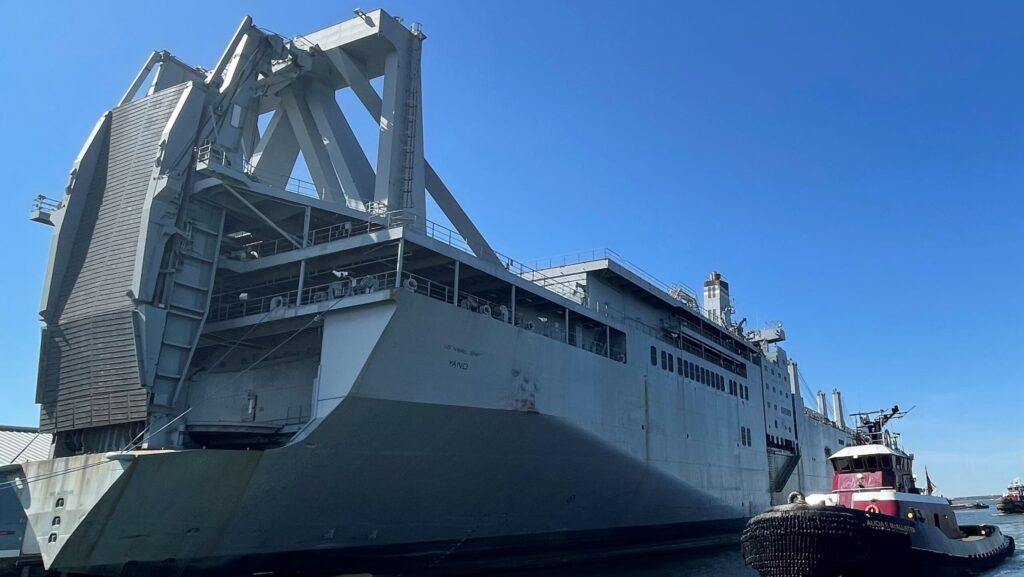
In a potential conflict with China, America’s most critical vulnerability would not be its destroyers, stealth bombers, or submarines, but the unglamorous network of ships, aircraft, and supply depots that keep them fighting. Logistics—the bridge between the national economy and combat forces—is the weakest link in the American deterrence system.
A Bridge Crumbling
After decades of neglect, this bridge is crumbling, and Beijing knows it. Deterring China requires the US build up not only front-line combat forces, but also its logistical infrastructure.
The US logistics enterprise is optimized for peacetime efficiency, a euphemism for cost-cutting. American maritime logistics system, essential for sustaining a fight across the vast Pacific, is particularly brittle and unprepared for a protracted conflict. During World War II, America commanded over 6,000 merchant ships to supply allied forces. Today, fewer than 200 US-flagged oceangoing commercial vessels remain.
A Hollowed-Out Force
The decline is systemic. The Military Sealift Command, the Navy’s logistics backbone, faces such severe personnel shortages that it is decommissioning ships it cannot crew. The Ready Reserve Force, the US surge fleet for emergencies, is a floating museum; the average ship is over 40 years old, with many struggling to meet activation deadlines due to poor maintenance. This hollowed-out force would likely become a top target in the opening hours of a war.
Deterrence Undermined
This logistical deficit directly undermines deterrence. While the best public wargames suggest the US would win a war against China today, Washington’s advantage is shrinking. As INDOPACOM commander Adm. Samuel Paparo notes, we are operating on “narrowing margins.” China’s leaders may believe they could triumph in a long war by simply wearing out US supply lines. For example, Beijing could mobilize its forces and keep them at a high state of readiness, forcing the US into a costly, draining counter-mobilization that exhausts our logistics before a shot is even fired. If Beijing believes we lack the endurance for a protracted fight, it may be tempted to start one, assuming our will—and that of our vulnerable allies—will crumble over time.
A Historic Warning
History offers a stark warning. President Franklin D. Roosevelt’s 1940 decision to move the Pacific Fleet to Pearl Harbor was meant to deter Japan. But the forward-deployed fleet was not logistically supported for sustained combat. This vulnerability didn’t deter Japan; it invited attack. Today, we risk repeating this mistake on a grander scale, deploying forces without a credible plan to sustain them under fire.
Urgent Solutions
While the challenge is immense, it is not insurmountable. Averting a logistical catastrophe requires urgent, targeted action in three areas.
- Partner with allies: Build a resilient, shared logistics network.
- Refocus domestic investment: Allocating funds to the logistics ecosystem.
- Revitalizing the national maritime enterprise: Modernizing the fleet and training the new generation of sailors.
The costs of rebuilding our logistics capacity are substantial, but they pale in comparison to the cost of failure. By investing in resilient regional logistics, Washington can send an unmistakable, bipartisan signal to Beijing that China has no quick and easy pathway to dominate its neighborhood by force.
The essential bridge between economic might and military effectiveness must be restored as a foundational pillar of our national strategy. It is the delivery system for the arsenal of democracy.