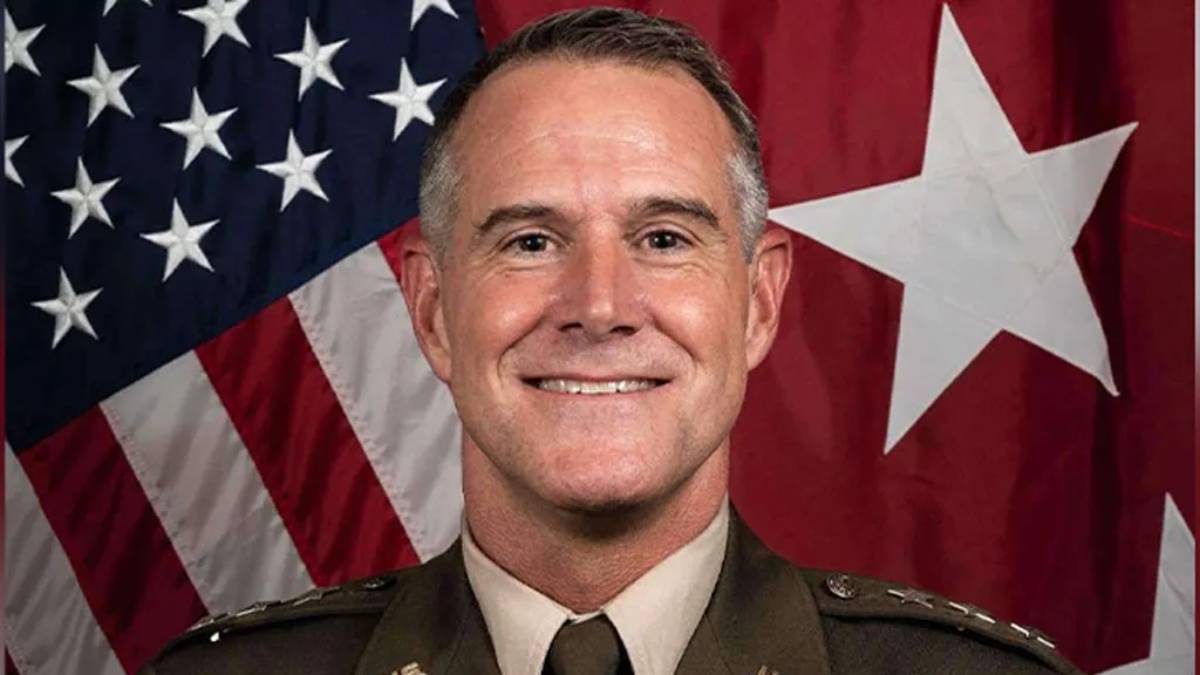
Though lacking official White House confirmation, strong signals indicate that Lt. Gen. Joshua Rudd, a senior Army official from US Indo-Pacific Command, has been selected to head both US Cyber Command and the National Security Agency (NSA). This anticipated nomination comes after an eight-month vacancy in these critical cybersecurity roles, already raising questions about the necessary qualifications to navigate unprecedented digital threats.
A Long-Awaited, Yet Ambiguous, Nomination
Senator Mark Warner, vice chairman of the Senate Intelligence Committee, confirmed that lawmakers have received Lt. Gen. Rudd’s nomination for the dual-hatted posts. “I look forward to reviewing Lt. Gen. [Joshua] Rudd’s nomination and evaluating his qualifications to lead the NSA and U.S. Cyber Command at a moment of unprecedented cyber and national security threats,” Warner stated, adding a critical note: “That said, it should never have taken this long to nominate someone to this critical post.” The Congressional Record on Tuesday showed Rudd had been nominated to the rank of general – a prerequisite for the dual role – yet a White House official maintained earlier that “no such nomination has been transmitted to the Senate,” creating an unusual discrepancy.
The Troubled Path to Leadership
The top positions at US Cyber Command and the NSA have remained empty for nearly eight months, following the abrupt firing of Gen. Timothy Haugh and his NSA deputy Wendy Noble in April. This dismissal was met with controversy, with far-right activist Laura Loomer publicly claiming responsibility, alleging the pair were “disloyal” to then-President Trump. In Haugh’s absence, Lt. Gen. William Hartman, who served as Haugh’s CYBERCOM deputy, has been acting as the interim chief. However, recent reports suggest Hartman was ultimately not considered a top contender for the permanent role.
Experience vs. Expertise: A Defining Debate
According to his Department of Defense biography, Lt. Gen. Joshua Rudd possesses extensive experience in special operations but no listed background in cybersecurity or related digital network portfolios. This profile has fueled debate over the ideal qualifications for leading two of the nation’s most sensitive security agencies. Republican Sen. Mike Rounds of South Dakota, a member of the Senate Armed Services and Intelligence committees, weighed in on the discussion at last month’s Aspen Cyber Summit. He suggested that deep cyber warfare experience is not necessarily a mandatory requirement for the leadership position. “Do you have to have specific knowledge of it to come in to manage it and operate it? It helps but it’s not necessarily mandatory,” Rounds explained, arguing that personnel in the field are “using it every day as a user, so they kind of have an understanding of what it is to begin with.” Thus, Rudd’s challenge will be to demonstrate that his strategic and leadership acumen can bridge any perceived gap in direct technical cyber expertise in an ever-evolving digital landscape.