Beneath the spectacle of joint military exercises, a strategic shift is underway as Egypt strengthens ties with Beijing, challenging the cornerstone of US policy in the region.
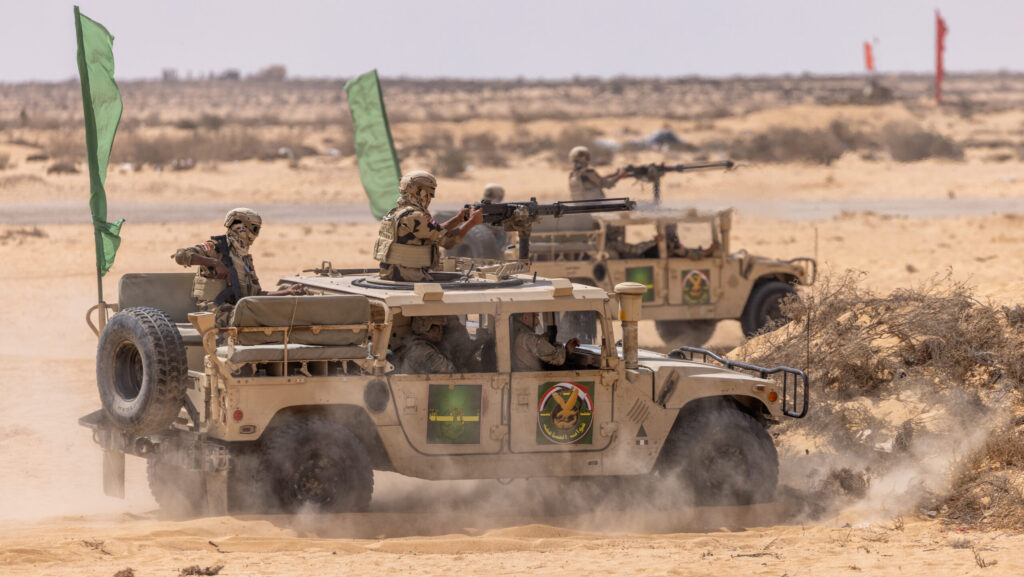
While the echoes of Chinese fighter jets faded from Egyptian skies in May, the rumble of American armor dominated the desert earlier this month. Bright Star 25, a massive multinational military exercise co-hosted by Egypt and the United States, concluded on September 10, showcasing a formidable display of military might.
A Show of Force: Bright Star 25 in Detail
The drills involved approximately 1,500 American personnel operating advanced equipment like M1A2 Abrams tanks and F-16 fighter jets. With participation from 44 nations, including key regional players like Cyprus, Greece, and Saudi Arabia, the exercise simulated amphibious assaults, irregular warfare scenarios, and joint task force planning.
At first glance, Bright Star 25 would appear to cement Washington’s relationship with Cairo as a bedrock of US strategy. However, beneath the surface, a concerning trend is emerging: Egypt’s deepening alignment with China.
Eagles of Civilization: A Glimpse of China’s Ascendance
Just months before Bright Star, Egypt hosted „Eagles of Civilization 2025,” the largest Sino-Egyptian military exercise to date. Featuring cutting-edge Chinese aircraft, including J-10 fighter jets and KJ-500 early warning systems, the drill underscored Cairo’s burgeoning military relationship with Beijing. This event wasn’t isolated but rather the culmination of a decade of increased Sino-Egyptian defense cooperation, encompassing arms sales, technology transfers, and Chinese investment in Egyptian infrastructure.
A Balancing Act or a Double Game?
Egypt’s simultaneous engagement with both the US and China raises questions about its strategic priorities. While Egyptian officials portray this as a hedging strategy to maximize benefits, Washington views it as a potential liability. The risk is that sensitive US military knowledge gained through exercises like Bright Star could inadvertently find its way to Chinese forces, eroding US advantages.
Rethinking US Assistance: Time for a Review?
The US provides Egypt with $1.3 billion annually in Foreign Military Financing (FMF). While ostensibly intended to support regional stability and counterterrorism efforts, this aid effectively subsidizes the Egyptian regime, freeing up its own funds to purchase Chinese military systems. Congress should reassess whether current levels of FMF align with US interests, and potentially restrict the scope of Bright Star exercises.
Sending a Message: Recalibrating the Alliance
Bright Star 25 serves as a reminder of the potential benefits of US-Egyptian cooperation. However, without a recalibration that addresses Cairo’s growing ties with Beijing, these exercises risk becoming a hollow display of US influence. Bright Star should reflect a genuine, enduring partnership, not an outdated commitment that undermines US strategic interests.