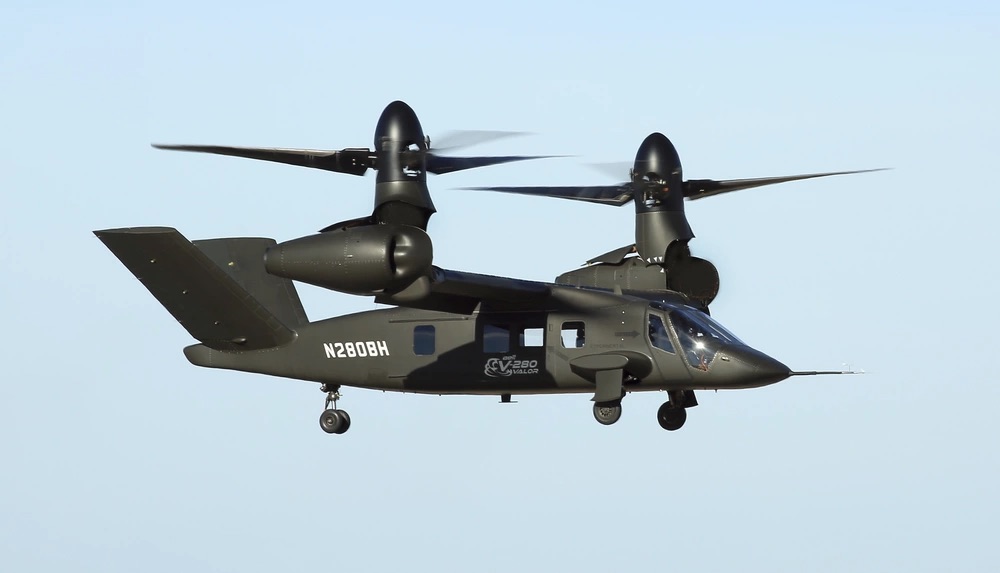
The U.S. Army is weighing a pivotal shift in its aviation strategy, considering a formal requirement for aerial refueling capabilities for the Bell-produced MV-75 Cheyenne II tiltrotor. This initiative aims to transform the platform from a tactical transport into a long-range strategic asset capable of deep-penetration missions.
Organic Logistics: Breaking the Cycle of Dependency
Army leadership is now „thinking creatively” about how to bring special-operations-grade endurance to the conventional fleet. Major General Clair Gill, a leading voice in maneuver aviation, has signaled that the service must solve its own logistical hurdles rather than relying on external assets for mid-air resupply.
„We need to think about how we do our own logistical resupply in the air for an MV-75,” Gill noted. While refueling kits were originally envisioned as removable options for elite units, integrating them across the board would allow the Army to maintain a persistent presence in contested environments without the need for frequent ground-based refueling stops.
The Performance Gap: Beyond Traditional Rotorcraft
The push for aerial refueling is driven by the unique flight envelope of the Cheyenne II. Because the MV-75 operates at speeds and altitudes far exceeding those of traditional helicopters, standard rotorcraft are physically incapable of performing the refueling mission.
This necessitates a move toward fixed-wing tankers or advanced autonomous platforms. Military officials emphasize that for the MV-75 to reach its full potential, the Army must secure assets that can match the tiltrotor’s agility, ensuring that the „tanker” does not become a bottleneck in high-tempo operations.
Unmanned Synergy: The Stingray and the Future of the Tanker Gap
While formal requirements have yet to be finalized, the future of MV-75 refueling may lie in unmanned technology. Recent industry insights have teased the possibility of the MV-75 being serviced by the MQ-25 Stingray, the Navy’s premier carrier-based refueling drone.
Senior officials have lauded the Navy’s progress in unmanned systems as a potential roadmap for the Army’s own needs. By leveraging autonomous tankers, the Army could ensure a continuous flow of fuel to its tiltrotor fleet, extending its operational radius across vast theaters while minimizing the risk to human tanker crews. This „unmanned idea” could be the definitive solution to the Army’s long-standing aerial resupply challenge.