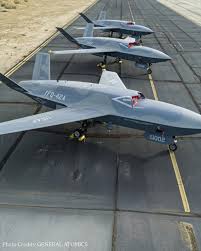
In a landmark series of flight tests, multiple artificial intelligence systems successfully traded control of a high-performance aircraft while airborne. This technological milestone signals a shift toward a „plug-and-play” era of aerial warfare, where specialized algorithms can be swapped seamlessly to meet evolving mission demands.
Mid-Air Mind Meld: Seamless Autonomy in Action
The „Talon IQ” initiative has reached a critical turning point by demonstrating that different AI „behaviors” can take turns piloting a single platform. During a series of recent flight tests involving a Vanguard Model 437 demonstrator, the primary autonomy system, Prism, successfully handed off control to various specialized AI sub-systems.
This digital hand-off allowed the aircraft to transition from general mission navigation to highly specific tactical maneuvers—such as Combat Air Patrols and simulated target engagements—without a single microsecond of instability. The ability of these distinct AI entities to work in tandem marks the end of the era of isolated, rigid software and the beginning of a collaborative digital ecosystem in the cockpit.
Modular Supremacy: Decoupling Flight Controls from Mission Logic
The core of this achievement lies in a layered, open architecture that treats mission software like interchangeable components. By isolating the flight control systems—the high-speed calculations that keep an aircraft airborne—from the mission autonomy logic, engineers have created a modular environment.
This means that high-level AI doesn’t need to be custom-built for every specific aircraft frame. Instead, mission-specific „skills” or generalist intelligence can be ported from one platform to another with minimal adjustment. Much like a skilled pilot can transition between different aircraft types, these algorithms are now proving to be platform-agnostic, allowing the military to deploy updated combat code across the fleet at unprecedented speeds.
Rapid Deployment: From Ground Test to Cockpit in Record Time
One of the most significant advantages of this new testing paradigm is the compression of development timelines. By utilizing a manned demonstrator as a safety backup, the program has bypassed the lengthy certification processes typically required for fully unmanned systems.
This setup allows new AI software to undergo ground validation one day and be tested in actual flight conditions the next. While a human pilot remains on board to ensure safety, the aircraft is flown „hands-off” by the algorithms, allowing for high-risk testing in a low-risk environment. This agile approach ensures that the most advanced software can reach the front lines in days or weeks, rather than years.