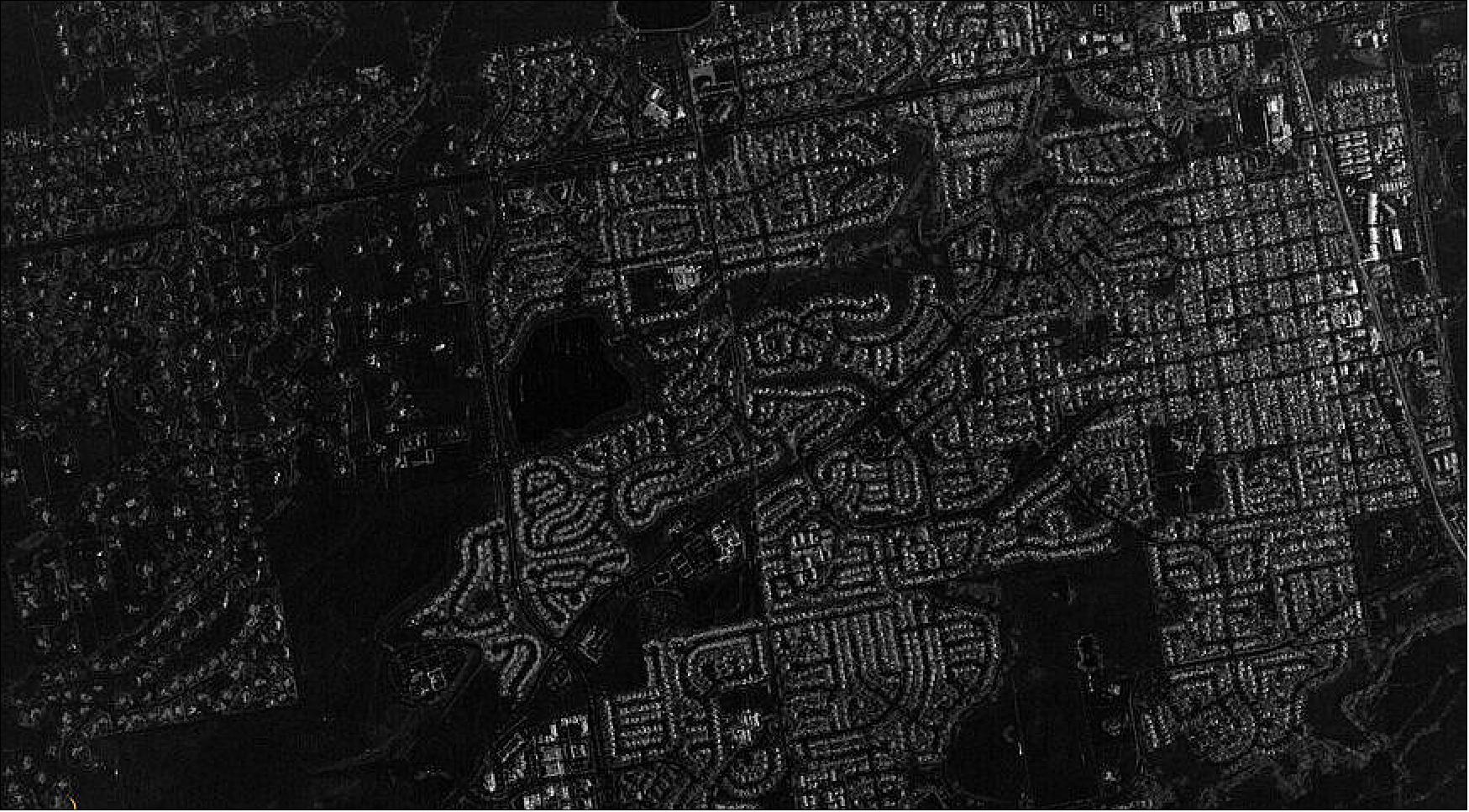
The German Ministry of Defense has awarded a significant €1.7 billion (approximately $1.99 billion USD) contract for the development of a new synthetic aperture radar (SAR) satellite constellation. The beneficiaries of this strategic project are Finnish firm ICEYE and German defense behemoth Rheinmetall. This initiative marks one of the first major concrete actions following the MoD’s September decision to allocate €35 billion for space security.
The Strategic Imperative of Space Dominance
Leaders from both companies emphasized the critical importance of space in modern defense strategies. Armin Papperger, CEO of Rheinmetall, stated that „modern armed forces depend on access to and control of space-based reconnaissance, communications, and mission control.” Rafal Modrzewski, his ICEYE counterpart, echoed this sentiment: „Space-based intelligence is the foundational layer of modern defense, but it is no longer just a strategic backdrop — it is a tactical instrument.”
A New Joint Venture Takes Flight: Rheinmetall ICEYE Space Solutions
To manage this ambitious project, the two firms established a joint venture in November, named Rheinmetall ICEYE Space Solutions, based in Neuss, Germany. This entity will be responsible for providing a high volume of SAR images via its exclusive constellation. The services offered will include full operations, ground station management, and AI-driven image evaluation. The contract runs from the end of 2025 to the end of 2030, with options to extend. Production of the first satellite is scheduled to commence in the third quarter of 2026.
SPOCK 1: Guardian of NATO’s Eastern Flank
The companies will own and operate the low Earth orbit constellation, dubbed SAR Space System for Persistent Operational Tracking Stage 1, or SPOCK 1. The imagery collected will primarily be provided to the German military, with the main purpose of „protecting the German Armed Forces’ ‘Lithuania Brigade’ and securing NATO’s eastern flank.” The Lithuania Brigade, also known as the Bundeswehr’s 45th Armoured Brigade, was stood up in April and is deployed in Lithuania to deter Russian aggression. This „heavy maneuver” formation will comprise some 4,800 personnel once fully operational, representing the first German military unit of such size to be permanently based outside the country since World War II.
Modernizing Germany’s Space Surveillance
Currently, Germany operates the aging SAR-Lupe constellation, developed by OHB-System, whose five satellites were launched between 2006 and 2008. Although two next-generation SARah satellites were launched in 2023, they only became operational this spring after a recovery maneuver to deploy their jammed antennas. Data from SAR-Lupe is shared with France in exchange for optical imagery from the French MoD’s Helios II birds. It remains to be seen whether this arrangement will extend to SPOCK 1 data.
ICEYE’s European Momentum in Space
For ICEYE, the German deal is the latest in a series of high-profile sales to European militaries. This trend underscores the continent’s collective efforts to establish „strategic autonomy” from the United States in the space domain. In May, the company announced an approximately €200 million deal to provide an initial batch of three SAR-sats to the Polish Armed Forces, with an option for three more over the next 12 months. In June, ICEYE secured a €158 million award to equip the Royal Netherlands Air Force with a full suite of ISR solutions. Another agreement, worth approximately €158 million, was signed in September with the Finnish Defence Forces for an undisclosed number of SAR-sats. Most recently, on December 2, ICEYE announced an undisclosed value transaction for the sale of a satellite to the Portuguese Air Force, marking a historic direct acquisition for Portugal’s space-based ISR defense.