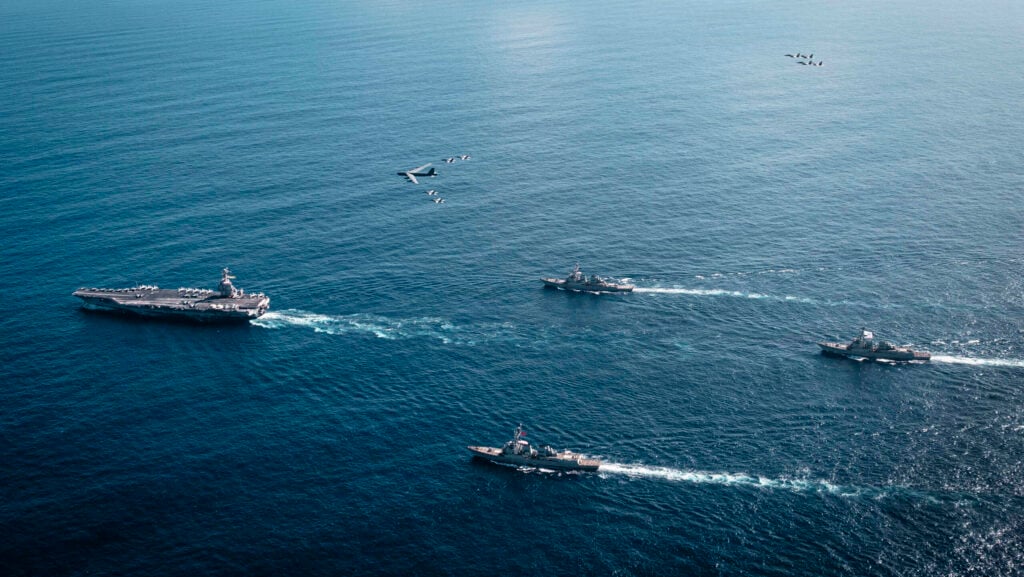
For the first time since World War II, the United States confronts a peer naval rival capable of challenging American command of the seas and global trade. The rapid expansion of the Chinese navy, coupled with internal challenges of an aging fleet and maintenance backlogs, necessitates a fundamental re-evaluation of US maritime strategy. A bipartisan Congressional commission has now been tasked with charting a course for a modern naval force, equipped to compete and deter sophisticated adversaries of the 21st century.
The Dragon’s Ascent and the Strains on the Star-Spangled Fleet
The Chinese Communist Party has dedicated a generation to building a formidable fleet, designed to contest sea control and convert industrial might into military power. This swift naval buildup, paired with dominance in commercial shipbuilding, is actively shifting the balance of power at sea and eroding traditional US advantages. Simultaneously, regional authoritarians, such as Iran, and extremist groups create an incessant global demand for naval forces, compelling the US Navy to patrol an ever-wider expanse with a fleet that is smaller, older, and increasingly fragile. Readiness issues and pervasive maintenance backlogs now critically threaten America’s ability to respond effectively when crises erupt.
The Commission’s Crucial Mandate: A Race Against Time
In response to this pressing reality, Congress established the National Commission on the Future of the Navy. Though initially announced in 2022, its members were not named until 2024, and funding secured only in late 2025. With significant ground to cover, the commission aims for rapid progress, actively seeking input from stakeholders nationwide. Public hearings are slated for 2026, culminating in a submission of comprehensive recommendations in early 2027. These are expected to span a wide array of topics, from how America builds and buys ships, consistent with initiatives like „Re-Industrialize 2.0” and the Maritime Action Plan, to nuanced policy and legal adjustments supporting innovative concepts such as the recently unveiled „hedge strategy.”
Addressing Three Core Challenges for Naval Renewal
In partnership with the executive branch, the commission will critically focus on three foundational problems:
- Testing Emerging Fleet Concepts: The commission will rigorously evaluate novel ideas, such as a hybrid fleet and the expanded utilization of unmanned systems, against the realities of naval combat and realistic budgetary constraints. A distributed fleet, combining manned platforms with unmanned surface and undersea vehicles, holds the potential to significantly expand sensing capabilities, complicate enemy targeting, and cover a far wider operational area.
- Confronting Shipbuilding and Maintenance Failures: An in-depth examination will target the recurring failures in shipbuilding and maintenance that have consistently transformed ambitious plans into „paper fleets.” Shipyards frequently struggle to deliver on time and within budget, leading to schedule slips, escalating costs, and the nation paying for ships that never fully materialize within the active fleet. Recent cancellations, including the Orca unmanned undersea vehicle and the Constellation-class frigate, serve as stark reminders of how even well-intentioned efforts can leave the fleet deficient.
- Navigating Constant Global Demand: The commission will grapple with the relentless global demand for naval forces, a factor that profoundly complicates fleet rebuilding efforts. From operations in the Red Sea to recent deployments in the Caribbean, American leaders consistently turn to the Navy due to its unique ability to project power from the sea while mitigating the political risks associated with large ground deployments. This persistent demand places immense strain on the force and exacerbates existing problems in shipbuilding and maintenance.
Deep Reforms for a Robust Industrial Base
Responsibility for this predicament extends beyond the Pentagon. Legacy policies and outdated laws have created perverse incentives throughout the defense industrial base and federal bureaucracy. Consequently, the commission’s recommendations will target not only the Navy but also Congress, the White House, and industry. The United States simply cannot afford to concede the high seas to an authoritarian rival, even as voices from both political parties advocate for a more isolationist stance.
To develop practical and actionable options, the commission plans an ambitious research and outreach agenda. Members and senior staff will engage with political and military leaders, junior officers, new recruits, and defense firms of all sizes. Through extensive outreach, including direct engagement with the fleet via professional military education institutions and essay contests, the commission aims to understand diverse perspectives on the problem and opportunities for change. This will inform a streamlined research effort, guided by the fundamental question: „A Navy for what?”
A Call to Action for America’s Maritime Future
Sir Walter Raleigh famously wrote, “Whosoever commands the sea commands the trade. Whosoever commands the trade of the world commands the riches of the world, and consequently the world itself.” For Washington, whose prosperity hinges on open seas, stable markets, and credible deterrence, the task is undeniably clear. The United States requires a Navy capable of securing its sea lines of communication and safeguarding its trade in the face of emboldened adversaries. To realize this vision, public feedback is paramount. America needs a new era of seapower, and the nation’s input is crucial to unleash it.