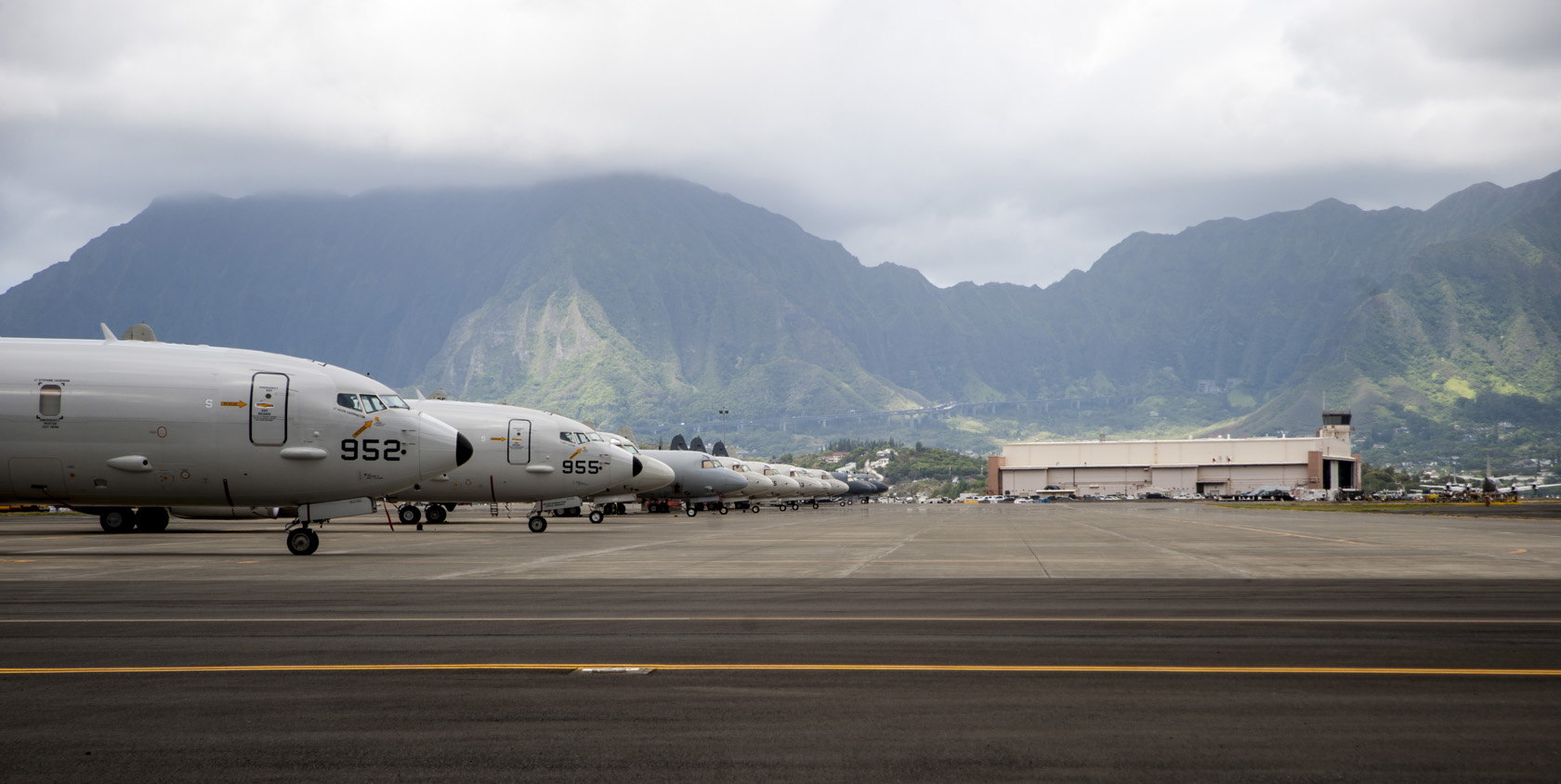
The United States government has given its approval for a potential Foreign Military Sales (FMS) case, paving the way for Singapore to acquire Boeing P-8A Poseidon multi-mission maritime patrol aircraft. This significant transaction, potentially valued at over $2.3 billion, marks a crucial step in the island nation’s ongoing efforts to modernize its maritime security capabilities.
Advanced Arsenal to Bolster Oceanic Surveillance
The approved package extends beyond the state-of-the-art P-8A Poseidon aircraft, encompassing eight MK 54 lightweight torpedoes and other vital associated equipment. This includes the AN/AAQ-24(V)N Directional Infra-Red Counter Measures (DIRCM) system and AN/AQQ-2(V) acoustic systems. This advanced technology is set to significantly enhance Singapore’s ability to maintain maritime situational awareness and effectively counter sub-surface threats.
A Critical Move in a Geopolitical Chokepoint
This development follows Singapore’s September 2025 announcement regarding the first phase of its airborne maritime security recapitalization. The incoming P-8A Poseidons are slated to replace the Republic of Singapore Air Force’s current fleet of five Fokker 50 maritime patrol aircraft. Singapore’s economy is heavily reliant on its port, which stands as one of the busiest globally. The nation’s strategic location, precisely at the narrow chokepoint where the Straits of Malacca converges with the South China Sea – a vital conduit for commercial shipping between Asia, the Middle East, and Europe – underscores the imperative for robust maritime defense.
Deepening Security Ties with Washington
Singapore stands as a key security partner to the United States, routinely hosting rotational deployments of US Navy Littoral Combat Ships and US military logistics units that facilitate regular visits by US warships and military aircraft. This potential acquisition not only modernizes Singapore’s armed forces but also deepens the critical defense ties between the two nations. It’s important to note that the notification from the Defense Security Cooperation Agency (DSCA) serves as a congressional notification and is not yet final; quantities and dollar totals frequently adjust during negotiations, though a legislative halt to the sale remains a remote possibility.