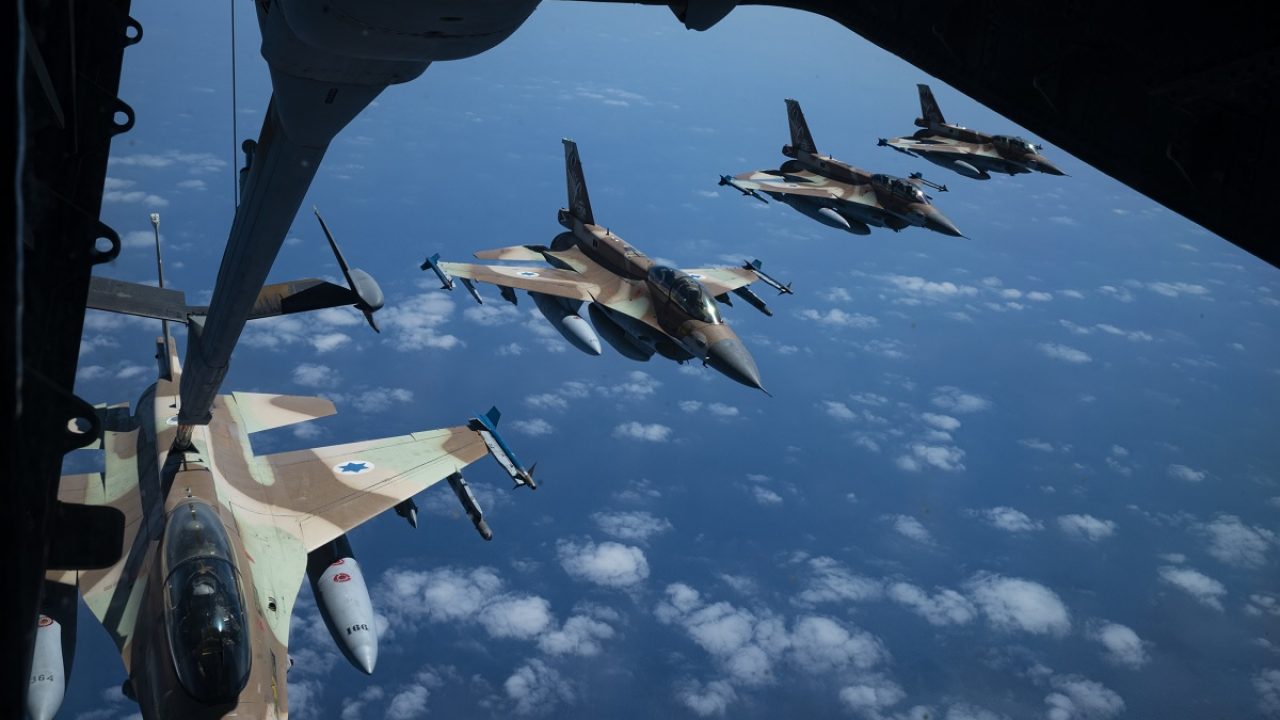
The recent announcement regarding Israel’s approval to purchase 30 new AH-64E Apache attack helicopters marks a significant shift in the priorities of the Israel Defense Forces (IDF). This decision comes in the context of intense multi-front conflicts over the past two years, as Israel seeks to bolster its military capabilities, according to defense analysts.
New Apaches for Urban Warfare: Reviving a Veteran Platform
The proposed sale, estimated at $3.8 billion, represents not only a considerable financial investment but also a reversal of the strategic course adopted by the IDF just a few years ago, when the emphasis was on phasing out manned rotary-wing aircraft in favor of drones. This profound re-evaluation is a „lesson from the war in Gaza,” explains Eitan Ben Eliyahu, a retired Major General and former Commander of the Israeli Air Force. Although unmanned aerial vehicles (UAVs) seemed to marginalize attack helicopters, making them appear obsolete, recent experience has proven otherwise. The past two years of conflict have confirmed that Apache helicopters „remain a vital necessity on the battlefield, particularly in urban warfare and commando operations.” Jacob Nagel, a Brigadier General (Res.) and expert at the Foundation for Defense of Democracies, previously National Security Advisor to Israel’s Prime Minister, reiterated this idea. He mentioned that, before the recent war, „the dominant concept was indeed to slowly close the helicopter squadrons and move to performing missions using unmanned arrays.”
History and Evolution: From Early Models to the AH-64E
Israel began training with the Apache in the 1980s and acquired its first helicopters in 1990 – a series of aged AH-64As that had seen action in the Gulf War. These were integrated into the 113th „Hornet” squadron. Later, with the acquisition of the Apache AH-64D Longbow, Israel opened a second squadron, dubbed the 190th „Magic Touch,” which has been a mainstay of Israeli airpower since, with the exception of a brief grounding in the summer of 2023 due to a technical issue. However, by the time of the 2023 war, the Apaches were aging, Nagel observed. And while decisions were made to replace Israel’s aging heavy lifters in 2021 and refuelers in 2022, there was no similar move to recapitalize the manned rotorcraft fleet. In fact, Nagel revealed that, before the October 7 attacks, „the intention was to immediately close the Alpha helicopter squadron and maintain the Delta squadron until its natural ‘death.'” But the war „proved the vitality of the array for unique missions, and therefore a decision was made to continue to maintain the two old types of helicopters and simultaneously acquire new ones, called ‘Echo’ [AH-64E], in a volume to be determined according to budgetary constraints.”
Acquisition Context and Strategic Significance
Last week’s US approval for the purchase of the AH-64E models did not come out of thin air. As early as January 2024, reports in Israeli media indicated Israel’s desire to acquire 12 Apache helicopters. A subsequent report mentioned that the plan was to acquire 15 helicopters, with the option of acquiring another 15 later. While approval for 30 helicopters does not mean Israel will buy them all or all at once, it simplifies logistics should they opt for a larger number. Yaakov Katz, author of „Shadow Strike,” a book about Israel’s raid on Syria’s nuclear program, and a Fellow at the Jewish People Policy Institute, emphasized that the Israeli military is working to improve its capabilities to prevent the kind of ground assault that occurred on October 7. „Israel had been more focused on drones, standoff capabilities, and its longer-range aircraft, but this shows a clear importance that the military is putting on the need to have close air support for ground forces and border security,” Katz stated.
Logistical Challenges and Future Budgetary Decisions
Nagel warned that the Israeli Air Force faces a complex and difficult logistical task. „Israel is the only country in the world that continues to operate ‘Alpha’ helicopters, which causes significant logistical difficulties, a shortage of spare parts, and more.” He himself played a key role during the war, examining Israel’s security budget force buildup plans, as head of what became known as the Nagel Committee. Asked whether the acquisition of the 30 new helicopters is primarily a replacement for the aging airframes, Nagel noted that the move is part of a broader decision to keep the helicopter capabilities and that the overall number of helicopters will be determined by future budgets. It is not clear if this will mean adding a new squadron, but the older helicopters will be retained.