South Korean industrial giant Hanwha Group has announced the appointment of industry veteran Michael Smith as the top executive of its US-focused defense division.
Outgoing CEO John Kelly, who took the position in May 2021, will remain until mid-September to assist with the transition before “departing the company to pursue new opportunities,” according to the announcement.
Smith is a Navy veteran with extensive experience, having held senior leadership roles at HII, Lockheed Martin, and BAE Systems. His previous positions include president of HII’s nuclear division and vice president of unmanned maritime systems at Lockheed.
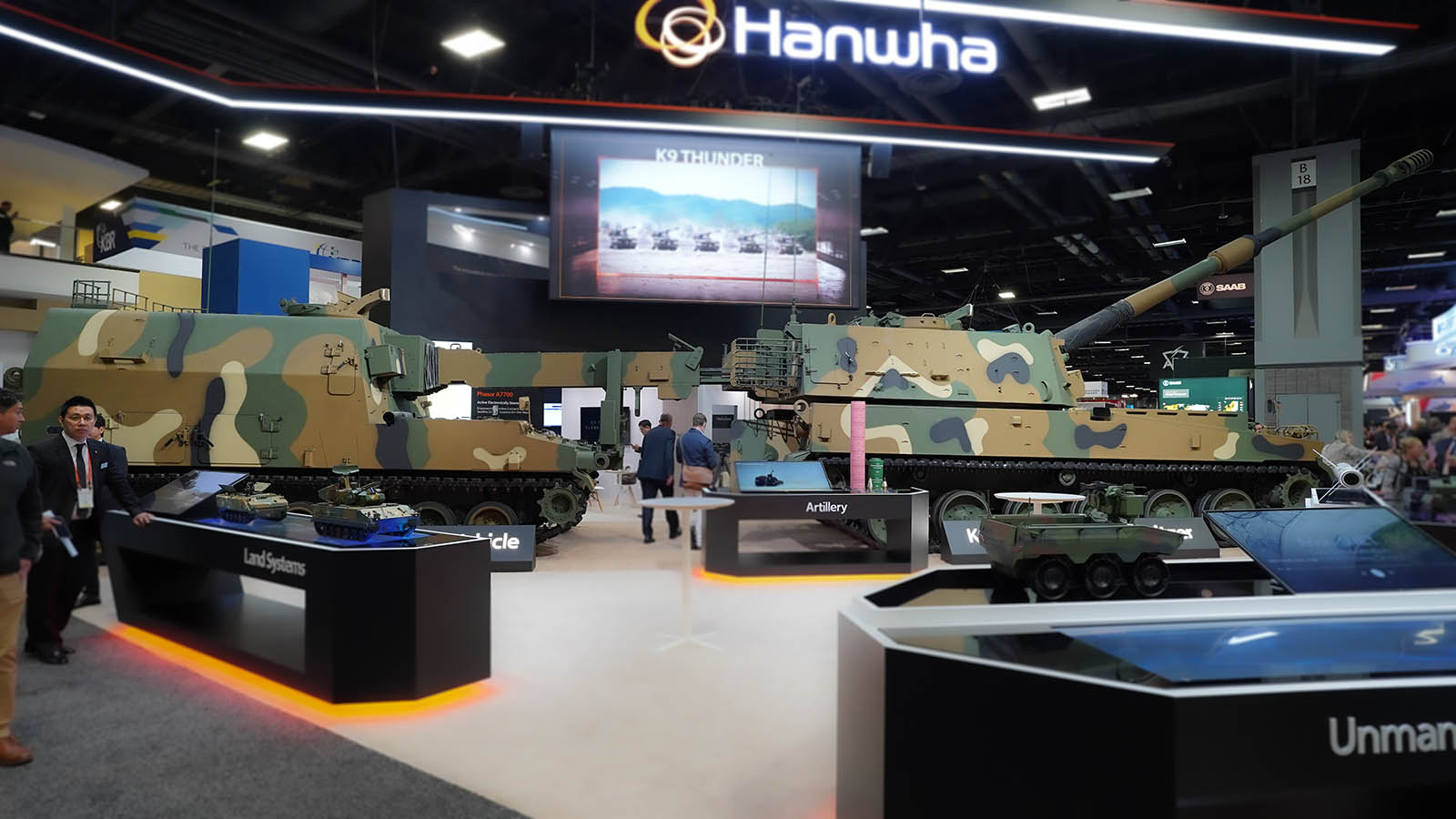
Smith steps into his new role at Hanwha’s US defense division as the company seeks major sales breakthroughs with the Pentagon. This includes opportunities in shipbuilding following its recent acquisition of Philly Shipyard and plans to sell howitzers to the US Army. Currently, Hanwha ranks No. 19 on Defense News’s list of the top 100 defense companies by revenue, rising from No. 26 after a 42 percent increase in defense revenue from 2022 to 2023.
In his statement, Smith expressed his vision for expanding Hanwha’s presence in the US defense industrial base, citing “tremendous opportunity.”
“Hanwha not only brings proven platforms and technologies, it also brings demonstrated process maturity that has been successfully deployed across a multitude of products and markets,” he stated. “Bringing cost-effective operations and certainty around execution is as crucial to the Pentagon as combat capability and deterrence are to the American warfighter.”
Kelly, who joined Hanwha in 2020 as the top US business development executive, noted that his expertise has played a crucial role in helping the newly formed US defense subsidiary establish strong relationships with the Defense Department.
He elaborated on the challenges foreign-owned businesses face in entering the US defense supply chain, stating, “The US defense supply chain tends to be quite well protected. And it makes it difficult for a foreign-owned business to break in. I think you’ve seen that paradigm stretch now, because there is just literally not enough supply going around.”