In an era of accelerating global threats and rapid technological advancement, the mantra within the defense community is clear: move faster, field sooner, and iterate continuously. From hypersonics and counter-UAS systems to critical space assets and tactical command posts, the primary bottleneck in equipping warfighters is no longer just invention, but the speed of delivery. The defense enterprise can no longer afford the protracted handoffs between requirements, prototyping, engineering, production, and sustainment. Today, the focus is on rapidly deploying reliable technology to operators and iterating quickly, without starting from scratch.
Addressing this critical challenge, a leading technology and management consultancy has unveiled its strategic framework: „build, partner, invest.” This multi-faceted approach is designed to reindustrialize the defense supply chain, linking specialized talent, cutting-edge research and development facilities, agile engineering processes, and best-in-class commercial technologies to scale proven solutions for national security.
A Strategic Evolution: From Advisor to Innovator
Long recognized as a trusted advisor to the Pentagon, this company has a deep-rooted history in strengthening government processes and systems. However, a significant pivot began in 2012, marking a focused shift towards developing rapid engineering capabilities. This transformation was catalyzed by the acquisition of a key engineering and manufacturing facility in Panama City Beach (PCB) and a defense systems engineering division. Over the past six years, this commitment has intensified, with a strong emphasis on building and delivering advanced technology and products directly.
Today, thousands of engineers and technologists are actively engaged in a diverse portfolio of technical projects. Their work spans from retrofitting military vehicles and developing counter-unmanned aircraft systems (C-UAS) to creating body-worn graphical processing units and integrating modern technology into uniforms and personal equipment, all aimed at enhancing warfighter survivability and mission success.
Forging a Future-Ready Workforce
The ability to rapidly meet warfighter needs stems from a strategically cultivated workforce that fuses deep technical expertise with invaluable real-world mission experience. Engineers and scientists are paired with seasoned mission experts drawn from diverse military and government backgrounds. This includes former Delta Force operators, FBI agents, pilots, logisticians, human performance specialists, and military drone pilots. This unique blend of talent ensures that solutions are not just technologically sound, but also inherently mission-centric, enabling effective scaling and delivery.
Supporting this specialized workforce is a robust infrastructure of three strategically located engineering, manufacturing, and production facilities across the U.S., encompassing approximately 150,000 square feet of advanced workspace. These facilities are instrumental in delivering complex, mission-critical projects. The company continuously invests in upgrading these capabilities, including recent additions like a new waterjet cutter at its PCB facility capable of cutting through six inches of steel.
Powering Innovation: R&D and Strategic Alliances
Beyond manufacturing, the company operates 20 research and development labs. These serve as vital hubs for prototyping, innovation, and both small and large-scale testing. This extensive R&D infrastructure allows for the delivery of mission-ready technology – such as man-portable systems, tactical Command and Control (C2), and advanced autonomy solutions – at what can be described as wartime speed. Furthermore, the company is actively advancing hypersonic test-bed technologies, ensuring the nation remains ahead of near-peer adversaries.
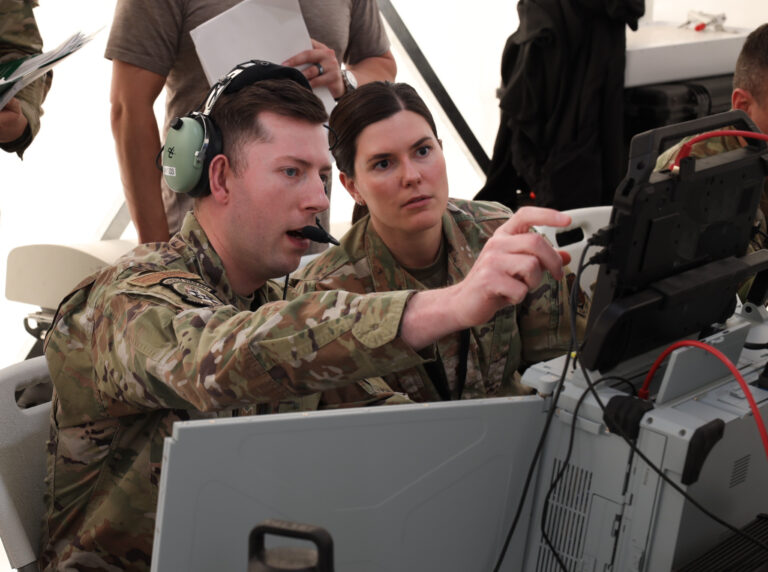
Collaborations with industry leaders are also key to accelerating impact. For instance, a partnership with L3Harris aims to deliver the Tactical Operations Center-Light (TOC-L) prototype, designed to empower joint forces at the tactical edge and support the Air Force’s Advanced Battle Management System (ABMS). This initiative leverages the company’s experience in modular detachment kits and L3Harris’ resilient communication capabilities to seamlessly connect sensors, decision-makers, and weapons.
The Digital Edge: Speeding Development and Addressing Obsolescence
Modern warfighting environments demand speed, and rapid engineering is the answer to compressing timelines while maintaining unwavering reliability. This strategy is particularly crucial for addressing mission sets where adversaries rapidly iterate technology, including hypersonics, drone warfare, autonomous robotic systems, counter-unmanned systems, space-based platforms, and seabed warfare.
Utilizing advanced digital tools like virtual environments, simulation, and digital twins, the company accelerates innovation and testing cycles. This approach not only leverages commercial and dual-use technologies to field mission-ready solutions at scale but also effectively addresses obsolescence in currently deployed military systems. A recent example includes the design of a digital replacement for an aging, unsupported analog device used on military aircraft, which significantly improved readiness, increased capabilities, and reduced operational and maintenance costs through the use of readily available commercial components.
Investing in the Future: Cultivating a Resilient Supply Chain
Recognizing that starting from scratch isn’t always the fastest or smartest path, the „build, partner, invest” strategy extends to forming strategic alliances and making targeted investments in companies offering best-of-breed technologies. This commitment is exemplified by a $300 million venture capital fund established to accelerate small businesses and revitalize domestic manufacturing.
Through this fund, the company actively evaluates investment opportunities and partners with companies possessing complementary advanced technologies. Notable collaborations include an investment in Shield AI for the development of its Hivemind Enterprise autonomy software development kit, and support for Firestorm’s drone manufacturing capabilities. A groundbreaking partnership with Andreessen Horowitz (a16z) as its first-ever Technology Acceleration Partner for Governments aims to deliver next-generation technologies across AI, cyber, autonomy, and electronic warfare.
These collaborations are not just about capital; they’re about bringing mission expertise to the table, growing capabilities, and co-creating solutions that significantly boost supply chain productivity and operational readiness.
Ultimately, rapid engineering is but one component of a comprehensive mission-centric solutions process. To deliver capabilities that are operationally relevant and ready for contested environments, the company integrates rapid engineering with robust software development, advanced hardware design, mission-tailored algorithms, and stringent cyber protections. This holistic approach ensures the delivery of advanced technology that is rapidly engineered, operationally secure, scalable, and precisely aligned with the evolving needs of the warfighter.