Introduction: A well-established name in aviation, Robinson Helicopter Company, is significantly expanding its horizons by launching a new dedicated division. Known as Robinson Unmanned, this strategic move signals the firm’s deep dive into the rapidly evolving world of remotely piloted and autonomous drones, aiming to capture significant commercial and military market shares.
Strategic Alliance: Pioneering Autonomous Airspace Dominance
Robinson Unmanned is set to offer a comprehensive array of drone solutions, spanning from Group 1 through Group 4 categories – excluding only the largest Group 5 unmanned systems. This ambitious venture is underpinned by a robust partnership with Ascent AeroSystems, a subsidiary whose expertise already includes the production of Group 1 and 2 drones, some of which are actively involved in the Pentagon’s pivotal Drone Dominance program. All future drone developments will now fall under the Robinson Unmanned umbrella.
For its more advanced, larger platforms, Robinson Unmanned plans to derive Group 3 and 4 drones from its popular R44 and R66 model helicopters. This approach mirrors the strategy employed by aerospace giants like Lockheed Martin’s Sikorsky, which is transforming its Black Hawks into Group 4 unmanned platforms via the UHawk program. The company envisions this new division as a cornerstone for its next century of business, leveraging its rich heritage and existing engineering prowess in parallel with its traditional helicopter manufacturing. Paul Fermo, currently the president of Ascent, has been appointed to lead this critical new venture as president of Robinson Unmanned.
Spearheading Defense Programs: From Logistics to Enhanced Intelligence
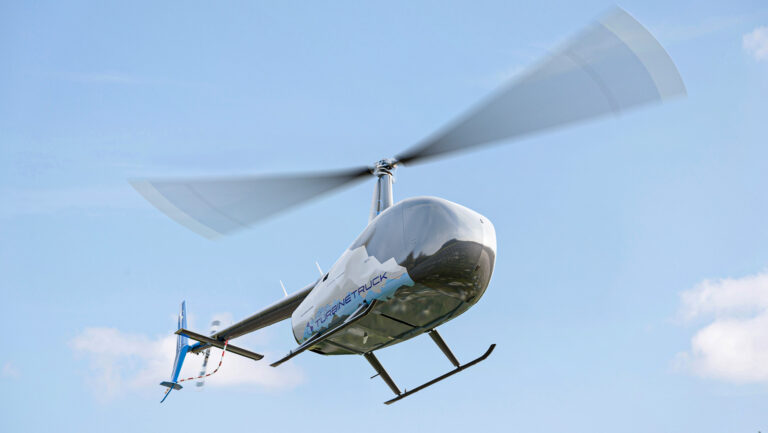
Robinson Unmanned is already making significant strides in the defense sector. The company is actively engaged with the Department of Defense (DoD) on a „developmental program” for its R66 Turbinetruck. This „next-generation” unmanned cargo helicopter is specifically engineered for crucial defense and logistics operations within contested environments. Intriguingly, the Turbinetruck will incorporate Sikorsky’s advanced MATRIX autonomy suite, in a manner similar to the UHawk program.
Industry leaders highlight that this collaboration between entities that might otherwise be considered competitors underscores a shared commitment to vital defense missions. This synergistic approach aims to enhance operational efficiency and, critically, to save lives – a lesson keenly learned from the complexities of logistics chain resupply and convoy vulnerabilities in past conflicts. Representatives from Sikorsky view the Turbinetruck and UHawk programs as „complementary bookends,” collectively providing „seamless capability wherever the mission demands” and expanding the network of uncrewed systems across civil and military applications.
Furthermore, Robinson Unmanned will inherit Ascent’s existing involvement in the Pentagon’s Drone Dominance initiative. Ascent was a participant in Gauntlet 1, a key phase of the competition where military operators evaluated small, low-cost drones. With Ascent currently positioned favorably on the program’s leaderboard, Robinson Unmanned is well-placed to secure a portion of the anticipated $150 million in orders, part of the military’s larger goal to procure 30,000 unmanned systems.
A Diverse Portfolio: From Pocket-Sized UAS to Long-Endurance Surveillance
The new division’s initial offerings of NDAA-compliant Group 1 and 2 drones showcase versatility and advanced capabilities:
- Helius: A „pocket-sized” UAS designed for rapid aerial awareness in confined or complex environments.
- Spirit: A modular and „rugged” drone, optimized for demanding surveillance missions.
- Spartan: A coaxial drone celebrated for its long-endurance capabilities, ideal for extended operational periods.
Synergy with Pentagon’s Vision and Long-Term Ambitions
The timing for this new venture is considered opportune. Robinson Unmanned’s offerings align precisely with the vision articulated by the Secretary of Defense, who champions unconventional sources that emerge from the commercial sector. These characteristics – cost-effectiveness, high scalability, and ultimately, attritability – are seen as critical advantages for modern defense procurement.
Beyond this new division, Robinson Helicopter Company’s engagement with the defense sector continues to deepen. Having supplied helicopters to the military for decades, the company was recently selected for Phase III of the Army’s Flight School Next program. In this new multi-faceted initiative to train helicopter pilots at Fort Rucker, Robinson is competing with its R66 model under two separate prime vendors, Lockheed Martin and M1, further solidifying its presence in defense aviation.