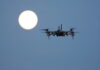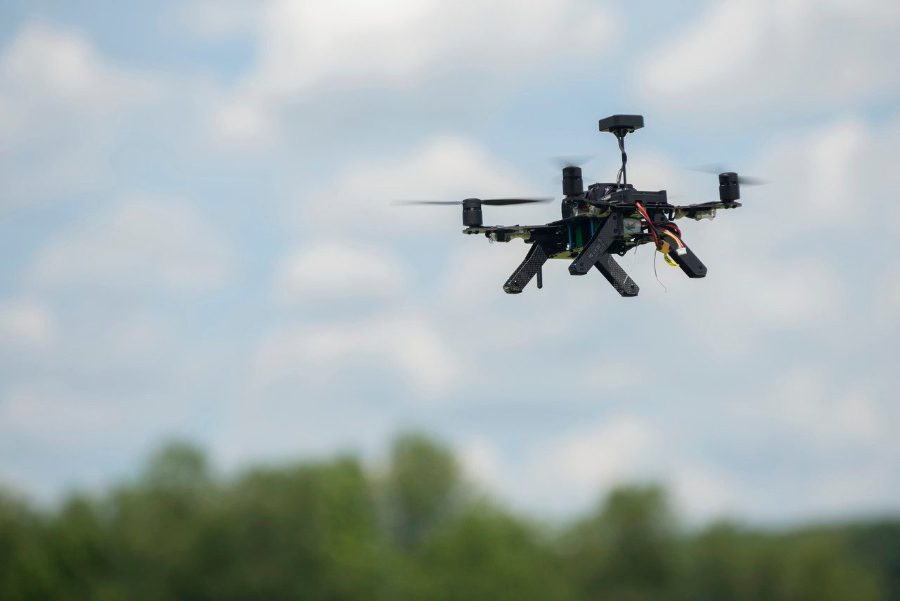
The Silent Threat of Small Drones The United States Air Force has initiated an intense campaign to find definitive solutions to counter the increasingly complex threat posed by small drones. Two Requests for Information (RFIs) issued to industry recently outline the Pentagon’s vision: early detection of aerial intruders and their rapid neutralization through precise „kinetic hard-kill” capabilities.
Point Defense Battle Lab: The Hub of Innovation At the heart of this initiative lies the Air Force’s recently established Point Defense Battle Lab (PDBL). The PDBL’s mission is clear: to become a center of excellence for developing counter-small unmanned aerial systems (C-sUAS) technology aimed at base defense. According to official documents, the PDBL was created to „push boundaries in C-sUAS capabilities, ensuring the Air Force maintains tactical superiority against evolving threats, and as a key part of the service’s effort to develop and evaluate advanced technologies to defend installations from sUAS threats.”
The Anti-Drone Arsenal: From Lasers to Kinetic Interceptors One RFI targets the development of „rapidly deployable” kinetic hard-kill systems, capable of being operationalized by a team of four personnel or less in under two hours. The envisioned arsenal is diverse and includes:
- Advanced Precision Kill Weapon System (APKWS) mid-range precision vehicle and container launchers.
- Large caliber 30mm gun-based airburst/proximity close-in sustained fire.
- Small caliber automated weapon stations with C-UAS fire control.
- Drone-on-drone autonomous kinetic interceptors with AI-guided to terminal that can be 3-D printed to full size.
- High-energy lasers with a 2-20kW power range, featuring precision engagement, single target sequential capabilities, and atmospheric sensitivity.
- High-power microwaves with GaN solid-state technology, capable of effective area engagement, swarm counter-capability, and weather resistance.
Detection and Tracking: The Crucial First Step In parallel with weapon development, another RFI focuses on small drone detection and tracking. This solicitation aims to „develop and validate Tactics, Techniques, and Procedures necessary to advance C-sUAS detection, tracking, interception, and neutralization.” The primary focus is on tracking Group 1 drones at ranges up to 2 km (1.2 miles), with a secondary focus on Group 2 and 3 drones, though with a preference for shorter ranges.
Legal Context and Strategic Urgency The threat of small drone incursions into the airspace of homeland military installations has been a persistent problem, leading US Northern Command to update its standard operating procedures after a series of incidents last year. These new RFIs also follow recent changes to Section 130i of Title 10 of the US Code, which grants military officials greater latitude in designating sites capable of conducting C-sUAS activities.
Beyond Defense: Offensive Attack Drones The deadline for submissions to both solicitations is April 30. While no potential future contract amounts were specified, the urgency is evident. Furthermore, in a separate move, the Air Force issued a third RFI, seeking ideas for the other side of the equation: offensive one-way attack drones, indicating a dual strategy – defensive and offensive – in future warfare.