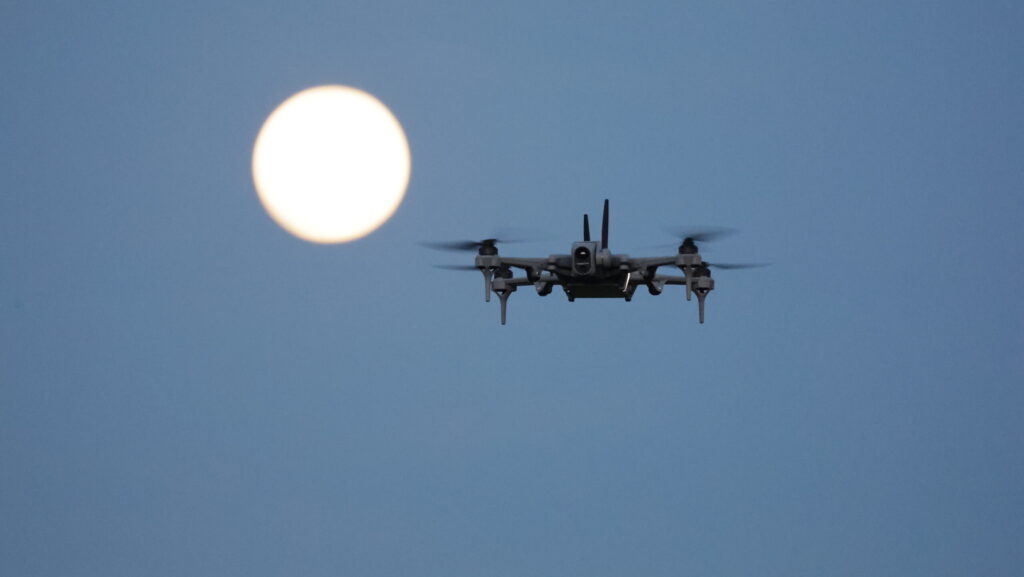
The world of modern warfare is rapidly transforming, with drones redefining the battlefield at a dizzying pace, spanning all warfighting domains. In this dynamic landscape, Red Cat, a key player in the drone industrial base, is solidifying its strategic role through its presence on the DIU (Defense Innovation Unit) blue list for quadcopters and fixed-wing VTOLs (Vertical Takeoff and Landing vehicles).
In a recent interview, Brendan Stewart from Red Cat provided details on the latest drone developments, underscoring their profound impact on global military strategies.
A Radical Transformation of the Battlefield
„It’s incredibly important,” Stewart stated. „Drones have fundamentally changed the nature of modern warfare. We’ve gone from traditional aviation programs, even on the drone side, things like Predator, Raven, Puma. Now we’re seeing that drones are being used at the squad level, at the unit level in a much more tactical capacity.”
The United States Army has recognized this reality through the implementation of the Short Range Reconnaissance (SRR) Program, and Red Cat is proud to have been down-selected to provide this cutting-edge capability to the warfighter.
Black Widow: Pioneering Mass Tactical Reconnaissance
Brendan Stewart detailed the role of the Black Widow drone, now entering low-rate initial production. „The Black Widow is the only drone in its class designed specifically to meet Army requirements,” he explained. „The first thing we did in participating in the SRR program was go to the warfighter, determine exactly what their needs were… we were lucky to win that down-select program, largely due to our diligence and our listening to the warfighter in what their needs were, pulling from conflicts like we’ve seen in Ukraine and elsewhere.”
The Black Widow represents the first small UAS in its class in the SRR program, being deployed rapidly at scale throughout the Department of Defense (DOD). „We’re very excited about this because it represents a doctrine shift from the traditional sort of ISR Overwatch drones of the Global War on Terror era to a much more tactical unit level ISR and light strike asset at massive scale,” Stewart emphasized. It’s not about dozens, hundreds, or even thousands of drones, but rather fielding plans for tens of thousands of drones throughout the life of the program. This fundamentally changes the nature of how conflicts are fought.
Tactics observed in Ukraine demonstrate the success of this approach, and geopolitical adversaries in the Pacific region are also building up large manufacturing capacities for small UAS. This marks a major shift in the Army’s doctrine regarding the procurement and deployment of these assets.
Trusted Alliances and Supply Chains: The NATO Perspective
The needs of NATO countries and other European nations are similar to those of the United States, Stewart noted. „One of the things that the conflict in Ukraine has highlighted for many of our European partners in and outside of NATO, is the fragility of the Ukrainian border has produced great concern regarding defensive capacity for bordering nations.”
There’s a massive uptick in demand, aligned with US requirements, for several reasons, including interoperability and, crucially, the fact that the innovation cycle is not driven by Chinese components. „We know that China and Russia are close allies and in a conflict with Russia, these nations want to be assured that their supply chains will not be cut off, that their software is secure, that they will be able to continue receiving these critical defensive articles,” Stewart clarified. Thus, there is a clear shift towards trusted American supply chains.
The procurement process is also changing, moving from traditional manned aircraft programs with multi-decade procurement schedules and fixed requirements, to a „commercial off-the-shelf” (COTS) style procurement process. This allows countries to acquire the best capabilities available on the market today and run the procurement process on the same timeline as the development cycle, which is crucial in a constant cat-and-mouse game with electronic warfare.
Blue Ops: Extending Autonomous Dominance at Sea
On a related subject, Red Cat has launched a maritime autonomy group called Blue Ops, extending innovation into the naval domain. „Blue Ops is a very exciting new division that we’ve opened at Red Cat,” Stewart explained. „Blue Ops builds unmanned surface vessels (USVs).”
The company realized two key aspects: first, the nature of conflict is changing, anticipating more global conflicts in what it calls the „littoral combat environment” – rivers, close-in ocean, brackish water. Secondly, there are few competitors in this space providing a warfighter-driven solution. „Our goal is to get as close as we can to the Navy’s requirements, and provide those capabilities to fight the conflict of tomorrow, hopefully deter the conflict of tomorrow before it starts,” Brendan Stewart concluded.