The Drone War: A New Reality on the Battlefield
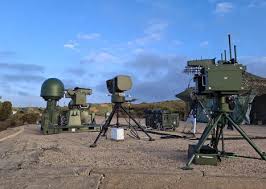
As the threat of small and medium-sized drones escalates on modern battlefields, a new high-tech weapon is emerging, promising to redefine aerial defense. Virginia-based defense firm AeroVironment (AV) recently unveiled its LOCUST X3 platform, an innovative laser-based counter-small unmanned aerial systems (C-sUAS) designed to effectively neutralize emerging aerial threats.
LOCUST X3: The Technological Answer to Asymmetric Threats
Equipped with a powerful 20-30 kW laser and featuring AI-enabled detection, tracking, and engagement automation, LOCUST X3 is more than just a weapon; it’s an intelligent defensive system. It can be mounted on vehicles or operated from fixed positions, offering crucial operational flexibility. This third generation of the LOCUST system was developed with real-world operational demands in mind.
Aaron Westman, senior director of business development at AV, explained that the success of previous generations and direct feedback from soldiers were pivotal in shaping the X3. „The earlier versions of LOCUST were developed and fielded, and we put them in the hands of soldiers, we got a lot of feedback from them on improvements that they’d like, different enhancements, and we took all that feedback and X3 is the result of that,” Westman stated. He, a former senior official at BlueHalo (acquired by AV in 2025 and producer of the original LOCUST laser system), specified that the X3 is optimized to combat drones up to Group 3, particularly targeting high-profile threats such as Iran’s Shahed and Russia’s Geran drones.
The Unlimited Advantage of Laser Weaponry
Traditional methods of countering Group 3 drones, involving the use of interceptors, are becoming unsustainable in the face of ever-increasing threat volumes. „The traditional way of dealing with [Group 3] threats is using interceptors, and that’s well and good when you only have one, or two, or three threats,” Westman highlighted. „But the amount of drones that they are able to create and have them fly at targets is really stressing the logistics of being able to replace and maintain interceptors.”
This is where the superiority of laser weapons comes into play. „And so that’s what’s really great about a laser weapons system, is there’s no logistic chain to reload the system,” Westman added. „As long as there’s energy, there’s a battery inside the system, [and] as long as that battery is charged, the laser can fire essentially limitlessly.” This crucial advantage significantly reduces operational costs and ensures continuous defensive capability, eliminating supply chain constraints.
A Booming Market: The Race for Technological Superiority
The cost-benefit analysis for laser weapons has been on the minds of military planners for years, and AeroVironment is not the only player in the race to develop laser- or microwave-based counter-drone systems. Israel has already declared its Iron Beam laser defense system officially active, having already seen real-world combat. Additionally, a team led by General Dynamics recently unveiled a new mobile microwave-based cUAS platform.
AeroVironment is solidifying its position in the field, competing in the Army’s Enduring-High Energy Laser (E-HEL) program and actively participating in the Army Multi-Purpose High Energy Laser (AMP-HEL) prototype program.
The Future of Air Defense: Testing and Deployment
While Westman acknowledged that the LOCUST X3 system has not yet been tested as a full, cohesive system, he clarified that all individual subsystems have been successfully evaluated. AeroVironment anticipates that complete X3 systems will enter testing within the next few months, marking a significant step towards integrating this transformative technology into the nation’s defense arsenal.