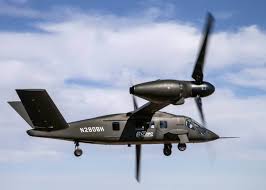
The symbolic successor to the Black Hawk fleet receives an official identity, yet uncertainties regarding global supply chains and budgetary constraints keep the maiden flight timeline under tight wraps.
A New Designation for a Modern Combined Force
The Army has taken a decisive step in modernizing its aviation branch by officially naming the new MV-75 tiltrotor: the Cheyenne II. Emerging from Bell-Textron’s high-profile victory in the Future Long Range Assault Aircraft (FLRAA) competition, the Cheyenne II is designed to assume critical mission sets from the aging Black Hawk fleet, serving as the foundational system of the modern combined arms force.
Military leadership describes the platform as more than just an aircraft; it is a technological cornerstone. Equipped with a „digital backbone” and a modular open design, the Cheyenne II is engineered to keep pace with emerging innovations, closing the gap between commercial development and military application.
The Race Against Time and Ground Realities
While initial optimism suggested the Cheyenne II could be airborne by the end of this year or early next, acquisition officials are now striking a more cautious tone. „It’s going to happen when it’s going to happen,” leadership stated, emphasizing that the pace of movement is dictated by a multitude of variables beyond their immediate control.
Beyond engineering ambitions, the program faces a harsh geopolitical reality: the global scramble for essential raw materials. With a supply chain involving thousands of suppliers across various tiers, the Army is working closely with industry partners to identify pinch points and ensure that critical components are not sourced from high-risk regions of the world.
Budgetary Impact: Momentum vs. Instability
The progress of the Cheyenne II is inextricably linked to financial predictability. Although the recent budget request reflects a nearly $600 million increase in research, testing, and engineering funds compared to FY26, the lack of consistent funding due to legislative gridlock can „kill any momentum.”
Despite the rise of the new tiltrotor, officials clarified that the existing fleet’s days are far from numbered. The Cheyenne II is not intended to immediately replace the Black Hawk in its entirety; rather, both platforms will coexist within the operational fleet for years to come. The current budget is structured to ensure that while new technology is introduced, the reliability of today’s operational fleet remains uncompromised.