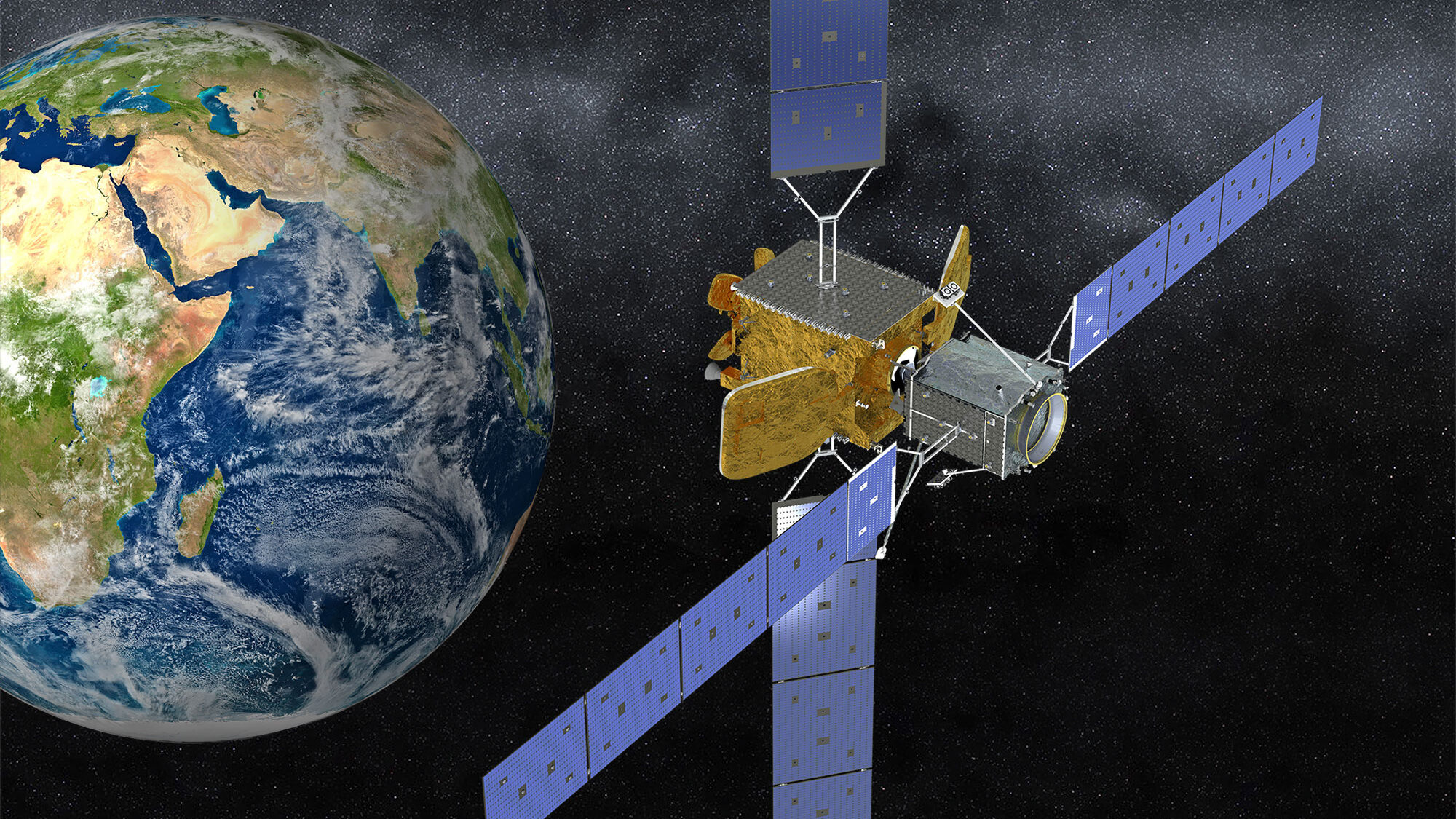
The Commerce Department announced today a comprehensive set of export reform regulations targeting various commercial space technologies. Notably, these reforms include lifting licensing restrictions on the sale of remote sensing satellites and on-orbit servicing platforms to key allies: Australia, Canada, and the United Kingdom.
A senior official from the Commerce Department highlighted the significance of these changes, stating that “this isn’t just a regulatory update.” During a briefing with reporters, they emphasized that the reforms aim to sustain U.S. leadership in space technology, enhance national security, and strengthen global partnerships.
These revisions to export controls are designed to bolster national security by simplifying collaboration between the Defense Department and its allies. This support will aid in the implementation of a “hybrid space architecture” designed to integrate commercial and allied government satellites with U.S. military space capabilities.
The three new rules mark a shift in the approach to export controls, easing restrictions on less sensitive space-related technologies and spacecraft components for close allies like Australia, Canada, and the UK. The official indicated that these modifications would alleviate burdens on U.S. companies while promoting innovation without jeopardizing crucial technologies vital to national security.
The first rule eliminates licensing requirements for remote sensing satellites equipped with electro-optical cameras and radars, as well as satellite systems that assist in logistics, assembly, or servicing for clients in Australia, Canada, and the UK.
The second rule relaxes license requirements for exporting specific spacecraft components to over 40 allies, including NATO and European Union members. This change aims to ease the export of less sensitive components and widen license exceptions, particularly to enhance collaborative NASA programs.
The third rule, currently undergoing public consultation until November 22, proposes transferring the jurisdiction of specific space-related defense articles from the U.S. Munitions List, as managed by the State Department, to the Commercial Control List, overseen by the Commerce Department. This shift is intended to reflect advancements in technology and evolving operational landscapes while safeguarding national security interests.
Examples of items to be transferred include spacecraft that perform collision avoidance, autonomous tracking of ground vehicles and aircraft, and those designed for cooperative docking or grappling.
Commerce and the State Department first sought industry feedback on these licensing reforms back in 2019, with the National Space Council directing the departments to proceed with changes last December. Chirag Parikh, the executive secretary of the National Space Council, remarked at the Space Foundation Space Symposium that the previous reform efforts occurred over a decade ago, necessitating updates to align with rapid technological advancements worldwide.
“With today’s updates to our export controls, the United States is taking a bold step forward in fostering a strong space industrial base,” Parikh asserted. “These changes will reinforce international alliances and demonstrate America’s dedication to innovation and leadership in the arena of space exploration.”