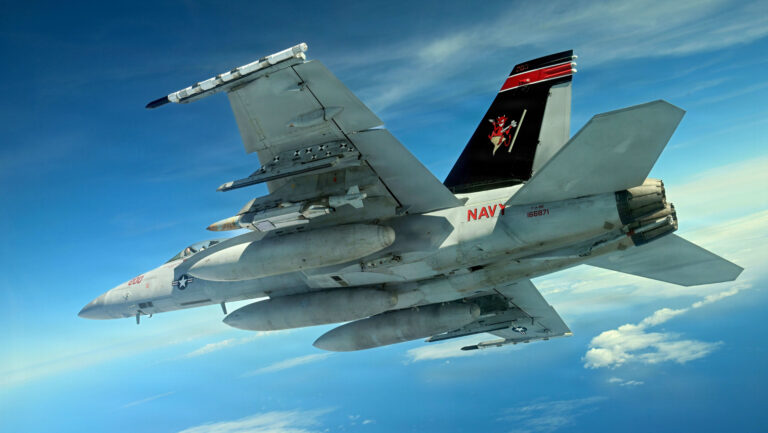
The U.S. Navy has signaled a paradigm shift in aerial warfare following the successful completion of inaugural tests for a Joint Direct Attack Munition (JDAM) modified with a turbojet engine. This breakthrough variant achieved a flight distance of approximately 200 nautical miles—shattering the capabilities of existing models by a factor of five.
Revolutionizing the Standoff: Fivefold Range Increase in Contested Skies
Conducted off the California coast, the recent flight tests validated the weapon’s seamless integration with existing aircraft interfaces and its ability to maintain controlled, powered flight. Launched from an F/A-18E Super Hornet, the new munition—dubbed the GBU-75—demonstrated that a standard precision bomb can be transformed into a long-range threat.
While current „extended range” JDAMs operate as glide bombs with a reach of roughly 40 nautical miles, the addition of a turbojet engine allows pilots to engage high-value targets from significantly safer distances. Military officials emphasized that this capability is vital for maintaining a tactical edge in highly contested environments. In its first powered flight, the weapon maintained consistent guidance, landing within mere meters of its intended target after a 200-mile journey.
The Rise of the „Mini-Cruise Missile”: High Impact at a Fractional Cost
The core of this innovation lies in the use of a Kratos-manufactured TDI-J85 turbojet engine. By mating this powerplant with the relatively low-cost JDAM kit, the Navy is creating a high-end standoff weapon without the prohibitive price tag of a traditional cruise missile. Developers suggest that this „Long Range” (JDAM-LR) variant could eventually boast a reach exceeding 300 nautical miles.
Beyond its range, the JDAM-LR offers a massive advantage in lethality. While many emerging low-cost missiles carry warheads weighing less than 100 pounds, the JDAM-LR is a 1,000-pound system carrying a 500-pound-class warhead. This allows for maximum destruction with fewer munitions deployed. Following the success of these trials, the program is now pivoting toward shipboard integration, marking the final steps before these long-range effectors join the active fleet.