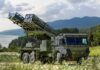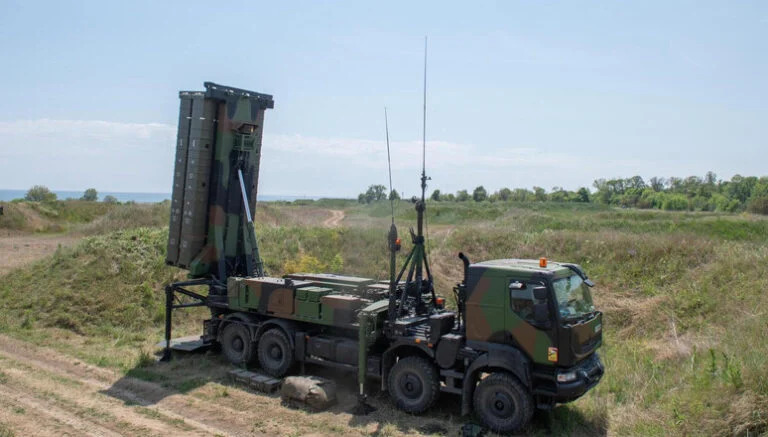
For the eleventh consecutive year, the planet has accelerated its military buildup, with global defense expenditures reaching a record-breaking $2.89 trillion in 2025. In a landscape defined by wars of attrition, political uncertainty, and geopolitical shifts, nations have responded with large-scale armament drives. The primary engine of this surge was Europe, which, in an unprecedented mobilization, increased its defense budgets by 14% amid growing fears that Russian aggression could extend beyond Ukraine’s borders.
Europe on High Alert: Rearmament Amid the Russian Threat
With a total of $864 billion spent in 2025, Europe has become the central pillar of the global increase. This shift toward a „war economy” has been fueled by intelligence warnings suggesting that Moscow could test NATO’s cohesion within the next three years. In this high-stakes environment, both Ukraine and Russia have significantly bolstered their resources: Kyiv saw a 20% jump to $84.1 billion, while the Kremlin’s military budget climbed to $190 billion.
The American Paradox: A Temporary Dip or Strategic Recalibration?
In a striking contrast to the global trend, the United States recorded a 7.5% decline in military spending in 2025. This contraction, however, does not signal disarmament; rather, it was primarily driven by the absence of new massive military assistance packages for Ukraine compared to previous years. Despite this dip, Washington remains the undisputed global leader, directing substantial funds toward modernizing its nuclear arsenal and strengthening its Indo-Pacific presence to deter Chinese influence.
The „Trump Effect” and the Leap Toward $1.5 Trillion
Analysts predict that the downturn in U.S. spending will be short-lived. The approved budget for 2026 already exceeds the $1 trillion threshold, and projections for 2027 suggest a staggering $1.5 trillion if the Trump administration’s latest budget proposals are adopted. Under the banner of streamlining domestic industry, the U.S. defense sector is preparing to quadruple the production of „Exquisite Class” weaponry, a move aimed at replenishing depleted stockpiles and ensuring absolute technological dominance.
Asia and the Middle East: Rising Pressure Points
The rest of the world has not remained immune to the rearmament fever. The Asia-Oceania region recorded its largest year-on-year uplift since 2009, reaching $681 billion, fueled largely by China’s 7.4% military expansion. In the Middle East, while total spending remained relatively flat, intense local dynamics were observed. Israel, for instance, despite a slight decrease following the peak of the Gaza conflict, is currently spending 97% more than it did in 2022—a sign of a region that remains under extreme strategic tension.