The United States Air Force is pivoting toward a high-volume, low-cost strike strategy, planning the annual purchase of thousands of new cruise missiles. According to newly released budget documents, the Pentagon is set to pour over $12 billion into stockpiling these emerging munitions under the FAMM (Family of Affordable Mass Missile) program, signaling a historic shift in aerial warfare procurement.
Mass Over Exclusivity: 27,000 Missiles to Secure the Skies
The emerging doctrine prioritizes „affordable mass” to overwhelm sophisticated adversary defenses. Projections suggest that nearly 27,000 FAMM units could be procured in the coming years. While the program kicks off with 1,000 units in FY27, production is expected to skyrocket to nearly 8,000 missiles annually by 2031.
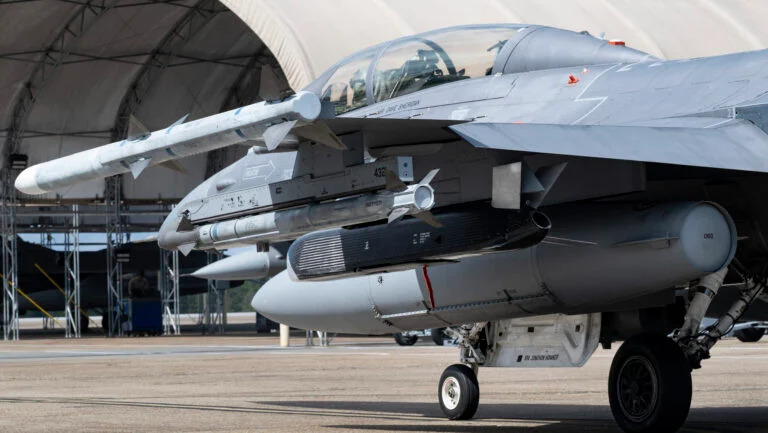
This production scale vastly outpaces traditional „exquisite” weapons like the JASSM or the AMRAAM air-to-air missile. To achieve this, the Air Force is partnering with agile defense firms including Anduril, CoAspire, and Zone 5. The FAMM platform is designed for versatility, capable of being carried by fighters and bombers in „lugged” configurations or deployed via palletized systems from transport aircraft.
Strategic Reach: The „FAMM-BAR” and Maritime Dominance
Beyond the standard variants, the Air Force is developing an extended-range version dubbed FAMM-BAR (Beyond Adversary’s Reach). Requirements for this variant include a range exceeding 1,000 nautical miles, specifically targeting „slow-moving maritime” objectives. Simultaneously, the ERAM (Extended Range Attack Munition) effort is focused on providing rapid-strike capabilities for foreign military sales, with Ukraine identified as a primary beneficiary of this streamlined technology.
Industrial Surge: Powering the New Missile Fleet
A massive expansion of the industrial base is underway to supply the small turbine engines required for the FAMM fleet. Recent contracts awarded to PBS Aerospace, Beehive Industries, and Technical Directions Inc. (Kratos) are intended to mature engine designs and prepare facilities for high-volume manufacturing.
Military leadership describes FAMM as the vanguard of a „new speed of acquisition.” By prioritizing cost-efficiency and rapid replenishment, the Pentagon aims to provide combatant commanders with a vast array of munition options, ensuring that U.S. stockpiles remain deep enough to sustain prolonged, high-intensity global conflicts.