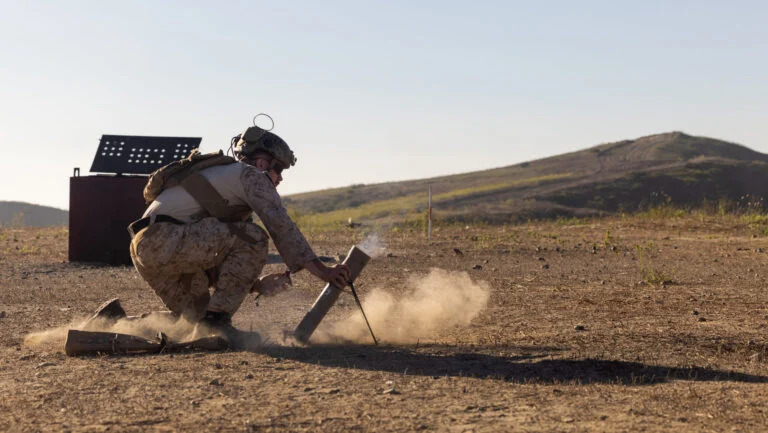
The U.S. Marine Corps is poised for a radical transformation in infantry combat capabilities. Starting this June, operational units will officially begin fielding new launched effects capabilities, dubbed Organic Precision Fires-Light (OPF-L). This move marks the critical transition from testing with inert training systems to delivering live warheads directly to the front lines, providing infantry squads with high-precision strike capabilities against enemies far beyond their line of sight.
An Elite Trio: Anduril, Teledyne, and AV Redefine the Tactical Strike
Three major players in defense technology are currently competing to equip dismounted Marine squads with portable, lethal solutions. Anduril is fielding its innovative Bolt-M system, Teledyne is providing the Rogue 1, and Aerovironment (AV) is supplying the Switchblade 300 Block 20.
So far, Anduril and Teledyne appear to have secured a significant lead, with both companies receiving follow-on contracts for over 600 systems each. These devices are specifically designed for ease of transport by dismounted personnel, granting small units a strategic edge in modern environments where speed and precision are the ultimate deciders of success.
Military Synergy: Army Lessons and the Medium-Variant Horizon
The development of the OPF-L program has not occurred in a vacuum. The Marine Corps has closely coordinated with the U.S. Army, incorporating vital lessons learned from the LASSO (Low Altitude Stalking and Strike Ordnance) program—a parallel effort aimed at providing anti-armor capabilities to Brigade Combat Teams. This inter-service collaboration has allowed the Corps to refine tactics, techniques, and procedures before these systems reach the hands of operational units.
An Open Future: Expanding to New Attack Platforms
The Marine Corps’ ambitions extend beyond the „light” variant. Leadership has already issued a request for white papers for a medium variant, known as OPF-M, with the goal of awarding production contracts by fiscal year 2028. Officials emphasize that the service remains open to various technological configurations—ranging from fixed-wing platforms and vertical take-off and landing (VTOL) systems to man-packable devices. The priority remains clear: rapid adaptation to emerging global threats and the swift delivery of advanced technology to the warfighter.