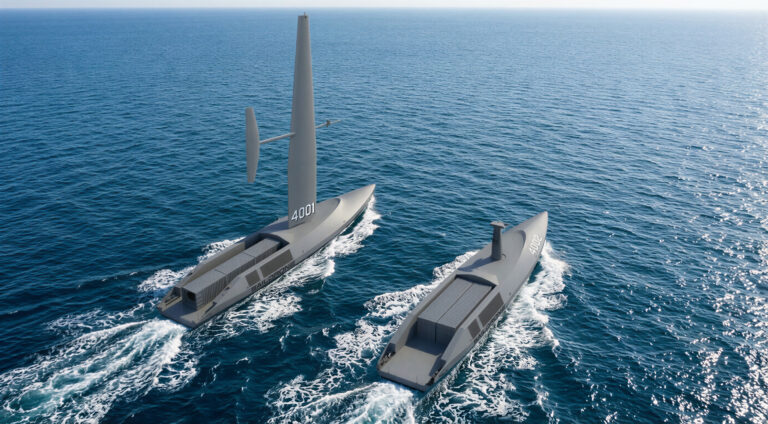
As naval forces face unprecedented operational and sustainment pressures, leadership is turning to Unmanned Surface Vessels (USVs) as a strategic lifeline. These autonomous systems are poised to revolutionize maritime warfare, easing the burden on an aging fleet and redefining how modern navies project power across the globe.
Ending the „Tractor-Trailer” Logic of Modern Warfare
For too long, the Navy has been forced to deploy massive, manpower-intensive combatants for missions that do not require such heavy hardware. Experts liken the current use of guided-missile destroyers for simple surveillance tasks to „sending a tractor-trailer to deliver a single Amazon box.” It is a tactical waste of scarce, multi-mission resources.
The future lies in „tailored forces”—mission-specific formations that mix manned and unmanned systems. By pairing a single destroyer with several medium-sized USVs, commanders can execute complex anti-submarine or reconnaissance missions that previously required a small fleet of manned warships. This shift allows high-end platforms to focus on the high-intensity combat roles they were built for.
Breaking the Cost Barrier: Robots Don’t Need Paychecks
The true limit on fleet size isn’t just the price of steel, but the staggering cost of human operations. Recruiting, training, and sustaining hundreds of sailors per ship creates long-term financial pressure that stifles growth. USVs offer a way around these labor-intensive cost centers, providing a persistent presence in high-threat environments without the logistical tail of a manned crew.
These autonomous „trucks” are defined by their modularity. Their value is derived from the payloads they carry—whether it be advanced sonar arrays, electronic decoys, or strike missiles. This flexibility allows the Navy to scale its capabilities rapidly without the decades-long commitment required by traditional shipbuilding.
A Global Shield: The Allied Perspective
The shift toward autonomous systems is also a geographical necessity for international allies. Nations like Japan, tasked with monitoring vast maritime domains from the East China Sea to the Western Pacific, view USVs as essential components of a distributed defense architecture.
The real strength of these vessels lies in their connectivity. By linking USVs with satellites, manned ships, and allied sensors, the military can create a seamless web of intelligence. In the modern theater of operations, the speed of data sharing is becoming just as critical as the caliber of the guns, ensuring that no corner of the ocean remains unmonitored.