As inexpensive, first-person-view drones continue to rewrite the rules of modern warfare by taking out multi-million-dollar assets, the U.S. Army is mounting a massive financial counteroffensive. Under the fiscal 2027 budget request, the service is seeking nearly $1 billion for small counter-unmanned aerial system (cUAS) capabilities—effectively doubling its previous investment to meet the urgency of the drone era.
A Unified Defense: The „System of Systems” Strategy
The Army’s approach represents a shift toward a holistic, interoperable architecture. Of the $994 million requested, a significant $414 million is earmarked for „operational” capabilities. This investment focuses on creating a „system of systems” that integrates expeditionary mobile platforms, sophisticated sensors, and electronic warfare components into a single, cohesive fire control network capable of neutralizing swarms and individual threats alike.
From Strategic Bases to the Individual Soldier
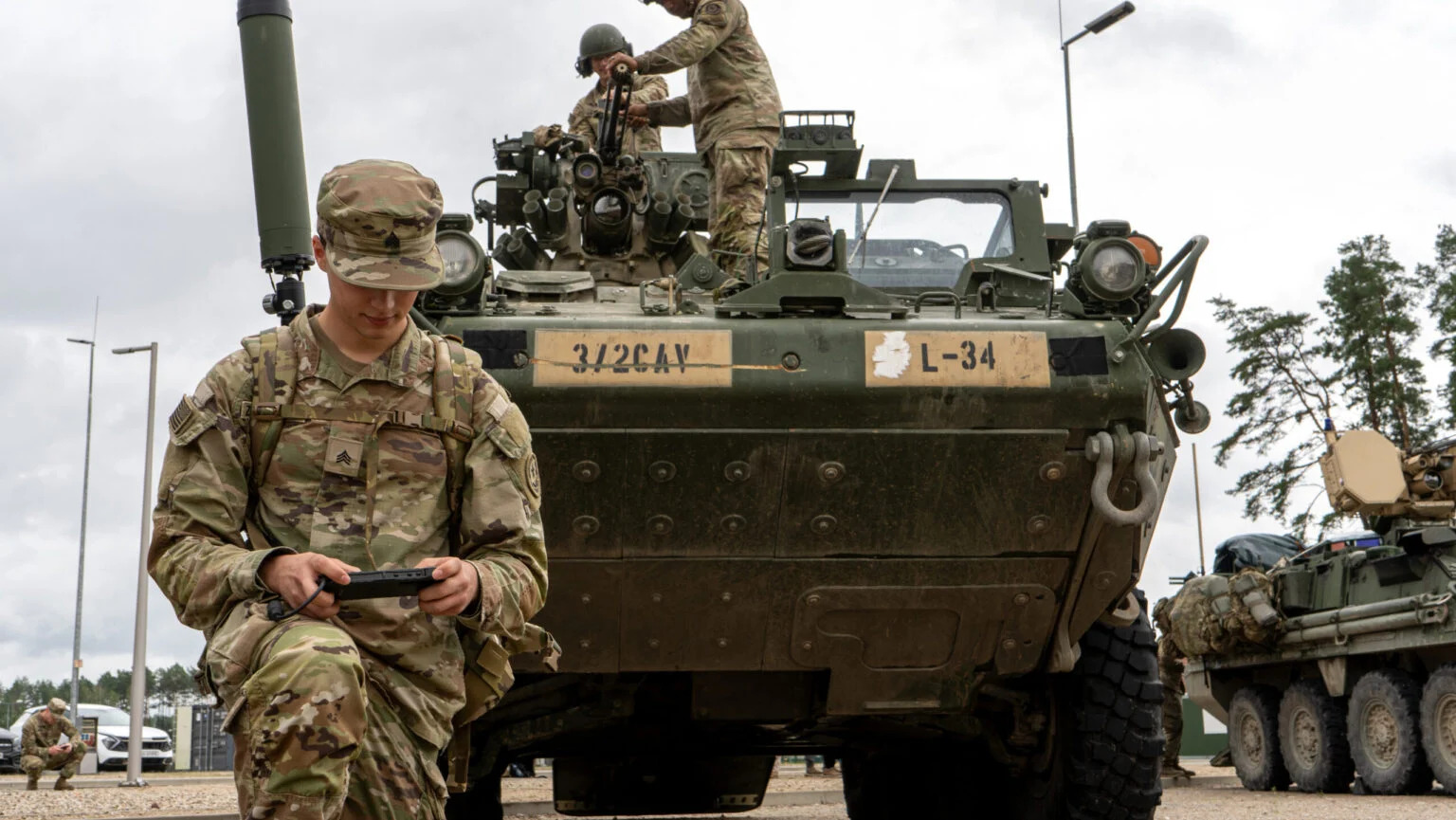
The modernization plan leaves no gap in coverage. Approximately $165 million is dedicated to „fixed” capabilities for protecting home defense sites and military installations, addressing a critical security need that has sparked intense inter-agency debate. Furthermore, the strategy prioritizes the tactical edge, allocating over $100 million for handheld and wearable counter-drone systems designed to protect individual squads and dismounted soldiers from Group 1 and Group 2 drone threats.
The Cutting Edge: Kinetic Missiles and Laser Power
The Army’s future arsenal combines traditional firepower with futuristic directed energy. The budget includes plans to procure 800 kinetic platforms and 24 units of the „Freedom Eagle-1” (Next Generation cUAS Missile). Additionally, $66 million is set aside for high-energy laser systems (E-HEL). These rapid prototyping efforts aim to provide a more sustainable and cost-effective way to down incoming threats compared to traditional missile interceptors.
Correcting the Economic Imbalance of Modern War
This surge in funding is a strategic necessity born from the lessons of recent global conflicts. Modern battlefields have shown a stark asymmetry, where $4,000 kamikaze drones are often engaged by interceptors costing upward of $3 million. By investing in agile launcher systems and the „agnostic” FoCUS program, the Army aims to balance the scales. The goal is to move away from expensive, unsustainable attrition and toward a technologically dominant defense that can neutralize cheap aerial threats efficiently and at scale.