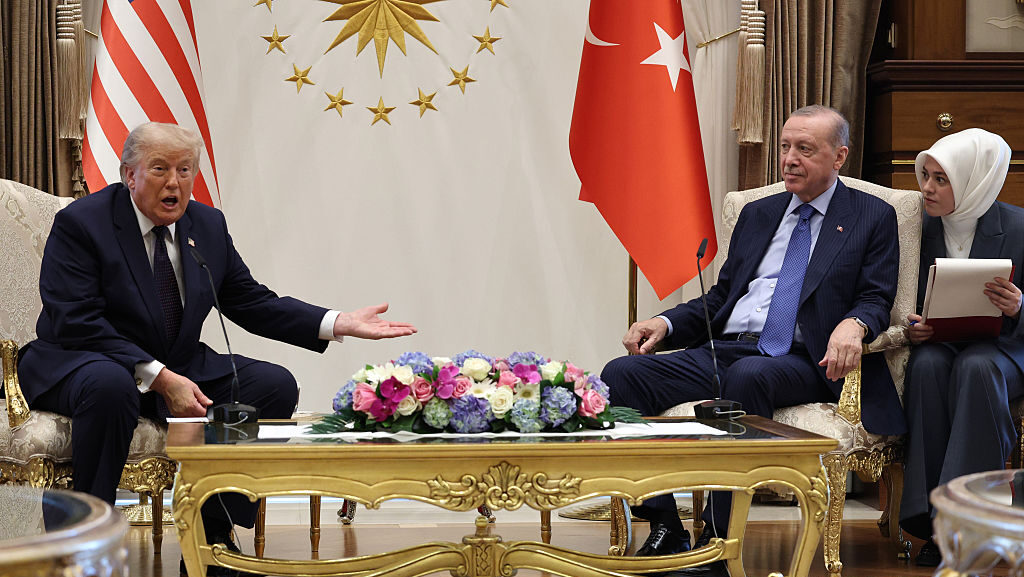
In a major diplomatic pivot, President Donald Trump has signaled his support for Turkey’s reentry into the F-35 Lightning II program, potentially reversing a cornerstone policy of his previous administration. Speaking alongside Turkish President Recep Tayyip Erdogan in Ankara, Trump hinted at a strategic realignment that is expected to trigger a fierce legislative battle in Washington.
Redefining loyalty: the push to lift sanctions
„It’s something certainly we’d consider,” Trump stated, emphasizing that bringing Turkey back into the fifth-generation fighter jet program is a looming decision. The U.S. President lauded the „very good relationship” between the two nations, suggesting that Turkey has shown greater loyalty than other traditional allies. Crucially, Trump indicated plans to dismantle CAATSA sanctions, asserting that the U.S. should not be in the business of sanctioning its friends.
The S-400 standoff and the $9 billion void
Turkey’s removal from the program in 2019, triggered by the acquisition of the Russian-made S-400 missile system, resulted in massive economic fallout. While Ankara lost an estimated $9 billion in production profits, the Pentagon incurred costs up to $600 million to onshore manufacturing. Currently, six Turkish-owned F-35s remain in storage on American soil, with $1.7 billion of Turkish funds still held by the U.S. Treasury, serving as a reminder of the frozen partnership.
The Capitol Hill hurdle: a bipartisan wall
Despite the executive branch’s warming stance, the path to delivery remains obstructed by federal law. The National Defense Authorization Act prohibits the transfer of F-35s to Ankara as long as the S-400 systems remain on Turkish soil. With bipartisan opposition holding firm for over half a decade, Trump faces the daunting task of convincing skeptical lawmakers that security concerns regarding Russian intelligence gathering have been fully mitigated.