A profound strategic transformation is sweeping across the Indo-Pacific, dismantling the rigid Cold War geometry of fixed bases and bilateral treaties. In its place, a „security web” is emerging—a distributed, resilient, and co-invented network designed for a century where chaos is no longer a failure of deterrence, but the baseline of conflict.
The era of the „fortress” is ending. The new architecture of the region is defined not by how well a single point can be defended, but by how effectively a network can survive a blow and continue to generate power. While the United States and Australia remain the central nodes of this evolution, they are no longer solitary actors. From the „porcupine defense” of the Philippines to the integrated sensor grids of the Malacca Strait, the connective tissue of a new way of war is being formed.
Beyond the Fortress: Guam’s Triple-Web Evolution
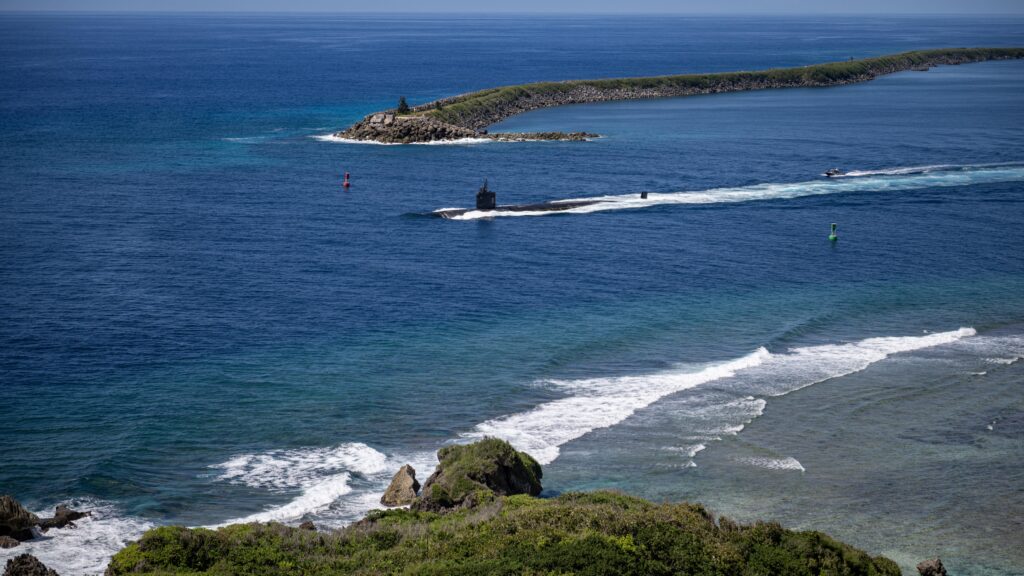
For decades, Guam was viewed as a static vertex of power—a heavily defended island from which the U.S. could surge forces. Today, the reality of high-precision, long-range strikes has turned fixed infrastructure into „sitting ducks.” In response, Guam is being re-engineered as an anchor node within three interlocking architectures: security, deterrence, and kill webs.
The security web focuses on survival through dispersion, spreading missile defenses and fuel storage across multiple islands like Saipan and Tinian. The deterrence web aims to manufacture uncertainty, forcing adversaries to weigh the risks of attacking a multi-nodal alliance that cannot be decapitated by a single strike. Finally, the kill web prioritizes information superiority—using a mesh of sensors and autonomous systems to decide and strike faster than the adversary can react.
The Littoral Laboratory: Co-Inventing Power in the East Java Triangle
The emerging amphibious partnership between the U.S., Australia, and Indonesia serves as a blueprint for how security partners now practice littoral power. It is a „three-lane” cycle of co-invention. While the U.S. and Australia refine the grammar of island-hopping and anti-ship fires in the north, Indonesia integrates these concepts through localized exercises.
The strategic genius of this arrangement lies in its flexibility. By allowing Jakarta and Canberra to adapt these tactics to their own political constraints, the network becomes more robust. American concepts travel furthest when they are not forced, but rather „owned” by local partners—sometimes even in frameworks where no American flag is visible on the beach.
Chokepoints and Porcupines: Securing the Maritime Arteries
The Strait of Malacca, a vital artery carrying 30% of the world’s seaborne oil, has long been a structural vulnerability for Beijing. Now, a maritime deterrence architecture is taking shape to exploit that friction. Using persistent ISR (Intelligence, Surveillance, and Reconnaissance) and „mesh fleets” of unmanned surface vehicles, the network creates a continuous contact picture that turns the chokepoint into a strategic chessboard.
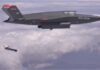
Further east, in the West Philippine Sea, the „porcupine defense” is becoming a reality. Small, lethal, and autonomous platforms—such as the MARTAC unmanned vessels—are being deployed to reef complexes and straits. These „attritable” systems allow the Philippine Navy to maintain a high-tech presence that can swarm, sense, and target, effectively leapfrogging traditional naval limitations.
Pax Silica: Integrating Economic Resilience and Autonomous Logistics
Modern security is no longer confined to the battlefield; it has moved into the supply chain. The „Luzon Economic Corridor” and the „Pax Silica” initiative represent a structural shift where trade policy is folded into the deterrence web. By securing semiconductor and AI supply chains among trusted allies, the network ensures that the economic base is as resilient as the military one.
Australia’s „Camel Train” project provides a glimpse into the future of logistics. By retrofitting civilian aircraft with autonomous avionics, Australia is turning general aviation into a strategic asset. A „boring” logistics drone hauling supplies can instantly become an ISR collector. With thousands of licensed drone operators as a potential reserve, this project leverages a civilian ecosystem to support high-intensity conflict.
A First Among Partners: The Dawn of the Multi-Node Order
The hub-and-spoke system of the 20th century—where all security flowed from Washington—is being replaced by a multi-node web. In this new order, partners like Japan, Australia, and the Philippines are no longer just consumers of security; they are producers of regional stability.
The U.S. remains indispensable, providing the munitions stockpiles and space architectures that underpin the entire system. However, the character of American leadership is changing. Washington is becoming the largest node in a web that empowers others to act with initiative—and at times, without a visible American presence.
For middle powers like Australia, this is the ultimate test. It requires investing in niche capabilities—autonomy, sensing, and resilient logistics—while accepting that the most significant strategic work may happen outside the direct embrace of American power. The strength of the new Indo-Pacific architecture lies in its ability to stand on its own terms, proving that a web is far harder to break than a chain.