What began as a chance encounter last summer at Fort Carson has evolved into a strategic breakthrough that is redefining the future of American military operations. A routine visit by a senior Special Forces leader led to an unexpected synergy with the 4th Infantry Division, sparking a mission to integrate elite units into the Next Generation Command and Control (NGC2) framework—the Army’s high-priority network modernization spearhead.
Breaking the „Sticky Note” Barrier: A Vision for Digital Integration
For Maj. Jaysin Williams, 10th Group’s SOF NGC2 Integration Director, a single briefing by the 4th Infantry Division commander served as a catalyst for change. Upon seeing the prototype for the new command system, the potential for a seamless digital kill chain became undeniable. For years, the gap between Special Operations Forces (SOF) and conventional units was often bridged by manual processes, increasing the risk of fratricide and slowing down critical targeting cycles.
Williams’ strategy focused on three pillars: real-time location sharing, digitalizing the targeting process, and co-developing battlefield applications. The goal was to eliminate the inefficiency of physical liaisons carrying handwritten notes to command cells, replacing them with a streamlined, interconnected digital environment.
The „Ivy Mass” Litmus Test: Two Minutes to Strike
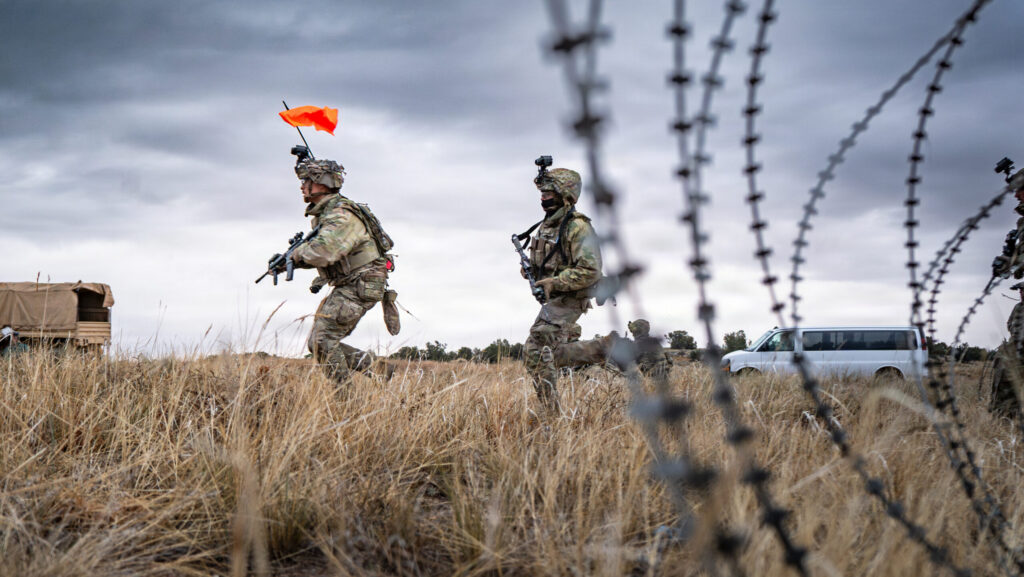
The integration was put to the ultimate test through the „Ivy Sting” sprint series, culminating last week in „Ivy Mass.” This exercise represented perhaps the most significant trial of NGC2 in a contested electronic warfare environment to date. Spanning 238,000 acres at the Piñon Canyon Maneuver Site, the event forced SOF and conventional forces to maneuver against a live opposing force in a large-scale combat scenario.
The results proved revolutionary. During the trials, the team demonstrated a complete kill chain—from identifying a target via commercial sensors to passing data through multiple staff sections and executing a strike—in under two minutes. This rapid integration proves that SOF units can serve as high-tech sensors, feeding vital intelligence directly into the Joint Force’s digital veins.
Pioneering the Future: SOCOM’s New Digital Blueprint
The success at Fort Carson is forcing U.S. Special Operations Command (SOCOM) to take a hard look at its traditional business model. The 10th Group is now recognized as the pioneer of NGC2 for the entire SOF enterprise, proving that the digital architecture developed for massive conventional divisions can be adapted for elite, agile teams.
The next phase involves SOF owning its own data layer while leveraging the core baseline of NGC2 applications. By adopting the Army’s technological foundation and tailoring it to their unique mission sets, Special Operations Forces are ensuring they remain at the tip of the spear in an increasingly transparent and digitalized theater of war.