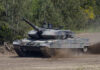
In a significant move to enhance the survivability of ground forces, BAE Systems has been awarded the U.S. Army’s Soft Kill Active Protection System (APS) program of record. This initiative is designed to equip military vehicles with advanced electronic warfare capabilities, providing a robust defense against a wide spectrum of threats, including anti-tank missiles and unmanned aerial systems.
Defeating threats through electronic deception
Unlike traditional „hard-kill” systems that rely on physical interceptors to destroy incoming projectiles, this soft-kill technology utilizes non-kinetic effects. At the heart of this defense is the Rapid Optical Observation and Kill (ROOK) program, which neutralizes threats by jamming or „confusing” the guidance systems of missiles and drones before they can reach their targets. This approach offers a layered defense strategy, providing a critical alternative to kinetic weapons in complex combat environments.
A legacy of innovation from the Rodeo to the ROOK
The selection of the ROOK platform represents the culmination of years of rigorous development and testing. The technology is a direct evolution of the TERRA RAVEN system, which rose to prominence after winning the Army’s „Soft Kill Rodeo” competition in 2019. This initial $20 million contract phase will support the further refinement of both the TERRA RAVEN and the Stormcrow defense system—a laser-based technology designed to intercept airborne threats with a virtually „infinite” magazine and lower sustainment costs.
Agnostic integration for a diverse battlefield
One of the primary advantages of the ROOK platform is its agnostic design, allowing it to be integrated into a wide variety of ground vehicles. While the specific fleet of vehicles to be equipped has yet to be finalized, the system’s flexibility ensures that it can be adapted to various platforms across the service. This versatility is essential as the military seeks to modernize its existing inventory to meet the challenges of 21st-century warfare.
Countering low-cost drones with sustainable technology
The push for advanced APS technology comes as the Department of Defense significantly increases its investment in counter-drone capabilities for the fiscal 2027 budget. With inexpensive, small drones increasingly capable of disabling multi-million-dollar armored assets, the shift toward non-kinetic solutions has become a strategic priority. By using lasers and electronic jamming, these systems offer a cost-effective and sustainable way to protect personnel and infrastructure while minimizing the risk of collateral damage.