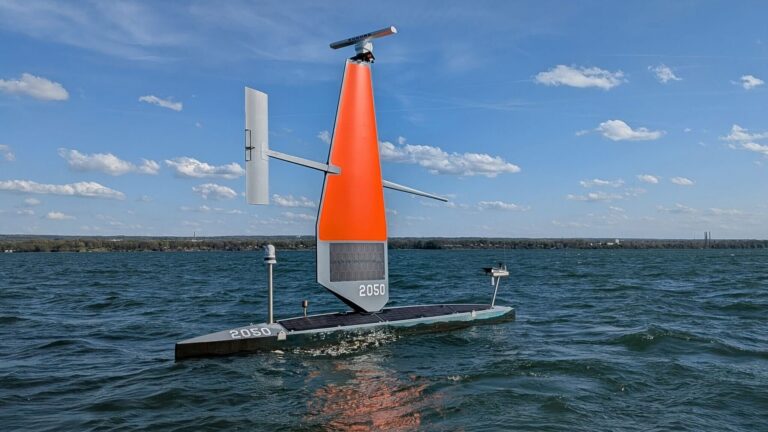
In an effort to bolster the monitoring of territorial waters, more than a dozen Voyager unmanned surface vessels, manufactured by Saildrone, have been deployed on strategic missions. This move aims to close visibility gaps in critical areas, providing a constant presence where human resources and traditional vessels face logistical challenges.
Unmanned efficiency: long-term surveillance missions in critical areas
The Voyager units are designed to remain at sea for approximately 100 consecutive days, equipped for coastal surveillance and mapping. In the Great Lakes region, these autonomous vessels support border security operations by identifying suspicious activities. Meanwhile, in the North Atlantic, the drone fleet assists efforts to combat illegal fishing, offering persistent monitoring that would otherwise be costly and difficult to maintain with human crews.
Paradigm shift: moving from a reactive model to proactive surveillance
The deployment of the 16 Voyager vessels marks a significant evolution in intervention strategy, moving from a reaction-based model to a proactive surveillance network. By taking over repetitive tasks and monitoring vast areas of open ocean, the drones allow specialized personnel to focus their attention and fuel resources strictly on missions that require direct human intervention, such as rescue or interdiction operations. This surveillance „net” identifies suspicious behavior in real time, optimizing authority response times.
Resilient technology in extreme weather and future prospects
A major advantage of Saildrone autonomous systems is the ability to operate in harsh environmental conditions, where sea state and severe weather could affect the performance or safety of a human crew. Unlike sailors, drones do not experience fatigue and are not limited by mandatory rest periods, ensuring a continuous presence for hundreds of days. This resilience is essential in northern waters, where conditions are much harsher compared to previous missions conducted in the Caribbean or South Pacific.
Expanding the monitoring network and innovations in the Spectre line
The current initiative, based on a $15.5 million contract signed earlier this year, is slated to continue through October. The success of this partnership could pave the way for new missions in regions such as Alaska or Guam. While Voyager units demonstrate their utility, new technologies like the Spectre model are already prepared to take on complex tasks, including anti-submarine warfare and advanced intelligence and reconnaissance operations, thereby strengthening maritime sovereignty through constant innovation.