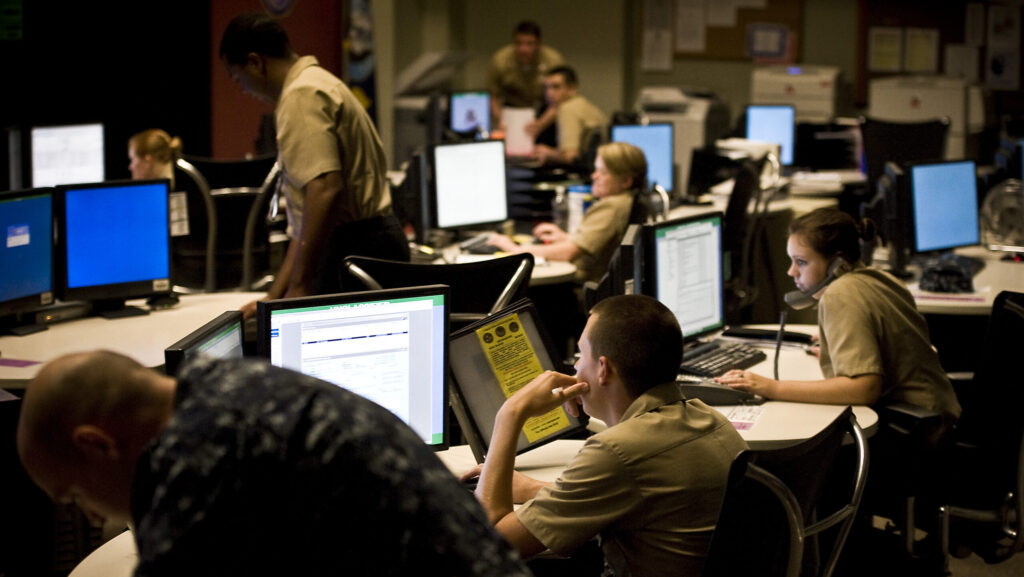
The United States Cyber Command is poised to usher in a new era with the implementation of Cyber Command 2.0. This ambitious initiative promises not only to redefine how cyber personnel are developed and trained at the federal level but also to deliver „exciting initiatives” that will be replicated for Navy service members in cybersecurity or IT roles, according to a top official.
Cultivating Cyber „Mastery”: From CYBERCOM to the Fleet
Anne Marie Schumann, the Navy’s principal cyber adviser, highlighted that the new plan, first unveiled in November, aims to improve how cyber mission force personnel are developed and trained with the goal of achieving „mastery.” „One thing that I’m really going to focus on over the next year is Cyber Command 2.0 or the revised cyber force generation model implementation plan,” Schumann stated in an interview at the WEST conference. „I’m really interested in taking what we learn as we start to implement that and looking at how that translates not just to the force generation that I’m providing to Cyber Command, but for force generation writ large.”
Innovation and Flexibility: A Holistic Talent Management Model
Schumann added that CYBERCOM 2.0 provides an opportunity to question everything and think creatively about shaping CYBERCOM’s missions as well as Navy-retained missions. „We’re going to learn things about best practices in recruiting or identifying talent. We’re going to look at things like how we incentivize,” she explained. „This is a whole talent management model to include the training piece. I think there’s going to be a lot of applicability there for the services as well as service-retained forces.”
Implementation Details: Still Being Forged
However, other Navy officials are still awaiting more specifics on the plans and structures outlined in the CYBERCOM 2.0 implementation plan, which was unveiled at the end of January. „I think that’s still kind of being worked out, to be honest with you, I don’t think the ink’s dry on any of that… or how these centers are going to impact what we have to do at our level,” remarked Vice Adm. Michael Vernazza, commander of Naval Information Forces.
The implementation plan specifies that the services will still be responsible for providing initial basic training before personnel join their teams at CYBERCOM. Yet, the plan also identifies an Advanced Training and Education Center—a concept that may not necessarily be a brick-and-mortar facility, but rather a vision for how the command can provide advanced training to forces once they are on the teams.
Strategic Collaboration: A Unified Effort for the Cyber Future
Vernazza, who is responsible for providing trained sailors to CYBERCOM, noted that while the full scope of Cyber Command 2.0 is not yet clear, working groups have recently begun, in which his organization is participating. Katherine Sutton, assistant secretary of defense for cyber policy, stated in a recent interview that there was „a unified campaign” between the services, CYBERCOM, and the Pentagon to build out the implementation plan.
For the services, roles in implementing the Cyber Command 2.0 plan include altering career management and incentive pay, Schumann elaborated. „I do think we have some very unique levers in the service that CYBERCOM can’t necessarily turn, but they can tell us what they need and then we can figure out how to leverage those things that we do have,” she concluded. „Recruiting and assessing is another area where I think there’s a lot of partnership we can have with CYBERCOM to say, as CYBERCOM stands up these three centers for 2.0, what are their studies, what is their research telling them are the qualities that make the best cyber operators? And then, how do we come together with CYBERCOM to make an assessment that spots that talent?”