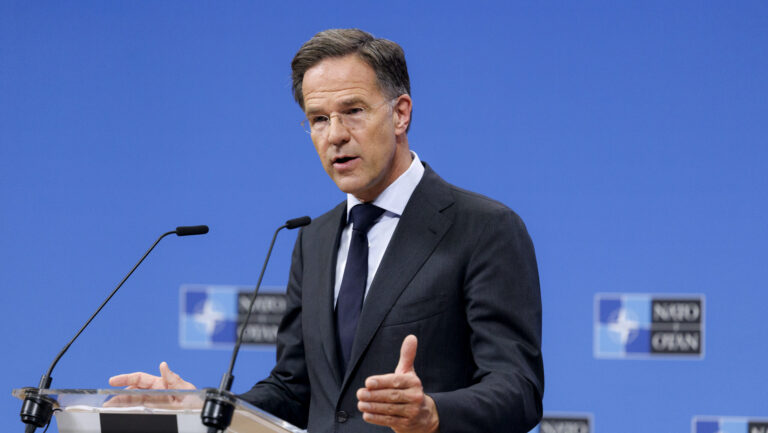
NATO’s top official, Mark Rutte, dismisses concerns over U.S. force reductions, framing the shift as a „fair” transition toward a stronger, more autonomous European defense.
The U.S. decision to scale back its contribution to the NATO Force Model is being met not with alarm, but with a call to action. Despite concerns that Washington is loosening its ties to the alliance, NATO Secretary General Mark Rutte insisted today that a „positive” picture is emerging. According to Rutte, the gap left by American troops and assets is rapidly becoming a catalyst for other allies to bolster their own military commitments.
Filling the Void: The End of „Over-Reliance” on the U.S.
The U.S. withdrawal of a third of its fighter jets from Europe marks a significant shift in regional airpower. However, Rutte pushed back against critics who view this as a weakening of the alliance. He argued that the previous model was „overly reliant on the United States” and that the current „adjusted” pledge is a necessary correction.
„It is not about where forces are currently located; it’s about who would do what if our defense plans were activated under Article 5,” Rutte told reporters in Brussels. He noted that several allies have already stepped up to replace U.S. personnel and capabilities, in some instances doing so „completely,” though he admitted that some gaps still require urgent attention.
The Ankara Countdown: Bracing for the Trump Factor
Rutte’s remarks come at a sensitive time, as heads of state prepare for the NATO Summit in Ankara next month. The messaging appears strategically aimed at U.S. President Donald Trump, who has frequently questioned the value of the alliance and threatened to withdraw American support. Trump’s recent social media broadsides, accusing NATO of failing to support U.S. interests in the Middle East, have only heightened the sense of urgency within the organization.
To appease Washington and secure the alliance’s future, NATO is pushing for an unprecedented 5% GDP spending target. Under the „NATO 3.0” vision, 3.5% would be allocated to core defense and 1.5% to dual-use infrastructure. This massive investment is seen as the only way to build a credible conventional deterrent and a robust industrial base capable of matching Russian production.
High Stakes in Brussels: Nuclear Planning and the Ukraine Front
The strategic shift coincides with a flurry of high-level meetings. This Thursday, allied defense ministers will gather in Brussels to discuss the alliance’s nuclear planning—a critical component of its deterrence posture. Simultaneously, the Ukraine Defense Contact Group will meet to synchronize military aid for Kyiv.
As the U.S. shifts its footprint, the message from Brussels is clear: the era of European military passivity is over. Whether the continent can bridge the capability gap in time for the Ankara summit remains the defining question for the future of the Atlantic alliance.