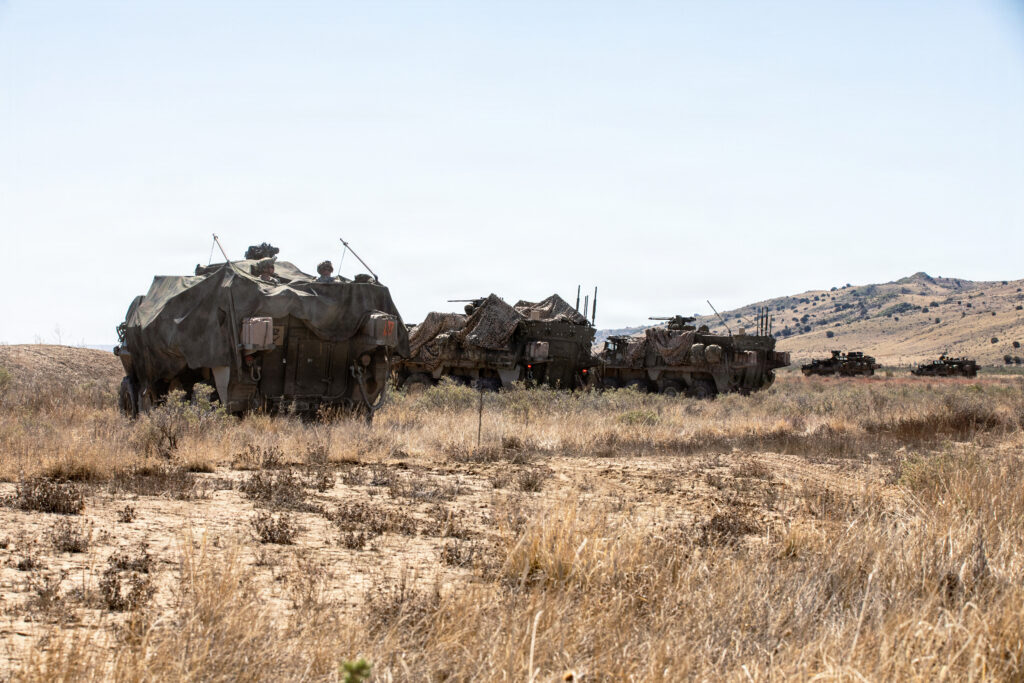
In a high-stakes training simulation, 4th Infantry Division soldiers learned that in modern warfare, the deadliest enemy isn’t the one who cuts your lines, but the one who makes you doubt your own gear.
Stuck in the silence of the empty desert, a unit of Army soldiers debated their next move. Their screens were flickering, and data packets were crawling. They suspected solar flares, satellite glitches, or user error. They spent hours troubleshooting, unaware that an enemy „Red Cell” was watching their every move with glee. This wasn’t a technical failure—it was a calculated, surgical electronic strike.
The Art of the Ruse: Why Degradation Trumps Destruction
The „Ivy Mass” exercise, a massive assessment of the Army’s Next Generation Command and Control (NGC2) initiative, revealed a startling truth: subtle interference is more dangerous than total jamming. When a radio goes dead, a soldier knows he is under attack and flips to counter-measures. But when the signal is merely „bad,” the soldier stays on the frequency, wasting vital time trying to fix a „broken” radio while the enemy closes in.
„It creates doubt,” noted exercise commanders. By partially jamming communications, the opposing force successfully paralyzed the unit’s decision-making process. The soldiers didn’t realize they were being hunted electronically until it was theoretically too late.
‘Uncomfortably Dispersed’: The New Reality of the Frontline
Drawing directly from the bloody lessons of the Ukraine conflict, Ivy Mass forced commanders to embrace a terrifying new doctrine: extreme geographical separation. The mantra of the exercise was to stay „uncomfortably dispersed.”
In an age where electronic signatures act as beacons for precision missiles, staying close to one’s unit is a death sentence. Commanders found that if a unit feels uneasy about how far apart its elements are, they are probably at the correct distance to survive. This „chess game” of distance versus connectivity is the new standard for any potential conflict in the Pacific.
Unleashing MAMBA-E: Replicating the Peer Threat
The exercise saw the debut of the MAMBA-E, a powerful, trailer-based jammer designed to mimic the high-end electronic warfare capabilities of „pacing threats” like China. For the first time, these effects were not „white-carded” or simulated on paper; they were real.
Cyber red teams hacked WiFi passwords and spoofed networks, while high-powered jammers created a „denied and degraded” environment that tested the limits of U.S. hardware. The goal was to stress the system to the breaking point before actual acquisition decisions are made for the future force.
Beyond the Tech: Adapting Tactics for the Spectrum
Despite the influx of new gadgets and algorithms designed to detect jamming patterns, leadership is adamant: technology is not a silver bullet. The takeaway from Ivy Mass is that the U.S. Army must overhaul its Tactics, Techniques, and Procedures (TTPs).
The future of combat involves moving to higher ground, changing terrain, and operating in radio silence—not just buying more expensive radios. As the Army prepares for its next major evaluation in July, the message is clear: the electromagnetic spectrum is now a front line, and the U.S. military must learn to fight in the dark.