The „Spectacular MIST” Challenge: US Navy Seeks Rapid Solutions to Turn Any Vessel into an Electronic Attack Platform
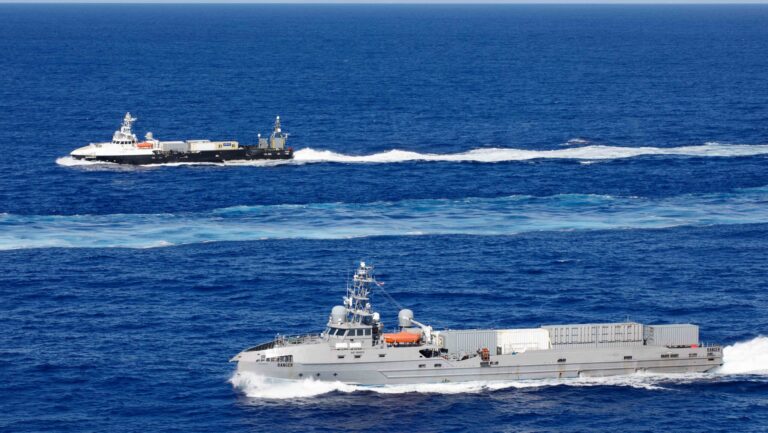
The Defense Innovation Unit (DIU) and the U.S. Navy have ignited a high-stakes race to develop „containerized payloads.” The goal is clear: to rapidly transform manned and autonomous vessels into advanced surveillance and electronic attack hubs using interchangeable modules that can be mounted on virtually any maritime platform.
“If It Fits in a Container, I Want to Fight With It”
This new initiative, dubbed the Spectacular MIST Challenge, aligns with an aggressive strategic vision promoted by top military leadership. Admiral Daryl Caudle, Chief of Naval Operations, has spearheaded a „containerized capability campaign,” emphasizing that flexibility is the ultimate weapon in modern warfare. “If it fits in a container, I want it, and I should be able to fight anywhere in the world with it across many platforms, at speed and scale,” he stated.
The project isn’t just about logistics; it’s a radical modernization effort where combat power can be generated instantaneously in contested maritime environments, where traditional warships might be too vulnerable or too few in number.
Open Architectures for an Invisible War
The official solicitation focuses on three essential technological pillars: threat radar simulators, active electronic attack, and passive electronic surveillance. The Navy is hunting for solutions based on „open-system architectures” and software-defined capabilities, allowing for rapid updates and seamless integration onto Unmanned Surface Vessels (USVs).
Defense industry players have no time to waste, with proposals due by July 22. The stakes are both technological and financial, as selected firms will receive funding for prototyping and live-sea demonstrations.
The Litmus Test: Real-World Pacific Demonstrations
The second phase of the competition will take the technology out of the lab and drop it directly into the waves of the Pacific Ocean. In September, off the coast of Southern California, prototypes will be evaluated under realistic operating conditions.
Top-performing vendors will advance toward production contracts and extended field assessments, with prizes reaching up to $1 million for the final winners. The ultimate outcome of this endeavor could fundamentally change how the U.S. Navy projects force in global theaters, turning mundane shipping logistics into a decisive tactical advantage.