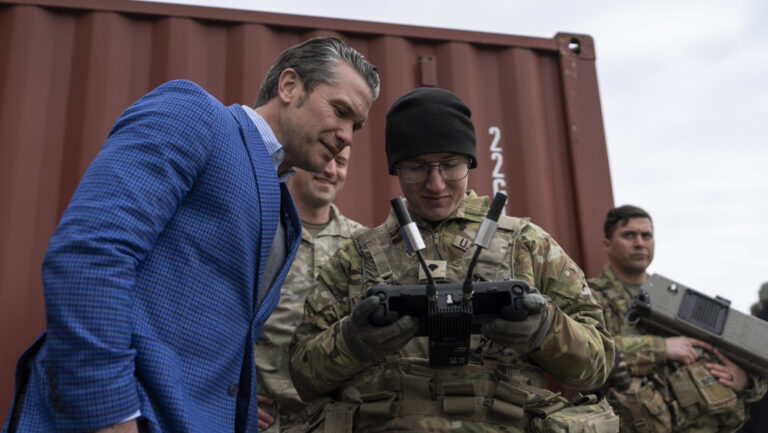
Forced Centralization of Unmanned Systems Sparks a Behind-the-Scenes War Between Secretary Hegseth and Military Services
A week and a half after Secretary of Defense Pete Hegseth ordered a sweeping restructuring to centralize drone programs from all services under a single manager, the position remains vacant, and speculation is reaching a fever pitch. This strategic role, already dubbed the „Drone Czar” in military circles, will wield unprecedented authority, but its success depends less on bureaucracy and more on the charisma and clout of the individual who fills the seat.
Absolute Power in a Name Vacuum: The Importance of „Wasta” at the Pentagon
Experts warn that in a Washington where personality often trumps policy, the profile of the new manager will decide the project’s fate. Jack Shanahan, a retired general and former leader of the military’s AI initiatives, emphasizes that the new boss must have a high-trust relationship with the Pentagon’s top brass and sufficient „wasta”—an Arabic term for informal influence—to bulldoze through bureaucratic barriers.
If this new office fails to secure unconditional backing from leadership and cannot collaborate effectively with the military services, it risks becoming an administrative disaster similar to the F-35 program, which was plagued by delays and astronomical costs.
Billion-Dollar Frictions: The Budget War Against the Clock
The „Czar’s” mission is complicated by a brutal financial calendar. Four different budget cycles are currently in motion, and the new manager must take the reins in less than 90 days to avoid losing funds already allocated for fiscal year 2025. While supporters of the reform, such as Rebecca Grant of the Lexington Institute, believe centralization is the only way to rapidly acquire the 200,000 drones needed, critics are far more skeptical.
David Berteau, a former assistant secretary of defense, warns that while the structure might be more efficient in the long run, in the short term, this move will significantly slow down acquisition processes exactly when speed is most critical.
Mission Impossible? The Revolt of the Air Force „Traditionalists”
The harshest criticism comes from former Air Force Secretary Frank Kendall, who views centralization as a „vote of no confidence” in the military services. In his new book, he argues that only the specific services (Army, Navy, Air Force) possess the necessary expertise to train personnel and ensure drone logistics in their respective domains.
“Trying to do all that from outside the service is problematic. They are the institutions that are going to have to operate these systems and train people for them,” Kendall stated. The doctrinal conflict is deep: can one person manage the „Wild West” of billion-dollar programs without sacrificing the specific needs of each military branch? The answer will arrive with the appointment of the individual tasked with turning this centralized vision into a battlefield reality.