From „Missile Trucks” to Artificial Intelligence: How Collaborative Combat Aircraft Will Redefine Military Aviation by 2030
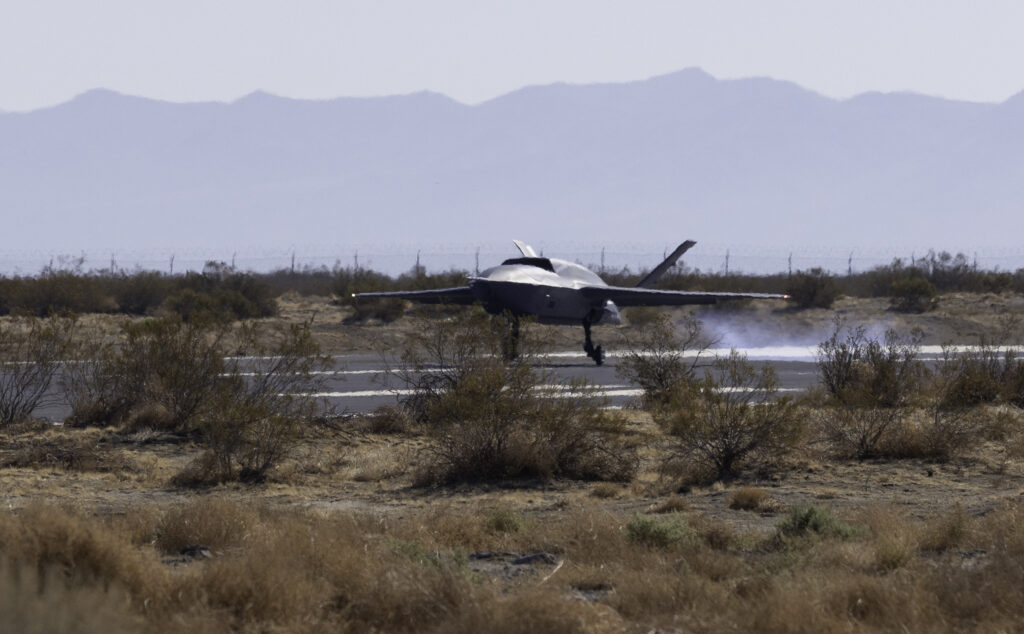
The classic image of a drone flying dutifully alongside a manned fighter is already a thing of the past. The future belongs to Collaborative Combat Aircraft (CCA), which by 2030 will evolve from mere flying ammunition depots into true „Swiss Army knives” of the sky—capable of executing electronic warfare, data relay, or surveillance missions in areas so dangerous that no human pilot could survive.
The Swiss Army Knife of the Skies: Farewell to Simple „Missile Trucks”
The transition from remote-controlled systems to autonomous ones marks a strategic turning point. Industry experts emphasize that these platforms are not just „missile trucks” but force multipliers that offer persistence on the battlefield. A CCA will be able to shift the dynamics of an engagement through electronic jamming in one sortie and by providing precise targeting data in the next, all while its human partner remains at a safe distance.
This evolution has deep roots, tracing back to risky experiments in World War II and leading to the modern doctrine of „manned-unmanned teaming.” The fundamental difference today is deep integration: these drones are tasked and controlled by the same units as manned aircraft, often sharing similar software configurations with cutting-edge fighters.
A Fragmented Global Race: The Search for a Common Standard
The U.S. Air Force is leading the charge with its „increment-based” program, but the Navy, Marine Corps, and Army are pursuing parallel paths, testing everything from carrier-based drones to vertical take-off concepts that may not even require jet engines. Internationally, Europe is betting on indigenous investment, though many allies prefer to let the U.S. work out the initial technical kinks before adopting the technology for their F-35 fleets.
However, enthusiasm meets the harsh reality of the industrial base. The absence of common technical standards remains a major hurdle. Currently, every manufacturer is developing its own solutions for basic components, which increases costs and slows down large-scale production. „More common and high-volume production is essential for the nation’s security,” defense sector leaders warn.
The Command Dilemma: Human „In the Loop” or „On the Loop”?
Can a single fighter pilot, under the pressure of combat, effectively supervise multiple autonomous drones? This is the question haunting command centers. The current model assumes the drone manages its own flight path, but the authorization for lethal engagement remains with the human. This shift toward a „supervisory” role is similar to how Patriot systems operate, where the required reaction speeds preclude waiting for traditional human input.
While the U.S. remains committed to human oversight, adversaries like China or Russia may not share the same ethical scruples, forcing the Pentagon to accelerate development. The market for these systems is estimated in the thousands of units, but the decisive leap will only come when a clear operational threat makes these „Swiss Army knives” indispensable on the front lines.