Lockheed Martin and nLIGHT to Develop High-Energy Lasers Designed to Saturate the Battlefield and Protect Warships
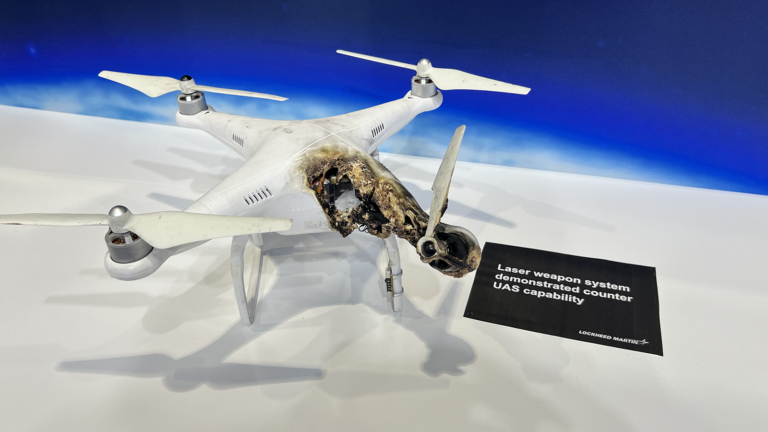
In a strategic move set to revolutionize air defense, aerospace giant Lockheed Martin and specialist firm nLIGHT have been selected to lead the development of high-energy laser systems. These new weapons, part of the Joint Laser Weapon System (JLWS) program, are designed to provide an impenetrable barrier against drones and, eventually, cruise missiles, marking the transition from experimental prototypes to deployable combat capabilities.
From Drones to Missiles: A Billion-Dollar Technological Shift
The partnership begins with an initial award of $86 million, with a potential ceiling reaching $847 million. The technological roadmap is ambitious: initial prototypes will deliver 150 kilowatts (kW) of power, optimized for neutralizing the drone swarms that have become a constant threat in modern warfare.
The next phase aims to scale power levels to the 300-500 kW range, a threshold necessary for destroying faster and more resilient cruise missiles. The Pentagon expects these systems to be containerized, allowing for rapid deployment on both ground-based platforms and naval vessels, offering unprecedented tactical flexibility.
The Economics of War: Million-Dollar Interceptors vs. „Bullets” of Light
The urgency of this program is driven by the stark reality of battlefield costs. In recent conflicts, adversaries have utilized low-cost drones and rockets to saturate air defenses and deplete stockpiles of expensive interceptors. Laser technology promises to flip this equation: instead of launching a million-dollar missile to down a thousand-dollar drone, armed forces can use a beam of light with a negligible cost per shot.
“We must actively defend against emerging threats,” program officials emphasized, noting that these systems will provide a „deep magazine” of directed energy that remains available as long as there is power, eliminating the risk of running out of ammunition during high-intensity engagements.
The European Front: Germany Enters the Era of Directed Energy
Parallel to American efforts, Europe is taking decisive steps in the same direction. A joint team from MBDA and Rheinmetall has been selected to build a laser weapon for the German Navy, scheduled to become operational by 2029.
Following a year of rigorous sea trials, this system proved it could engage air, sea, and land targets even in adverse weather conditions. The German project highlights a global trend: the future of port and maritime security will no longer rely solely on explosives, but on the precision and speed of concentrated light.